Summer Branch Drop

Several areas of the Botanic Garden are roped off. A sign explains that is to protect visitors from the risk of falling branches as a result of Summer Branch Drop. That can occur when trees are drought stressed, and when they take up water after a period of drought. It is unpredictable, and not related to other indicators of tree health.

The Drought FAQ page of the Botanic Garden website mentions that branch drop can affect any tree but is particularly known to affect cedars, pines, oaks, beeches, chestnuts and poplars, as well as old trees.

Rain taken up by branches after drought can weaken them to the point that branch drop can occur – usually six to eight hours after heavy rain.

While some trees are sacrificing branches, others such as this Yoshino cherry, are curling up their leaves to limit transpiration.

Meanwhile, no real rain for almost a month.

July Heat and Drought

In March at the Cambridge University Botanic Garden, the Yoshino Cherry (Prunus x yedoensis) was flowering. The flowers of the Yoshino Cherry are white when they are fully open, but tinged with pink when the buds are closed or just opening.

Now in late July the flowers have gone, but the leaves are bright. and the tree stands out against the pale buff of the dry grass.

The grass is pale buff because it hasn’t rained since the end of May, and even that was just a light shower. How long can grass do without rain before it is too late for it to recover?

There were two long days of record breaking heat a few days ago, with a high of 37°c. The forecast is that it will rain today and tomorrow, and after that there is no rain forecast for the next two weeks. The question is how much will it rain today and tomorrow? The grass especially, needs hours and days of steady rain.

White Bryony

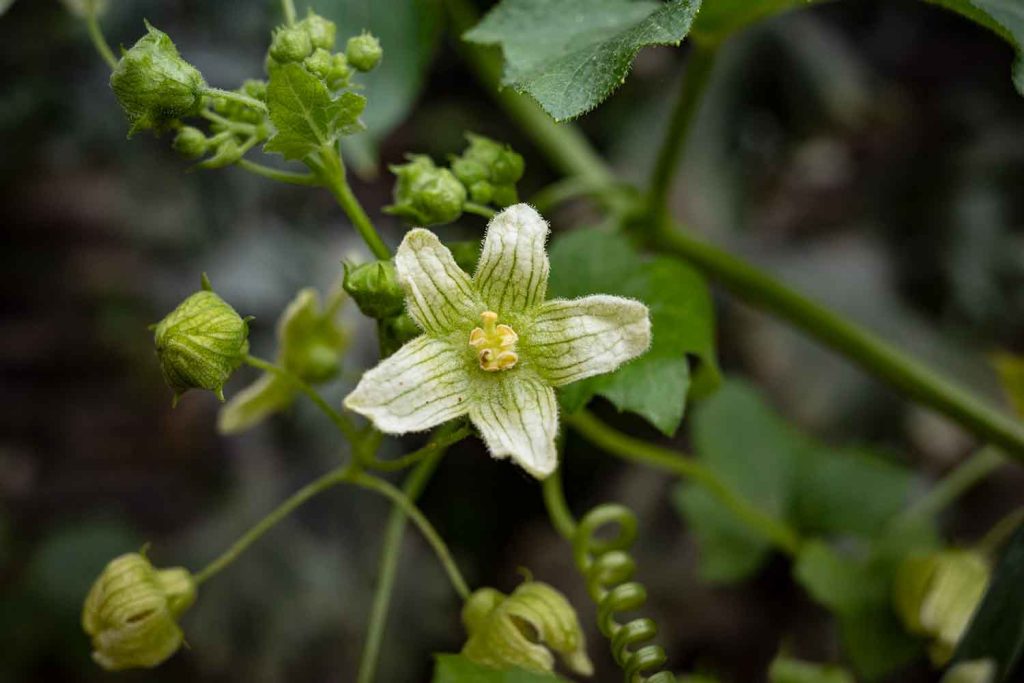
White bryony was growing in the garden when we came to this house, growing strongly over and through a redcurrant bush. You can’t believe how fast it grows.

Apparently it is mainly found in the south and east of England, which fits because that’s where we are. It’s a climber and it wraps its curling tendrils around the stems of other plants. I have not seen it actually strangle another plant, but I know that other climbers do. It is amazing to watch it searching for a stem to cling to. A growing tip waves around in the air, seeking out its host, and apparently it can connect through smell. 

It flowers between May and August and has these white and green-veined flowers. Later on it produces shiny red berries. It is highly poisonous, particularly the roots. The flowers are a give-away that the plant is poisonous, although I can’t exactly say why it strikes me that way.