Georgian Edinburgh

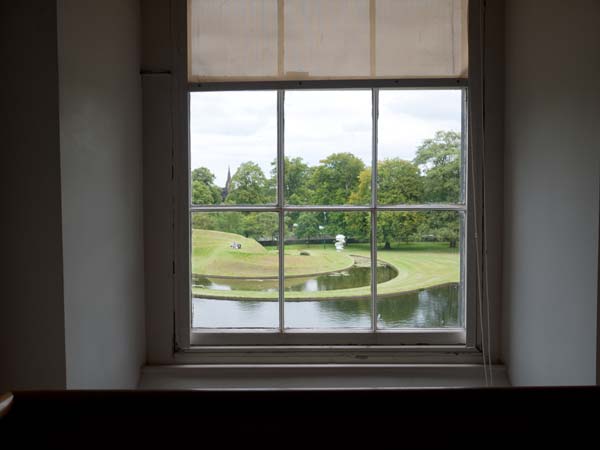
Window-In-New-Town-Edinburgh

Edinburgh is quite far north of the equator – 56° north in fact. That’s further north than Moscow or Copenhagen.

So every drop of sunshine that can be wrung out of the winter sky is welcome.

This is our first winter in Edinburgh and before we arrived I was worried that the winter might be dark and cold. I had visions of the darkness stretching on interminably, month and after month.

We had also heard that last winter the temperatures were as low as -6°C (21°F) and there was 7 inches (18cm) of snow that lasted for weeks and left some homes stranded.

This winter though there has been no snow at all except for a light powdering a couple of times that disappeared within an hour.

Gales

There was a gale, however, that ripped through Edinburgh in late November soon after we arrived here. When that happened, we had visions of spending months listening to the wind howling and the windows rattling.

And there was another gale in January that felled 34 specimen trees in the Royal Botanic Garden in Edinburgh.

But overall the weather has been mild and we have had quite a number of sunny days this winter. And the skies have been fairly bright rather than dark and overcast as I had feared.

From Whence The Sun Shines

Nonetheless, north is north and in the northern hemisphere the sun shines from the south.

So it is a natural question to wonder why the fine Georgian buildings of the New Town are built on a north-facing slope where they are least likely to catch the sun.

The answer is that it is because of the way that Edinburgh grew in the years before start of the development of the New Town in the 1760s.

Hope Street Edinburgh

The Old Town

Edinburgh today is cut through east-west by a steep, narrow valley. Once, a river ran through the valley. Nowadays the river is hidden underground and a railway runs along the valley.

The city was originally built south of the valley. This is the Old Town, with the High Street (also known as the Royal Mile), Edinburgh castle, and St. Giles Cathedral.

To the east, down a long, gentle slope, there is Holyrood Palace.

Today there is also the new Scottish Parliament Building across the road from the Holyrood Palace.

The house of John Knox, the Scottish clergyman and a leader of the Protestant Reformation, still stands on the High Street. Knox died in 1572, which gives some idea of the age of the Old Town.

So with the Old Town situated where it was, the most prestigious part of the city known as New Town had to be built on the remaining available ground across the other side of the narrow valley to the north.

Once out of the little valley, the land runs quite steeply downhill and then tapers out gently towards the Firth of Forth, that great body of water that flows eastwards out into the North Sea.

general map of New Town in Edinburgh

First Build Your Access

So with the prospect of a new and expensive development in the heyday of Scottish wealth, there was just the problem of its location and fact that the site for the development was cut off from the center of the city.

Before New Town could be built there first had to be a connection across the valley. No one wanted to have to climb down into the valley and back up out of it to get to the Old Town and another solution was needed.

One-And-A-Half Million Cartloads Of Earth

The solution was quite neat. One-and-a-half million cartloads of earth from the foundations of what was to become New Town were dumped in the valley and a road built across it leading up to the High Street.

If you visit Edinburgh and stand on the Mound looking over at Princes street and the museums and galleries, it is on those one-and-a-half million cartloads of rock and earth that you are standing.

Princes Street was one of the first streets built in the New Town and it runs north of and parallel to the narrow valley that separated the New Town from the Old Town.

This photograph is looking down from the Mound in the Old Town. Princes Street runs across just behind the park that is, not surprisingly, the green area in the photo.

Nearer to the camera you can see the Art Galleries that were built after the valley was filled in.

I find it funny, somehow, to think that the railway runs below those galleries.

Looking North From The Mound Towards Princes Street In Edinburgh

North And South

North is north, and there is no getting away from that. And what that means is that the fine buildings of New Town are facing the wrong way to catch those precious beams of sunlight. That is perhaps why the ceilings are so high and the windows are so tall in the houses – to let in the maximum amount of light.

A Long development

The buildings of the New Town were built in the Neo-Classical style over a 140-year period beginning in the 1760s.

Part of the reason for such a long period of development was that many of the houses and apartments were rented out by the developers to recoup their initial investment. Once that investment was repaid there was money in the pot to continue with the next phase of building.

And so the development moved forward, with renowned architects like John and Robert Adam and William Playfair bringing their talents and designs to Edinburgh.

Who Lived In New Town

I am trying to imagine who might have lived in these rented houses and apartments in Georgian New Town.

It had to people of substance – but why did they rent and not buy outright? Was it characteristic of the period that people rented? Unanswered questions…

St. Colme Street In New Town Edinburgh

The Layout Of New Town

Most of the streets in New Town run east-west, and while the top end of New Town is on the flat ridge in the center of the city, the bulk of it is on the north-facing slope and at its lower points it runs precipitously downhill.

The architecture is so well preserved that it is easy to picture ladies and gentlemen of the period in their finery – half-present like ghosts – walking on the streets.

My favorite street is Albany Street at the eastern end of New Town. It is a wide street and the buildings are not very tall. So while they are not the grandest in New Town by any means, the proportions are very appealing and the street feels old.

Albany Street In Edinburgh

In contrast, there are street and crescents and circuses at the western end of New Town with some building having massive columns that look – to my eye at least – overbearing and unnecessarily self-important.

Almost all the buildings in New Town are faced in ashlar stone. Ashlar describes a way of cutting the stones so that they taper away on all sides from the front face.

Once the walls are built, there is practically no mortar gap visible between the blocks – because the mortar is hidden in a wedge shape behind the front face.

Walk around the side of these buildings however, and the rougher stone is visible.

around the side of an ashlar stone fronted building

Doune Terrace

Doune Terrace is at the western end of New Town. This photograph is of the end house on the curving crescent of Doune Terrace.

In the second photograph you can see the view from Doune Terrace looking northwards towards Stockbridge and can see here how the road drops down the hill.

Notice the cobblestones. The streets in New Town are all paved with cobblestones which, coupled with the broad streets give an ‘un-21st century’ look that is very strong and obvious.

Doune Terrace Edinburgh

From Doune Terrace and Gloucester Lane in Edinburgh Looking North Towards Stockbridge

Because of the long period of development, New Town is really a collection of several small developments that run into one another with gardens (surrounded by railings and locked gates) dotted about.

And because it is so well preserved and was so finely built, it is now a UNESCO World Heritage site.

Living In The Ruins Of Former Glory

The Scots do not cover their windows like the English do. That gives the passing snooper a wonderful opportunity to see how well furnished the apartments and houses are.

I can tell you that some are very finely furnished. But many, many houses are in a poor state internally. There are beds in living rooms, abandoned rooms, old fittings, wardrobes piled up, weak and ancient light fittings.

It is as though the comparatively impoverished occupants of modern times are living in the ruins of the former glory of a bygone age.

And while I like walking around New Town and taking in the architecture, I cannot shake the feeling that it is has its back to the sun and would rather be up and across the valley facing south.

Great Stuart Street Towards Ainslie Place Edinburgh

St. Vincent Street

In their long runs down from Princes Street, the streets that lead down to New Town change their names several times. So, for example, Frederick Street becomes Howe Street, which becomes St. Vincent Street.

And at the bottom of St. Vincent Street and visible from way up the hill hundreds of yards away is St. Stephens church. As you can see, the street is cobbled. And on the left is railing overgrown with trees of one of the many gardens in New Town.

Local residents can apply for a key to the gardens which is given for a modest yearly fee.

St. Stephen's church at the bottom of St. Vincent street in Edinburgh

Looking Out Over New Town

New Town can look very romantic and it can also look rather austere.

So let’s finish with segments of a poem by Pablo Neruda and one of our ecards that we made by pairing the final lines of Neruda’s love poem with a view over New Town.

Love
I ache for you in gardens of blossoming flowers
I have forgotten your face
I remember your hands
How did your lips feel on mine?

Because of you I love the white statues that sleep in parks
White statues that neither speak nor look

Your caresses enfold me like vines climbing on walls

I have forgotten your love
but I seem to glimpse you behind every window

Crocuses On Brunstfield Links

Crocuses On Bruntsfield Links in Edinburgh in February 2012
Crocuses On Bruntsfield Links in Edinburgh

I photographed these today on a large grassy area here in Edinburgh known as the Bruntfield Links.

The Links are adjacent to the Meadows – another large grassy area – and it is a very pleasant walk from the adjoining neighborhoods of Bruntsfield and Marchmont into the center of the City.

The Links and the Meadows are criss-crossed with footpaths with people walking to and fro across the green swathes at all times of the day and evening.

And the Meadows dip gently and then rise again towards the city center, so from Bruntsfield and Marchmont the scene is laid out one green vista.

Many of the people walking are students, so there is none of that sense of urgency that there might be if everyone was hurrying to the office.

It is all very relaxed and pleasant – and in a capital city.

more-crocuses-in-Edinburgh-in-February-2012
More Crocuses In Edinburgh In February 2012

What Lies Beneath

Legend (and perhaps more than legend) has it that the bodies of plague victims were buried under the Links during the Black Death in the 1300s.

They say that this accounts for the hummocky ground, which is why it was here that the game of golf was invented.

Apparently, somewhere on the Links there is a plaque erected by the City of Edinburgh Council stating that the Links was one of the earliest places that golf was played in Scotland.

The Official Line On Golf

So the official claim is that Bruntsfield Links is ‘one of the earliest places’ rather than the precise place where golf was invented, for of course it was in Scotland that the game was first played.

Whichever it is, the crocuses are out in February – testifying to the mild winter this year.

Crocuses On Bruntsfield Links in Edinburgh
Crocuses Close Up
Crocuses Close Up

Ecards

Over the next few days we will add some of the photos from today to the Flowers category of our ecards, including this close up shot.

Romancing The Ecards: Valentine’s Day Origins And Lore

bear with balloons and quote from Winnie The Pooh
Nobody Can Be Uncheered With A Balloon

Sealed With A Kiss

Ever sign an ‘x’ on your email? Or use several of them in a real live letter or on an envelope (as in ‘SWAK – Sealed With A Kiss’), as we did so often for years before computers came on the scene?

Well, it is believed that the ‘x’ symbol became associated with the kiss in medieval times. This was because people who could not write their names had to sign in front of a witness with an ‘x’.

The people then kissed the ‘x’ to show they were doing this sincerely.

Two flower heads kissing with a quote by Ingrid Bergman that a kiss is a lovely trick designed by nature...
A Kiss Is A Lovely Trick – A Quillcards Ecard

Serious Pecking Across The Internet

Speaking of kisses, Quillcards has romantic images like this ecard with its evocative French proverb:

caraffe and cafe tables with quote lovers can exist on kisses and cool water
Lovers Can Exist On Kisses And Cool Water – A Quillcards Ecard

We also have quirkily romantic cards, like the sketched ‘kissing couple’ at the top of this article who are paired with a quote from the actress Ingrid Bergman who starred in the classic movie Casablanca.

To Wear One’s Heart On One’s Sleeve?

Okay, it’s the Middle Ages, and everyone wants a special person to be their valentine for that special day in winter.

So they write the down on strips of paper the names of people to whom they are attracted, put the slips in a bowl – and draw names to see which of them will be their valentine.

After this, they wear the name that they have drawn pinned on to their sleeves for an entire week so that everyone can see who is special to them.

This is the origin in modern times of our expression ‘to wear your heart on your sleeve.’

Religious And Societal Connections With The Day

So how did this official day of romance come about?

Well, I have seen several versions described of where this holiday comes from.

All say that we are indebted to ancient Rome for the holiday, for it was they who celebrated the Feast of Lupercalia on February 14th in honor of Juno. Juno, the goddess of women and marriage, was also the queen of Roman gods and goddesses.

I read conflicting information after that, including one source that claimed Pope Gelasius I established the holiday in 496 AD, while another version stated that it was centuries later in 1537 that England’s King Henry VII officially declared the holiday.

As far as the religious connection goes with the holiday, Pope Paul VI deleted the holiday from the General Roman Calendar of saints.

He did this only a few decades ago – in 1969.

The Heritage Of Courtly Love

In line with King Henry VII, it is said that the holiday become associated with romantic love in the Middle Ages through Geoffrey Chaucer.

Chaucer is considered by many to be the greatest English poet of the Middle Ages, and it was through his artistic circle that the tradition of courtly love flowered at this time.

It was also at this stage that Valentine’s Day evolved into a day when lovers expressed their love for one another through flowers, candy, and sending greeting cards known as valentines.

Curative Chocolate?

By the 1800s, a physician would commonly advise you to eat some chocolate if you were pining for a lost love.

Picking up on this, Richard Cadbury produced the first commercial box of chocolates for Valentine’s Day in the late 1800s.

And of course, millions of heart-shaped boxes of chocolate are sold for Valentine’s Day these days.

Say It With Flowers

Flowers are hugely popular to give on Valentine’s Day as we all know, and almost 75% of the people who buy them are men.

Interestingly, quite a number of women send flowers on Valentine’s Day – to none other than themselves.

Prompting A Proposal

Are you interested in moving on from romance to a more permanent union with your partner? Are you hoping to marry your partner, but he or she hasn’t brought it up at present? Want to strike a playful note?

Then this image with its quotation by the English illustrator and poet Edward Lear might help with the cause:

rose and ring and quote about marriage from Edward Lear
O Let Us Be Married – A Quillcards Ecard

A Fine Romance

Consider tragic love, and odds are high that William Shakespeare’s play Romeo and Juliet written in 1596 will come to mind.

No doubt this in part accounts for the fact that each year the Italian city of Verona where he set the play receives more than 1,000 valentines addressed to his fictional character Juliet.

If you enjoy the Bard and want him to be part of your declaration of ‘I love you’ this February 14th, here’s a card featuring an ardent, earnest quotation from his play Henry V.

Old Dijon with a Shakespeare quote: I Know No Ways To Mince It In Love
I Know No Ways To Mince It In Love – A Quillcards Ecard

Talk To The Animals

Hoping to strike a lighthearted stance with a love because you’re a bit shy about it all?

Then this appealing, pint-sized guinea pig might be what you are looking for:

guinea pig with the words 'but would you be my valentine'
But Would You Be My Valentine? – A Quillcards Ecard