The Masham Sheep Fair 2009 in England

From the Middle Ages to the Present
Set in the hills of England’s picturesque Yorkshire Dales in lower Wensleydale, the history of the sheep fair in the historic market town of Masham goes way back to the Middle Ages.
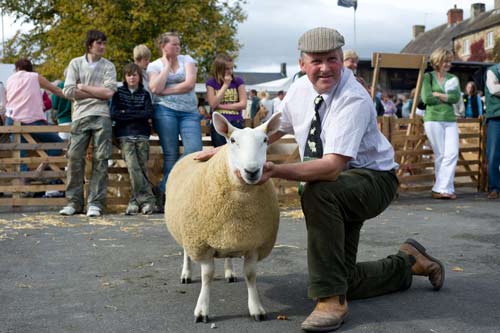
Cheviot sheep at Masham Sheep Fair

Wool As England’s Chief Commodity
Sheep fairs are natural in England since wool was the foundation of the wealth of the nation beginning with Norman Conquest in 1066. By the end of the twelfth century, England’s most important industry was the production of wool.

Although of course the nation’s industries and focuses have greatly changed since then, sheep farming still maintains an active presence with 34 million sheep in the UK.

Sheep On Show
At the Masham Sheep Fair this past weekend, there were many people in the village square that was chockablock with wooden pens full of different sheep breeds, many of the breeds bearing the names of regions throughout England.
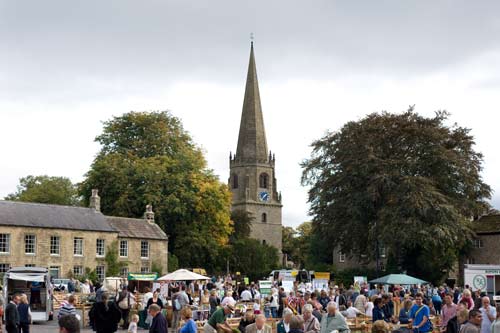
The village of Masham in North Yorkshire

Different Breeds for Different Folk
There were Swalesdale, Dalesbred, Blue-Faced Leicester, Herdwick, Teeswater, Wensleydale, Jacob, Texel, Suffolk, Oxford Down, Hampshire Down, North Country Cheviots, Beltex, Bleu Du Maine, Charollais, Dorset Horn, Poll Dorset, Ryeland, Shetland, and Manx Loaghton.

The range of facial, head, and fleece characteristics and color was fascinating and wonderful to observe.

Ribbons and Such
Contests were held, ribbons awarded, and farmers and their families were there to exhibit and sell their wide array of sheep. In all, forty-five trophies were awarded over the two days of the fair.

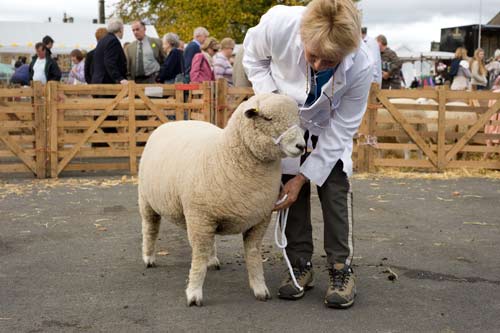
At one contest, the winner was this glorious Cheviot pictured here during the judging:
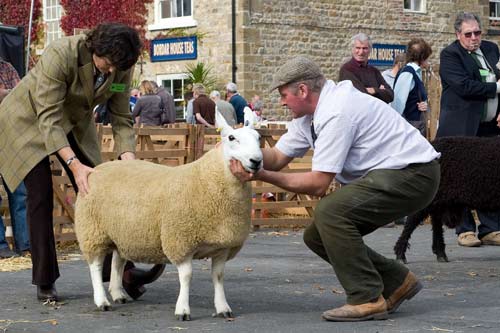
Judging at Masham Sheep Fair

A Well-Behaved Champion
A large circle of people stood and admired this sheep. We were particularly amazed at how still she stood for a considerable time. Held by the farmer but not on a leash as some other sheep were, she occasionally baahed but otherwise she was completely motionless.

I spoke with the farmer after the competition and found out this sheep is 18 months old and she hasn’t got a name yet but she will be ‘christened’ shortly, as he put it.

A Life for Lambing
This prize sheep is not fated for slaughter as so many of her kind normally are. Rather, her owner hopes she will live out her life having as many lambs as possible. He also proudly pointed out what he called her feminine curves, and how fine her two-inch thick fleece is.

And so she will be going to ‘ramming’ in a few weeks when she will be mated with a suitable ram.
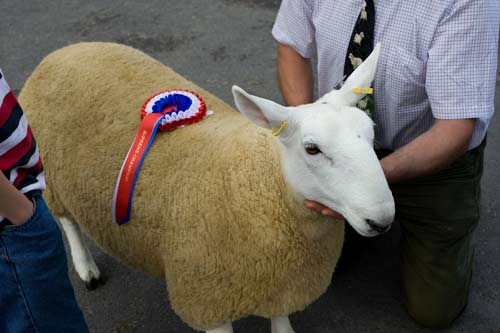
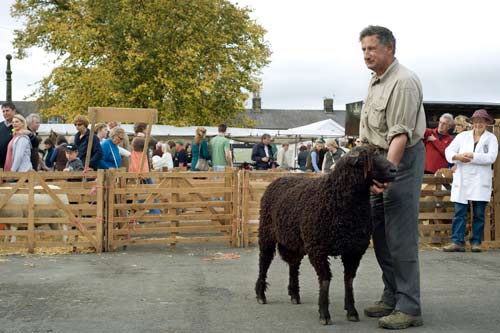
Supreme Champion at Masham Sheep Fair

More Beauties From the Fair

Ryeland Sheep Champion

Black Wensleydale
Black Wensleydale

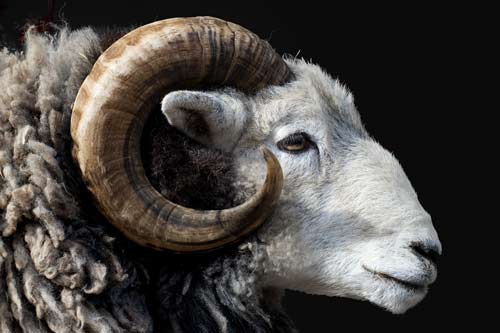
Herdwick Sheep
Herdwick Sheep

You can read more about the Herdwick breed and the part that Beatrix Potter played in ensuring their survival, in this article of ours about Beatrix Potter and Herdwick Sheep.

References
The Cistercian Monks and Sheep Farming by Professor Esmond Wright
Masham Sheep Fair Programme of Events

If you enjoyed this article, please consider leaving a comment. You might also want to send a distinctive Quillcards ecard – just follow the link.
Take A Peek At Boo, The Eagle Owl

A ‘Bubo Bubo’ Named Boo
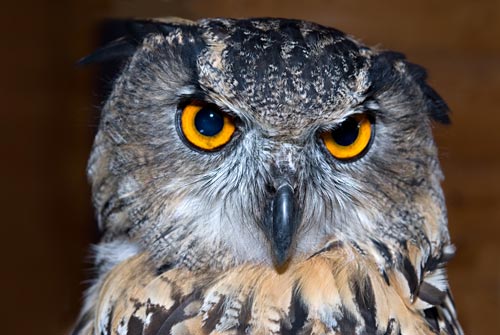
The Eurasian Eagle Owl is known as ‘bubo bubo’ in Latin, hence the name of Boo for a female of the species whom we met this past weekend at the Wildfowl and Wetlands Trust (WWT) Martin Mere wetland center in Lancashire, England.

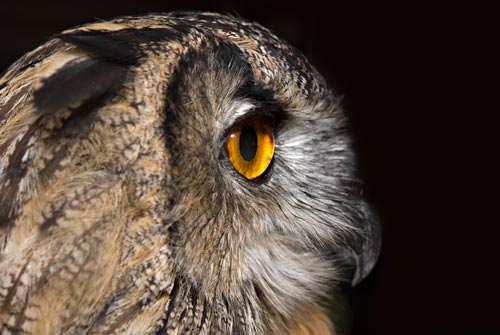
As you can see from these front and side views, Boo is a regal creature:

eagle-owl
eagle-owl-profile

Boo’s Story
Boo originally hails from Finland. She’s 20 years old, and she has been under the kind and knowledgeable care of the Corio Raptor Care and Rehabilitation for the past 16 years. Staffed solely by volunteers, this organization rehabilitated her after her owner abandoned her with a severely broken wing.

As one of her carers noted, there are ways that people can buy these birds as pets although of course they are not suitable as domestic pets.

Judging by how calm and collected Boo was when a crowd of us petted her in turn, however, hopefully her memories of the abuse she suffered are now in the past.

Jeepers Creepers, Where’d You Get Those Peepers?
As Boo stared at me with her wild golden eyes and huge irises that reminds one of the creatures in animated Disney fairytales, she seemed completely unfazed by all the attention that her startling beauty prompted in the crowd.

Helping People With Special Needs
Such behavior triggered me to ask her carer if it did not in fact bother her to have so many strangers stroke her.

It turns out that Boo loves the attention and she is used to it because she is taken regularly to a school for special needs in Liverpool where everyone gets the chance to interact with her.

Bits and Bobs About Eurasian Eagle Owls
Like all Eurasian Eagle Owls, Boo is a species of horned owl that is largely noctural and found in many parts of Europe and Asia.

Boo’s carer told us that she weighs about 10 pounds (4.5 kg). That’s typical for females, while males only weigh up to seven pounds (3 kg). The species has a wingspan ranging from 55 to 79 inches (138-200 cm), and they measure 23 to 30 inches (58 to 75 cm) long. Their prey is usually small mammals, but they can kill foxes and young deer.

She Can’t See For Miles and Miles…
Looking at a massive raptor like Boo, I figured that she would have fabulous eyesight to see for miles when scouting for prey.

However, her carer explained to me that that stereotype is false: Like all Eurasian eagle owls who are largely nocturnal raptors (that is, raptors who are active during the nighttime), Boo’s long-distance vision is actually very similar to that of humans.

The Diurnal Raptor’s Gift
It is only diurnal raptors (that is, raptors who are active during the day) who can spot prey like a rabbit on the move from up to three miles away.

Tripping the Light Fantastic
The retina of the human eye contains two photoreceptors called ‘rods’ and ‘cones’. Cones are sensitive to color, rods are sensitive to light.

Eurasian Eagle Owls have far fewer cones in their eyes than we humans do, so these owls can only see primary colors.

With far more rods, however, what Eurasian Eagle Owls like Boo do have in spades compared to humans is extreme sensitivity to light.

Boo’s Buddies
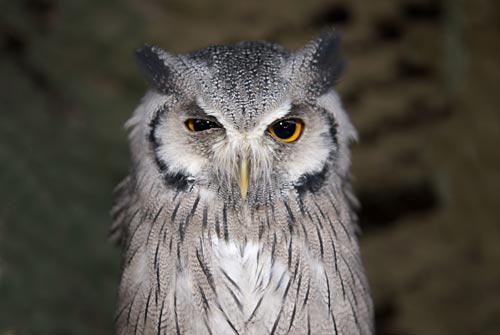
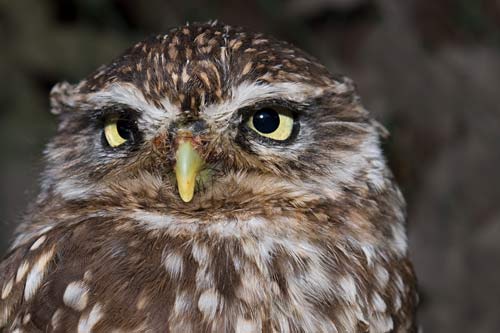
Here are two of Boo’s friends who were also at the exhibit this past weekend. I didn’t get the chance to find out why and how they ended up in care at the rehabilitation center, but I was able to make note of their breeds: The first is a White-Faced Scops Owl, and the second is a Little Owl.

As you can see, along with Boo they made a magnificent and memorable trio.

White-faced Scops Owl
Little Owl
Little Owl

References
Corio Raptor Care & Rehabilitation
Wikipedia
The Wildfowl and Wetlands Trust (WWT)

You can send distinctive ecards featuring our photographs by Joining Quillcards.

Coco Chanel, Fashion Icon: Untangling the Threads

Chanel

Towards Liberating Women from Corsets
At the end of the 19th century, it was customary for ‘properly’ dressed women to spend their days imprisoned in ornate dresses with padding and layers of underclothes including corsets which restricted movement and were very confining.

It was Gabrielle Bonheur Chanel who used her fashion genius of design and scissors to set women free by changing the reality of what was considered the only socially correct way that females should dress in polite Western society.

As she herself explained, “I gave women a sense of

Read more