Cherry Blossom Beauty – Cherry Blossom Transience

It’s early April and still cold here in Leeds, but the sun has been shining on and off, and the cherry trees are in blossom.

Their pink blossom stands out all the more because most other trees are still bare, without even leaves.

The cherry blossom is the national flower of Japan and it has been painted by Japanese artists for centuries because not only is it beautiful, but it is the symbol of life.

The tree blooms and the early spring winds soon blow the blossom to the ground. That echoes the transient nature of life, which is a theme that appealed to the Japanese samurai warrior class because of their creed of bushido – of honor, obedience, sacrifice – which dictated that they had to be ready to give their lives at moment’s notice.

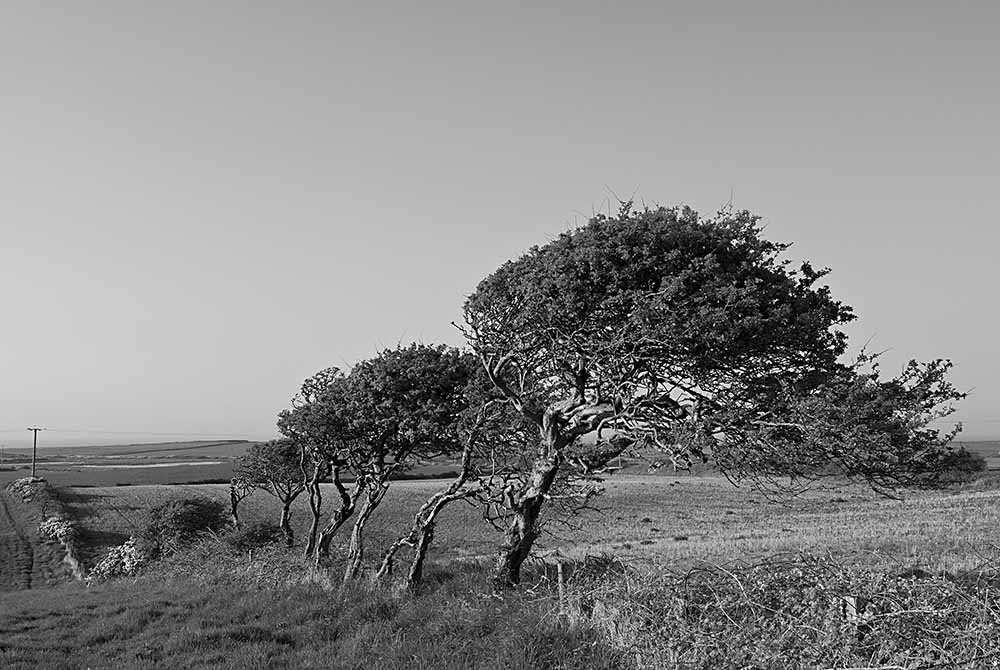
That poignant melancholy is a constant theme in the samurai way of life, and the cherry tree with its graceful, arching branches – alive and yet fragile – is a perfect visual metaphor for this.

cherry_blossom

And the shape is a gift for artists and photographers because of the way the shape translates so well from the three dimensional branch to the image on paper.

For a haiku on the theme of cherry blossoms, see the end of the article on pairing images with Japanese prose and haiku.

Why Black and White Photographs Don’t Fade

Taking Care Of Photographs

Black and white photographs that have been stored in a shoebox for sixty or seventy years may be as clear and unfaded today as they were the day they were put away.

And the reason is that the image in black and white photographs is made of very stable silver compounds protected by a gelatin layer on fiber based paper.

Of course, they may be creased or rubbed, but if they were put away carefully that may be all the protection they needed.

Of course, they are not digital prints – that’s a whole other story. What I am talking about is the process used with film and the ‘wet’ darkroom. And for that, the process that is used today is more or less the same as that from seventy or eighty years ago.

And that process is that in a darkroom, light is shone through the negative onto the paper to produce a latent image. Then the latent or hidden image is developed in different chemicals so it can be seen.

To do that the paper is placed in a bath of liquid developer until the image appears, and then the paper is transferred to a bath of liquid ‘stop’ that stops the reaction. Then the reaction is ‘fixed’ by placing the paper in a bath of a third chemical – and that’s it.

The whole process takes just a few minutes.

And the resulting thin layer of silver compound that is the photograph, protected by a gelatin layer, will remain stable for upwards of one hundred years.

That is not to say that all black and white photographs will be in perfect condition – but if they are not it is probably because they were processed incorrectly in the first place.

For example, the chemical that stops the reaction may have become weak or exhausted so that the development carries on slowly over the years and darkens the photograph.

Zebra - A Qullcards Ecard
Zebra – Also A Qullcards Ecard

Resin coated papers

There is a proviso to all this, and that is that with the introduction of plastic resin coated papers for the amateur market in the late twentieth century, new problems arose. Traditional fiber based papers used barium sulphate as the white base. Resin coated papers used titanium dioxide.

And the problem was that the titanium dioxide in the paper reacted with even very low levels of light to produce peroxides that oxidized the silver and make the photo darker than it was when it was first developed.

So resin coated prints from only a few years ago are subject to problems to which traditional fiber based prints are immune.

What we know from all of this is that the stability of the image depends on the materials that the image is made from and from the paper on which the image is made.

Color Photographs from the 1970s

Color photographs involve clouds of dye that are set into the emulsion along with silver compounds and the dyes are activated by light. When the process is finished there is no silver left in the image – just the dyes.

Color photographs were, of course, introduced to the consumer market much later than black and white photographs, and the early compounds were not stable. They reacted with sunlight, with chemicals in the paper of the pages of the albums in which they were put, with cigarette smoke, with the paper the emulsion was laid on, and not least of all with each other.

And color photographs from those days will probably have faded very badly. Some are now no more than a pale smudge.

Modern Color Photographs – Advances In Color Materials

Thankfully, there have been big advances in color materials and modern photographs have archival stability to rival black and white photographs.

Environmental Risks to Photographs

That is not to say that color photographs are immune to deterioration, and it pays to know what the biggest risks to the stability and vibrancy of color photographs are. The biggest risks are sunlight and chemicals.

There are two ways of preventing sunlight damaging a photograph. The first is the obvious one, which is to hang the photograph out of direct sunlight. The second way is to protect the photograph with a sheet of glass that has a UV filter within it. That is an expensive option and there are other downsides, because the colors of the print may look somewhat muted behind UV glass. And of course, many people don’t want to put glass over a photograph at all.

Chemical Attack

Cigarette smoke and cooking fumes pose perhaps an obvious risk. But there may also be corrosive chemicals in the materials with which the photograph is in direct contact. The wrong kind of mounting board can attack the print. The board may be made from wood pulp that contain acids that interact with the print. They can cause it to turn yellow and eventually destroy it.

A good framer will know this and will use an acid-free mounting board. These boards are either made from materials that do not contain acids (such as cotton rag) or they have buffer chemicals in them that counteract the lignin acids that are found in wood pulp.

True Photographs, Giclees, Inkjets, and Dye Sublimation Prints

True photographs use light to activate chemicals in the paper. That light may be focused onto the paper in the traditional way with an enlarger. Or the light may be focused digitally with a laser that reads the negative (or even a digital file) and shoots light in a controlled pattern onto the paper.

Whichever method is used, the clouds of dye and silver compounds in the emulsion are activated by the light, and chemicals are used to develop the image and then to stop the development when the image is complete.

New Printing Methods

At the same time that the color materials found in true photographs have been improving to the high quality we have today, there has been a movement in the home market and the professional fine art market with consumers and photographers printing their own photographs with new digital methods.

These new kinds of prints are not true photographs because they do not use light at all. Instead the printer reads the information in the digital file and uses that information to send color to the paper.

Inkjets and giclee prints are made by print heads that are controlled by computers and which squirt materials onto the paper. The materials may be dyes or pigments.

Dyes are solutions of dye materials in water; which means that the dye is dissolved in water and the solution is squirted onto the paper and absorbed into it.

Pigments on the other hand are suspensions of very finely ground insoluble material that is suspended in water. The suspension is squirted onto the paper and the pigment lays on the surface of the paper rather than being absorbed into it.

Dye sublimation prints are a third option that use a heated head to vaporize colored dyes into the paper.

The distinction between dyes, which are absorbed into the paper, and pigments that do not dye the paper fibers, is important.

Dyes are not color-fast and can fade within a matter of months. Pigments on the other hand can remain light-fast for upwards of 100 years, and are now so stable that they are said to rival true photographs for archival stability. And why not, because pigments are precisely what artists have used for centuries, bound up in oil to create oil paintings.

Conclusion

The hopes of photographers thirty years ago have been achieved. The search for methods that produce stability and vibrancy of colors can be produced by true photographs and pigment inkjets.

‘Rembrandt Lighting’ In Photography

‘Rembrandt’ or ‘chiaroscuro’ lighting accentuates the focal point of the composition by bathing it in light and surrounding the focal point by darker recesses. The Italian word ‘chiaroscuro’ means light and dark, and the alternative name of ‘Rembrandt’ lighting comes from the fact that he created that lighting effect in a lot of his paintings and may be the finest artist to have used the technique.

The contrast between light and dark areas also accentuates the three-dimensional appearance of the subject.
 

chiaroscuro or Rembrant lighting on a pear
Chiaroscuro or 'Rembrandt' Lighting On A Pear

 
In photography the chiaroscuro lighting effect is straightforward to achieve with window light, because window light is directional. In the northern hemisphere the ideal window is one that faces north, away from the direction of the sun, because the light is less contrasty.

But if the subject is placed very near the window, the light fall-off may be too rapid because light always falls off most rapidly nearest the light source and there is a dramatic decrease in the intensity of the light with each step back into the shadows.

Whereas if the subject is placed well into the room, say twenty feet from the window, and is then moved another foot further away from the window, the fall off of light caused by moving that small extra distance from the light source isn’t great because the light has already spent its power penetrating that first twenty feet.

While placing a subject close to a light source can be very atmospheric, it may be too much for the film or camera sensor to deal with. And yet there may be too little contrast and too little light if the subject is placed deeper into the room.

A common way to overcome this problem is to place the subject near the window and use a reflector to bounce light back into its darker side and so reduce the contrast across it.

But that’s not all that Rembrandt lighting is, because he used it to color the scene to create mood. And I thought of that when I looked at the image of young piglets under the heat lamp at a local farm. It was very dark in the shed and although I propped my elbows on the side of the stall, I knew the shot would probably be blurred and therefore useless to make a large print, but at this size it doesn’t show too much and the lighting on the piglets in the half shadow reminds me of how chiaroscuro lighting was used to mould the human body in classical compositions.
 
piglets

You can send distinctive ecards featuring our photographs by Joining Quillcards.