Ai Weiwei’s Zodiac: From Summer Palace To Somerset House

The Zodiac In Somerset House

It’s a small thing, but one of the more interesting way to enter Somerset House is from Victoria Embankment by the River Thames in London. The usual entrance is off the busy road named the Strand, but there is a back staircase (at least it feels like a back staircase) from the lower level of the Embankment.

Then when you come from the quiet below into the foyer and out onto the courtyard, you are hit by the full force of the fountains, the quadrangle, and at the moment by Ai Weiwei’s huge cast sculptures of Chinese zodiac figures.

The Chinese Zodiac
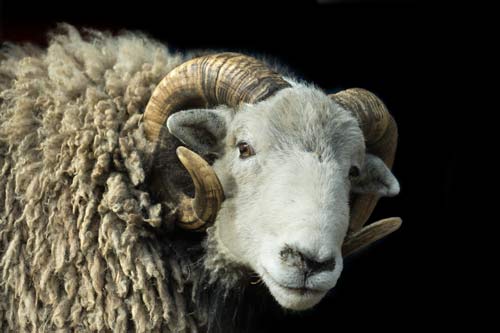
The are twelve animals in the Chinese zodiac, that progress in the order: rat, ox, tiger, rabbit, dragon, snake, horse, ram, monkey, rooster, dog, and pig.

In the Chinese zodiac, the years progress through the zodiac and so do the months and even the days. So a person might be a certain animal of the zodiac for his years, and another animal for his or her months, and so on, and and every person is a mixture of these.

The traditional Chinese understanding is not so much that a person is formed or moulded by his or her zodiac but rather that a person is perceived by others as the embodiment of his or her zodiac combinations.

And unlike the Western concept of time where it is thought of as being linear, the traditional Chinese understanding of the progression of time is that it is cyclical. So when the months come around, they really do come around.

It has always interested me that two people can stand side by side and yet occupy entirely different universes – at least so far as their concept of how time is progressing.

The Rat
The Rat

Apparently Ai Weiwei’s sculptures are based on the zodiac symbols that were stolen from the Summer Palace in Beijing during the time of the Opium wars in the early part of the 19th century.

I read recently that Ai Weiwei made a comment about how fitting it was that the sculptures should be shown in Somerset House – a building that was just being built at the time that the Summer Palace sculptures were being stolen and spirited abroad by colonial powers.

It reminds that, as always, there is a gentle prod from the artist – about freedom and domination.

On Poles
The way the animals are on poles reminds me of the trophies of some bloody battle. And these are not cuddly representations – even the cuddly rodent has big teeth, as you can see.

My, What Big Teeth You Have

On Tour
The sculptures started their tour in New York and I don’t know what the setting for the exhibition was there, but in London on a sunny day with kids running in and out of the water fountains, it felt just right and just the kind of thing that Ai Weiwei would have liked.

Ai Weiwei Detained
Ai Weiwei is being held by the Chinese authorities and has not been seen since his arrest at the beginning of April.

It is not as though he is a marginal figure, unknown outside the art world who can be ‘disappeared’ without anyone noticing or raising questions.

For example, he was the artistic consultant in the design of the ‘bird’s nest’ Beijing National stadium that perhaps you remember from the 2008 Summer Olympics.

So what does the future hold for him? There is Until recently there was an interesting article in the Chinese state-run Global Times newspaper in April. Here is an extract:

Ai Weiwei is an activist. As a maverick of Chinese society, he likes “surprising speech” and “surprising behavior.” He also likes to do something ambiguous in law. On April 1, he went to Taiwan via Hong Kong. But it was reported his departure procedures were incomplete.

Ai Weiwei likes to do something “others dare not do.” He has been close to the red line of Chinese law. Objectively speaking, Chinese society does not have much experience in dealing with such persons. However, as long as Ai Weiwei continuously marches forward, he will inevitably touch the red line one day.

The Lion Roars
The Lion Roars

This is the second article on Ai Weiwei. Click here for the article on his ‘One Hundred Million Sunflower Seeds’ exhibition.

Six Angles To Shoot London

If you have half a day free in London and want to see some of the more iconic buildings in the city, you can do it at a fairly relaxed walking pace.

This walk begins at Liverpool Street rail station, and when you step out onto the forecourt you will see the famous ‘Gherkin’ office building peeking out from between other office buildings in this, the financial district of London.

The Gherkin From Liverpool Street

It Was Bedlam
Just a few yards down Liverpool Street there is a blue plaque on the wall that commemorates the first site of the Bethlehem (or Bethlem) Royal Hospital – a hospital for the mentally ill dating back to 1247.

It is from the name Bethlem that the word Bedlam originates – a word which, of course, means ‘uproar, confusion, and wild ideas run riot’.

The Site Of The First Bethlehem Royal Hospital in London

Heading To The Gherkin
A ten minute walk will take you to St. Mary Axe, the interestingly-named street where the Gherkin building stands. As you wend your way towards it, you will see old buildings jostling for position against new and ever taller buildings looming behind.

It is some years now since Prince Charles lamented the destruction of the London skyline and compared it unfavorably to the skyline of Paris which had been preserved against the encroachment of the modern world of the developer’s paradise. I am sure Prince Charles would be even more unhappy today.

But the world moves on, and London is a busy and vibrant city. I have read recently that Paris is said to be stagnating for the very reason that without new building, its population cannot grow.

The Gherkin And The Baltic Exchange
The Gherkin was built on the spot where the Baltic Exchange stood before it was blown up by the IRA in 1993. The explosion blew out the side of the building and it was decided that it was too costly to repair, so it was pulled down.

The Baltic Exchange was a fine old stone building and there is an argument for saying the blowing it up unintentionally paved the way for some of the less attractive buildings in the area to get a foothold, once the ‘Gherkin’ was built on the site of the former Exchange.

The iconic ‘gherkin’ outline is often photographed from further away in order to capture its shape, but shooting close-up gets you the contrast between the geometry of the building and the young trees growing in front of it. Looking up, there is the bulbous top of the building with the window cleaner’s crane hanging over the edge of it.

Looking up, I wonder whether the curve of the building keeps the windows more clean or less clean when it rains.

Trees and the Gherkin building at 30 St. Mary Axe
The Top Of The Gherkin Building At 30 St. Mary Axe

South Towards The Thames
Heading south down towards the river Thames it is easy to find your way because the streets gently drift downwards as you get nearer the river. This is a particularly interesting part of London because many of the streets are old, and their pattern has not been broken up by redevelopment.

The Monument To The Great Fire Of London
Monument Underground station was just a name to me until I saw the monument after which is was named. It stands just a few yards from the station on the corner of the quaintly named Fish Street.

The monument was erected shortly after the Great Fire Of London that raged across London for three days in 1666 and was designed to commemorate the fire and to celebrate the rebuilding of the city.

The Monument in London
The monument was designed by Sir Christopher Wren and Dr Robert Hooke. Wren is, of course, famous as the architect of St. Paul’s Cathedral and of many other fine English buildings.

Sir Christopher Wren
You can read more about Wren in this article about his life and times when he lived temporarily in Cardinal’s Wharf while he watched the cathedral being built on the north bank of the Thames following the destruction of the first St. Paul’s Cathedral in the Great Fire Of London.

Dr. Robert Hooke
Hooke, though, has often been overlooked or ignored because he ran foul of professional jealousies during his lifetime, principally following his invention of a microscope that was very simple but very powerful. It used a tiny spherical lens, the great curvature of which gave a much greater magnifying power than any other microscope of its day.

Based on his observations, Hooke was able to see and document things that had never been seen before, and it was he who coined the word cell to describe a basic building block of life.

He could see things with his microscopes that the users of other microscopes could not see. So when he first published drawings of the organisms he had observed, he was accused of fabricating his observations.

Hooke was a real polymath and investigated many branches of the sciences. He was also an early proponent of the idea of biological evolution.

Hooke designed several buildings including the Royal Greenwich Observatory and worked with Wren on the design of St. Paul’s Cathedral – the dome of which uses a method of construction designed by Hooke.

The Wikipedia entry for Dr Hooke is well worth reading.

Another of the buildings Hooke helped design is the second Bethlehem (or Bethlem) Royal Hospital. It was built on the street known as London Wall – a short walk from the original site. The building is no longer there although there is a plaque on the wall of the Pizza Express restaurant that occupies the spot.

Subsequently the hospital moved to Beckenham in Kent, where it is today – and still called the Bethlem Royal Hospital. It is quite amazing to think that this hospital can trace its history back to 1247.

Another Bedlam
There is a village named Bedlam near Harrogate in North Yorkshire. It is believed that the name of the village originates from a Norse word for a collection of buildings rather than anything to do with ‘uproar, confusion, and wild ideas run riot’. Still, the welcoming sign to the village is rather lovely.

The Village Of Bedlam In North Yorkshire

You can find this village sign as one of our ecards, here.

From Pudding Lane To Pie Corner
For some reason best known to the designers, the Monument was designed so that its height of 160 feet (49 metres) is the same as the distance from the base of the monument to Pudding Lane where the Great Fire started.

Schoolchildren are taught that the fire ran from Pudding Lane to Pie Corner. It spread so rapidly that there was a fear that it would cross London Bridge and burn through the boroughs on the south bank of the Thames. It didn’t, but the buildings on the bridge burned down.

Climb the 311 steps of the winding stone staircase and you will come out onto a balcony that runs around the column and from which you can see a complete panorama of London, including a view down the Thames towards Tower Bridge.

Spiral Staircase In The Monument
Looking Up The Spiral Staircase Inside The Monument

While I was up there I heard that more people had died from throwing themselves off the Monument than had died in the Great Fire. There is now a wire cage covering the formerly open area above the fence on the balcony but there is sufficient room to poke a lens between the strands of wire. So I was able to take this photo of Tower Bridge straddling the Thames.

Tower Bridge on Thames in London

St. Paul’s Cathedral
From the Monument, a walk along Cannon street parallel to the Thames brings you to St. Paul’s Cathedral.

While it is often photographed from the river or from the Millennium Bridge leading from Tate Modern on the South Bank, there are other angles from which the building reveals itself – such as these in these two photos.

St Paul's Cathedral in London

St Paul's Cathedral in London Viewed From The Park

A Splash Of Red
There are lots of small side streets and alleyways off the main roads that run along the Thames, and it was in one of these that I saw this splash of red of a telephone box.

Some years ago it was decided to keep the old style telephone boxes in the historic heart of London rather than replace them with the new design.

Now telephone boxes are becoming redundant as more an more people have mobile phones. It makes me wonder how long telephone boxes will remain a sight on London’s streets.

Telephone Box and bollard in London
Old-Style Telephone Box

The Houses Of Parliament
Further along the river, the Houses of Parliament stretch into the distance. It is easy to forget that that the building is built right on the bank of the river and it is still a slight shock to see the green algae on the lower walls – clearly visible when looking at the building from Westminster Bridge.

The Houses Of Parliament in London

Houses Of Parliament Close Up
The Houses Of Parliament in London Viewed From The South Bank

Trafalgar Square
This is the last leg of the journey walking from Big Ben up to Trafalgar Square which, when viewed from the steps of the National Gallery, looks reminiscent of London of the early nineteen hundreds. This is in part because of the alterations to the Square made under the direction of the former Lord Mayor Ken Livingstone, who had the area in front of the gallery pedestrianised.

Trafalgar Square in London

Conclusion
That wraps up this photographic walkabout. It doesn’t include a shot of Westminster Abbey and there are other buildings that vie for attention, but it’s a sample of what London has to offer and some of the different ways of photographing the sights – and it can be done comfortably in a half day’s walk.

Technical
I used a Nikon D7000 with a Nikon 35mm f1.8 AF-S lens for all of the shots except of the plaque, which I shot with my iPhone, and the Bedlam sign in North Yorkshire – which I probably shot with a Nikon D60.

Henry Moore, Ai Weiwei, and More

At The Exhibition
Leeds Art Gallery in collaboration with the Tate Britain Gallery in London is hosting an exhibition of Henry Moore’s sculptures, paintings, and drawings.

There is a permanent exhibition of his sculptures at Leeds Art gallery. For this exhibition, however, pieces have come from many other galleries and from private collections. So this is a unique opportunity to see a lot of Moore’s work in one place.

Henry Moore was born in 1898 and brought up in Castleford, which is about 14 miles from Leeds. So many people in Leeds are acquainted with his sculptures. In fact, there is a large bronze Henry Moore sculpture on permanent show outside Leeds Art Gallery.

Moore died in 1986, and during his long life he drew on African primitive and pre-Colombian art to sculpt his favourite subject over and over again.

His favorite subject was people. Many of his sculptures are of women and most of them are simply figures – standing, sitting, thick and bulky mothers holding babies, delicate women with heads turned up to the sky.

And they range from the greater than life size (with a couple that are simply huge) down to many that are just a couple of feet tall or less.

Often their faces are twisted in some way – just in a simple distortion away from the regular – that seems to show their personalities.

Even though many of his figures might look like a cross between pre-Colombian art and a Picasso during his ‘bathers’ period, they hold together as figures.

They all ‘work’ as works of art. Their isn’t a dud among them. I think that is in part because Moore was a very good draughtsman.

I didn’t once get the feeling that the head on this one or that one was the wrong size, or the shoulder here or there was wrong, or this or that neck needed to be moved over a bit.

An Official War Artist
Moore was commissioned as an official war artist during the Second World War and he chose to paint and draw the civilian population sheltering in the London Underground during the German air raids.

He was famous before the war, but his drawings of people sheltering in the Underground made him internationally famous. The drawings went on tour – including to the United States to help drum up enthusiasm for America’s entry into the war in Europe.

They are very moving drawings in muted dark blue-grey with pale wraith-like people sitting or sleeping in long rows stretching into the dark interior of the tunnels.

If you get the chance, the exhibition is well worth visiting. It runs until 12 June.

Henry Moore Reclining Figure

Ai Weiwei Detained and Shown
Following up on my article on Ai Weiwei’s Sunflower Seeds exhibition at the Tate Gallery, I was very sad to learn that Ai Weiwei has been detained by the Chinese authorities. It is now more than a month since he was detained, with no word on what the future holds for him.

The Lisson Gallery in London is showing an exhibition of his work. The exhibition was planned before Ai Weiwei was detained so it is not a reaction to his detention. Having said that, his detention cannot have come as a complete surprise. The exhibition runs until 26 June.

There is also an exhibition of Ai Weiwei’s animal figures on display in the courtyard at Somerset House in London – so that is something else to see.

Quillcards Web Server Status
Now for something technical. We run this site on a virtual private server with a web host that is noted for its reliability. There are nonetheless times when maintenance is scheduled, and there is always the possibility of a piece of hardware failing unexpectedly.

As the rather spectacular recent outage with Amazon cloud storage has shown, even world-class services can go down for extended periods.

So it is with some pleasure that we can say that our uptime has been more than 99.85% over the whole period we have been running Quillcards.

However, we have always worked on the principle that if the service were to go down, members would like to know what is happening rather than be left in the dark.

And that presents a problem when the very service that could alert people to a problem is itself out of action.

So to deal with this, we have an admin site running on a separate web host to Quillcards.

We post messages on the admin site when maintenance is due to be run on Quillcards. And apart from that the admin site more or less just sits there and twiddles its thumbs.

Or rather it did until six days ago when the web host where it runs had a catastrophic failure on one of its servers.

Just to make it absolutely clear – this had no effect on Quillcards because the admin site that had the problem is run on a different server with a different web host.

The Failover Fell Over
Normally the server on which the admin site is running would ‘failover’ to another server and service would continue uninterrupted.

A ‘failover’ system works by one server continuously copying its information across to a second server in real time.

Meanwhile the second server monitors the health of the first server and if it detects that the information that is being copied across to it is corrupted, it stops accepting information and it takes over and becomes the main server.

Except that on this occasion the second server failed as well….

So now the company that runs the web host for our admin server has been working hard over the past five days reconstructing hundreds, possibly thousands, of websites – including our admin site.

Our admin site is now back up, but until yesterday it was falling over intermittently as the load on the servers kept spiking. Thankfully, it seems to have settled down now.

I have mixed feelings about what has happened. I have sympathy for the people at the web host company working hard to get the service back up, but something was badly wrong that allowed a failover server to fail at the same time as the original server.

Was Leslie Howard Shot Down On Purpose
Leslie Howard, the film actor who played Ashley Wilkes in the 1939 film Gone With The Wind, was shot down in 1941 by a german aircraft while he was a passenger on a plane bound for Portugal.

It was widely thought at the time that he was targeted by the enemy because of his role in Pimpernel Smith – a 1941 anti-nazi film in which he starred and because he was thought to be a British spy on his way to convince Franco not to join in the war on the German side.

New light has now been thrown on this – as revealed in an article of 17 April in the Sunday Times – from transcripts held in the British National Archive and recently rediscovered by a German historian, Professor Neitzel.

The transcripts are of recordings made of the conversations of captured German pilots, including the conversations of one Corporal Heinz Dock.

Corporal Dock was secretly recorded describing to a cell mate in a detention camp in England how he came across flight KLA 777 by chance and chased it across the skies above the Bay of Biscay before shooting it down.

So Leslie Howard was not the victim of a targeted killing, but simply one of the unlucky people on that ill-fated flight.

Selfridges And Overfishing
On a positive environmental note, the famous London store Selfridges – which has a food emporium that can turn anyone into a food lover – announced on 5 May that it is no longer selling several dozen species of fish that are threatened by overfishing.

Selfridges has teamed up with a number of conservation partners, advisors, and collaborators on Project Ocean – the declared aim of which is to “celebrate the beauty of the ocean, highlight the issue of over-fishing, help us all understand the threats to the ocean and make positive choices about the right fish to buy and eat.”

The End Of The Line
A good place to learn about overfishing in the world’s oceans is the End Of The Line.

Overfishing has depleted the fish in the world’s oceans by 90% compared to fifty years ago – so that stocks are at the point of no return and unable to regenerate themselves.

It’s a sobering thought, isn’t it.

Facts About Overfishing - A Quillcards Ecard
Facts About Overfishing – A Quillcards ‘Animals and Nature’ Ecard

Reclining Woman - Henry Moore
Reclining Woman – Henry Moore – Outside Leeds Art Gallery