Bison: Do They Twist And Pull, Or Do They Nibble?

bison-close-up

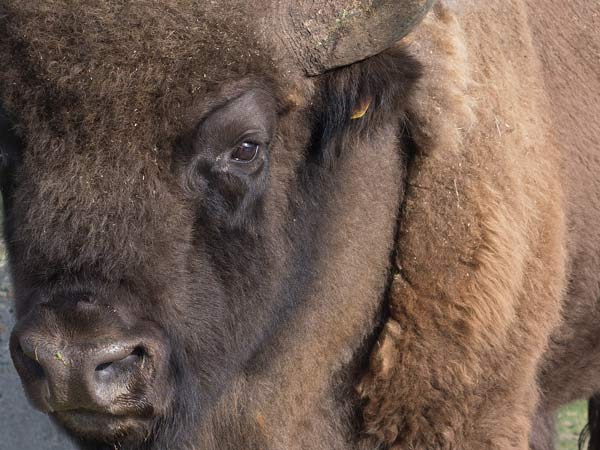
Bison (or buffalo as they are known in the United States) are of course an iconic animal of the American plains.

They are now reduced from the huge numbers there were before the opening up of the West.

Ah, the West and Westerns.

I’ve always been a fan of Westerns – even trashy TV Westerns that were really just soap operas.

Abandoned towns and the open space of ranges and deserts give characters settings in which to play out themes without the clutter and distraction of civilisation.

For me growing up, a good Western could be practically transcendent.

Westerns have helped me understand life, and I have a shorthand name for a certain kind of Western. I call it ‘The Retired Gunslinger’.

Shane

The film Shane was the first example I saw of it. For anyone who hasn’t seen the film, it’s about a former gunslinger (Shane) – a man who wants to put his past behind him.

He’s been drifting – full of sadness and regret over his former life. He tries to settle down working for a homesteader. Thing are complicated by the attraction the homesteader’s wife feels for him and the adoration that the young son feels for him.

Shane keeps acknowledging that the husband is the real hero, bringing up a family against the odds.

A local cattle baron wants to force the homesteaders to quit and move away from the valley. When the cattle baron’s men can’t beat Shane, a notorious gunslinger is called in to fight Shane.

Shane is reluctant to fight, but he is forced by his code to face down the gunslinger, and of course he wins.

But the gunfight has distanced him from the life he hoped to have in the valley.

So he rides off alone, and in the final scene we see the family he helped looking on after him with a mixture of feelings.

Ostensibly, that’s the story. But the real story is how it plays with us, the audience.

The film is an hour and a half long and we are waiting most of that time for the showdown. We would have been completely let down if the gunfight had been avoided.

The lesson that the homesteader choosing to lead an industrious and peaceful life is the real hero of the film, is a myth.

The real meat is in the gunfight.

And the storyline of the ‘retired gunslinger’ has been reprieved over and over again. Fairly recent examples being the 1985 film Pale Rider and 1992 film, Unforgiven – both Clint Eastwood films.

To Leave The Past Behind

Of course, it is not just Westerns that play on the retired gunslinger theme.

The theme was given a modern-day setting in David Cronenberg’s 2005 film ‘A History of Violence’.

It tells the story of a coffee shop owner in a small town whose violent past is uncovered.

The hero knows what he wants. He wants to hang on to the new life he has made for himself. The question is whether, now that his past is revealed, he will destroy his new life in the process.

The hero has to reluctantly return to violence, and we would be saddened if the hero lost his new life and family.

But would be cheated of the gladiatorial arena if the hero avoided resolving his problems violently.

Westerns and bison – I’ll be returning to them shortly. First though, a side-step to some other animals.

Siberian Tigers In The Highland Wildlife Park
siberian-tiger

A few weeks ago, Tamara and I went to the Highland Wildlife Park in the Cairngorms here in Scotland.

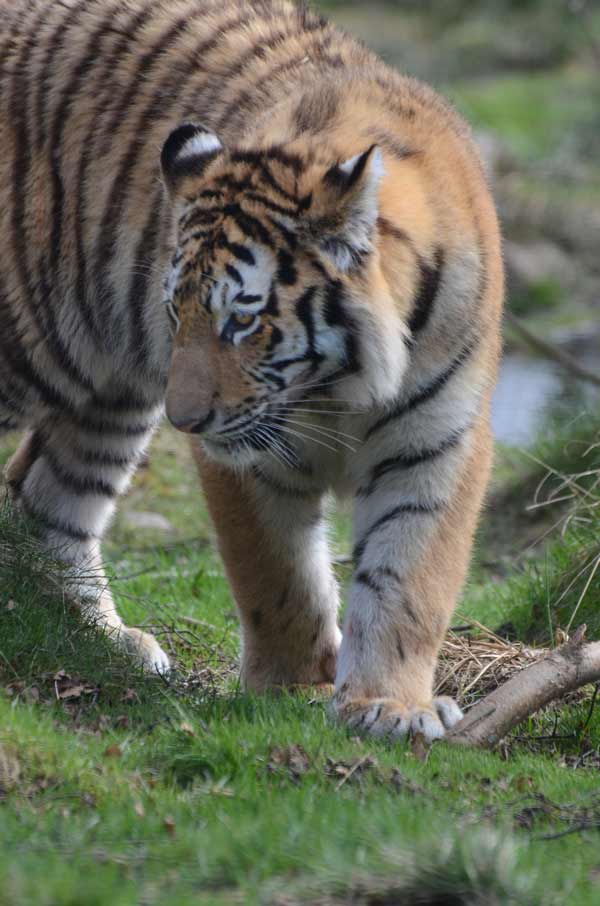
Here is one of the more spectacular animals there – a Siberian tiger.

Or rather it was known as the Siberian tiger until the last of them disappeared from Siberia in the 1990s, and is now known as the Amur tiger.

For me it is still the Siberian tiger because it seems wrong to rob the animal of its name along with its habitat. Ah well…

Japanese Macaques In The Highland Wildlife Park

japanese-macaques
The Park is also home to a troop of Japanese macaques, otherwise known as Snow monkeys.

They live all over Japan, and because the climate there can be anything from freezing to sub-tropical, they have learned to adapt to a wide range of temperatures.

You may have seen photos of them bathing in hot springs in Japan.

Bison In The Highland Wildlife Park
bison

bison

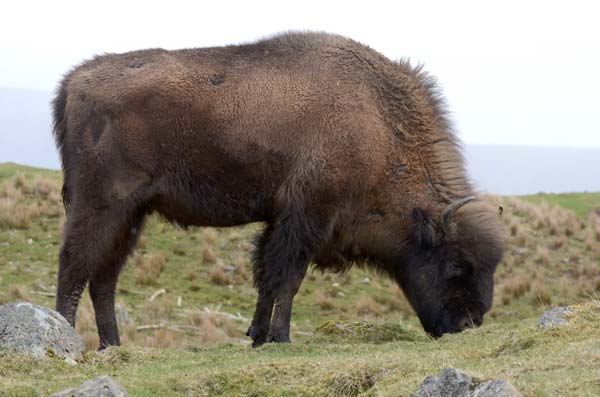
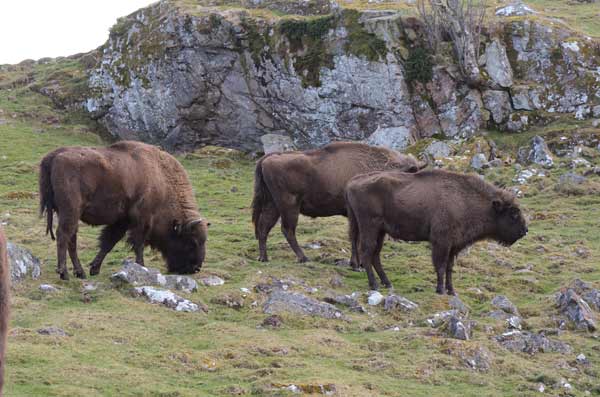
Which leads me back to where I started, because the the Park is home to a herd of bison.

I watched the bison eating and they seemed to be nibbling the grass, but it was difficult to tell from a distance.

The warden at the park didn’t know but he texted me later to say that the consensus among the staff was that bison twist and pull the grass to eat it.

Cattle Versus Sheep

The reason I wanted to know how bison eat is because of something that Westerns taught me, which is that there were powerful forces at play in the opening up of the West.

The coming of the railroad, the fencing in of the open ranges, agriculture, cattle ranching, and that notorious animal – the sheep.

The range wars between cattle ranchers and sheep ranchers was a war of survival because of the difference in the way that cows and sheep eat.

Cattle twist their tongues around grass and pull and tear it to eat it. Sheep, on the other hand, simply nibble grass.

The problem is that sheep will nibble grass to a fine sward. That means is that whilst sheep can eat where cattle have grazed, cattle can’t eat the grass where sheep have been.

At least they can eat until the grass grows long enough again for them to wrap their tongues around.

So the cattle ranchers saw the sheep ranchers as enemies, robbing their cattle of land upon which to graze.

So when I saw the bison at the Highland Wildlife Park, I had to know whether they nibbled or whether they twist and pull the grass to eat it.

After all, if they nibbled, then that would have been another reason for wiping out the herds to make way for cattle.

But no, the herds of buffalo / bison were wiped out for other reasons.

How Do They Get So Big?

Like cattle, bison fill their stomachs and then go off to ruminate. That is, they regurgitate the grass and re-digest it to get the maximum nutrition out of it.

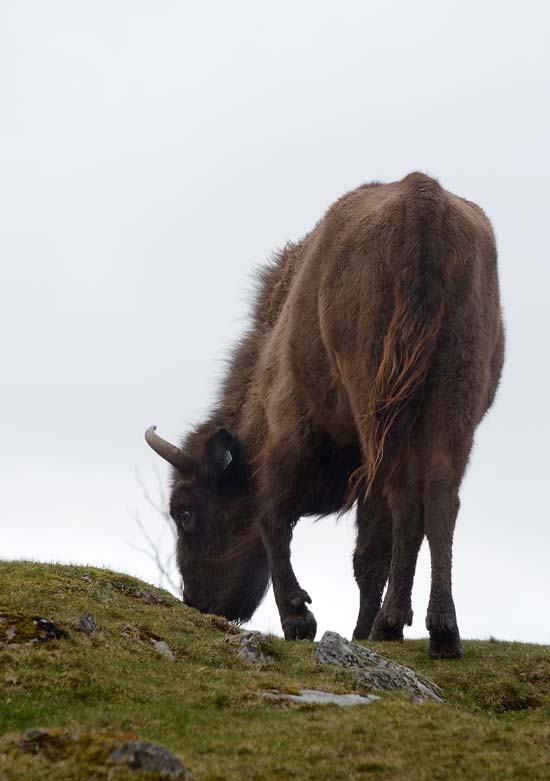
Despite this capacity for re-digesting food, it amazes Tamara that animals like the bison can grow so big on a diet of grass.

And I have to say, grass + calf = bison hardly seems possible, does it?
young-bison

Oystercatcher In The Car Park

As a final note, this oystercatcher was nesting in the car park of the Highland Wildlife Park. There were cars and people passing by all around it and it just sat patiently.

The park ranger told me that it was now the fourth year that it had returned to the same spot to hatch its young.

oystercatcher-in-the-cairngorms-highland-wildlife-park

Top Facts About The National Museum Of Scotland

national gallery of scotland in edinburgh

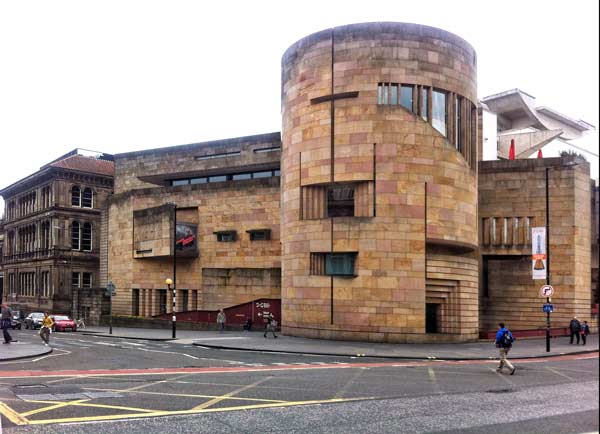
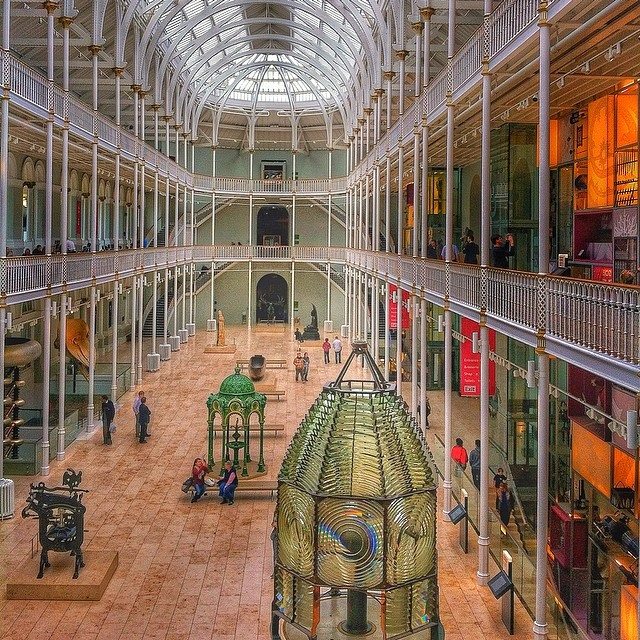
This is a view of the main gallery of the National Museum Of Scotland in Edinburgh. As you can see, the building is very light and airy.

In fact, it is so light and airy that it limits what can be put on display.

That’s because when it was designed in 1861, no one knew the deleterious effects of sunlight on exhibits. But today, of course, we do.

So when the museum was renovated in the 1990s, the designers were faced with a choice.

The choice was either to preserve the light and airy appearance of the building and limit what was on display – or to roof in the building to lower the light levels so that more exhibits could be displayed.

And the building won.

And rightly so, because the building has become a museum piece in its own right.

The Origin Of The Design Of The Building

The building is loosely modelled on Crystal Palace in London – the building that was the temporary venue for the 1851 Great Exhibition.

The 1851 ‘Great Exhibition of the Works of Industry of all Nations’, to give it its full title, was designed to show the power of man to forge and form the world to his design.

And the United Kingdom as the greatest imperial power, was in the middle of a love affair with its conquest of the material world.

And this ‘new’ design principle shows in the architecture of the National Museum of Scotland in Edinburgh.

Francis Fowke

The architect of the National Museum of Scotland was Francis Fowke, who took his inspiration from the design of Crystal Palace in London.

Fowke was just 42 when he died, but he left his mark on an amazing number of buildings including the Royal Albert Hall, parts of the Victoria and Albert Museum, and the Natural History Museum – all in London – and the National Gallery of Ireland in Dublin.

Crystal Palace

As a side note, Crystal Palace was built in Hyde Park in London to house the Great Exhibition. It was built with a glass roof and glass walls around a cast iron structure – hence ‘crystal’ palace.

It was never intended to remain permanently in Hyde Park and in 1854 it was moved to a new site in south London.

The exhibits from the Great Exhibition were then moved to the Victoria and Albert Museum (V&A) in London, which was built in 1857 specifically to house the exhibits from the Great Exhibition.

And so things continued until Crystal Palace burned to the ground in 1936.

The Architecture Of The National Museum Of Scotland

From the outside, the building has a stone-clad facade typical of Edinburgh architecture.

It is the interior with its tall, slim cast iron columns and a glass roof that reflected Victorian pride in the conquest of new materials.

Unfortunately, cast iron rots. So when the museum was renovated n the 1990s some of the columns were replaced with stainless steel. They are all painted, so you can’t tell which are which by looking.

In The National Museum Of Scotland

Among the exhibits on view we can see in the photograph a whale’s skull just to the left of the two people standing talking on the ground floor.

And just up from that is a section of the particle accelerator that was used at Edinburgh University in the 1950s and 60s to break atoms apart.

In the foreground is the glass lens from the Inchkeith lighthouse in the Firth Of Forth, in use until the 1980s.

And up on the first floor on the left is the all-important cafe.

There is a lot more to the museum off to the right of what you can see in the photograph and also behind the camera, as it were.

The light levels in the other rooms are low to protect the exhibits, and stepping from the main galleries into those rooms, they seem even darker until your vision adjusts itself.

Tamara and I have seen some terrific exhibitions here in the past two years. Viking ornaments, mammoths, and Egyptian mummies, to name just three. They have been wonderfully curated and are true educational experiences.

So if you are in planning to be in Edinburgh, find out what is on – you are not going to be disappointed with the exhibitions the museum puts on.

What’s In A Name

The museum can vie with the best for the number of names it has had throughout its history.

It started life as the The Industrial Museum Of Scotland. A decade later it was renamed as the The Museum Of Science and Art, only to be renamed as the Royal Scottish Museum in 1904.

With reorganisation in the 1980s it was amalgamated with the National Museum Of Antiquities (then housed in the National Portrait Gallery) and renamed the National Museums of Scotland (note the ‘s’).

Then in 1998 the new Museum Of Scotland opened next door to the National Museum.

This is the new building – purposely built to look like a defensive fortification. And to the left of the frame you can see part of the National Museum.

Museum Of Scotland in Edinburgh

Then in 2011 the Museum of Scotland was knocked through to connect to the National Museum and the whole museum was renamed yet again – this time as The National Museum Of Scotland.

If you look up Scottish museums on the Web, you will see them collectively described as ‘National Museums Scotland’. Note the missing ‘of’ and the additional ‘s’ to differentiate the collection from the National Museum of Scotland…

Yes, it is all very confusing and quite homely and appealing.

Correction 23 March 2016

My thanks to Donnie McCathie of of National Museums Scotland who points out that contrary to what I said in this article before this correction – National Museums Scotland does not include the two buildings of the Modern Art Museum on the edge of the city.

They are in fact part of National Galleries Scotland.

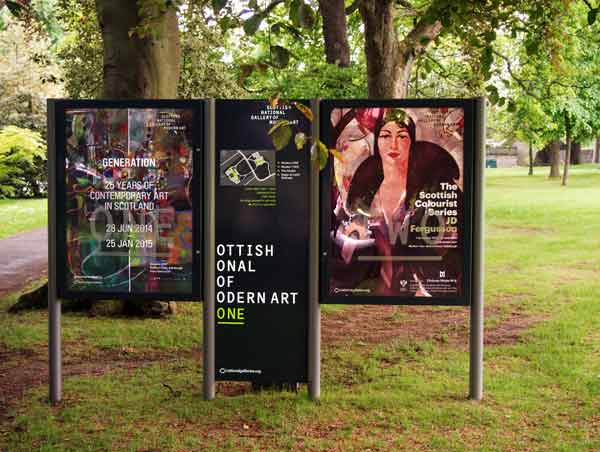
That said, I will keep the image of the signage for the Modern Art Museums here in this article because the signs are so quixotic:

modern-art-museum-sign-edinburgh

The ‘ottish onal of odern art one’ wording is not an error. This is the sign for The Scottish National Gallery Of Modern Art One.

Modern Art Two is across the road, with its corresponding half of the complete sign.

It makes perfect sense for a modern art museum to break the rules, but I wonder what foreign visitors make of it?

Why Mother’s Day Was The Time To Go Home

03103

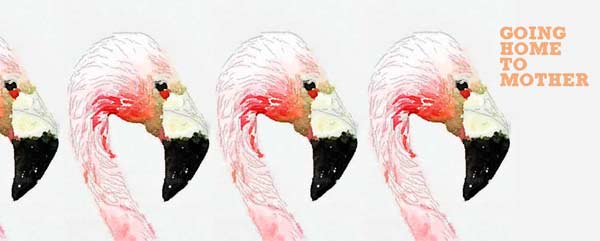
This ecard is from our Mother’s Day range. It’s one of eleven ecards in our Mother’s Day ecards range.

A similar version is also available as a Mother’s Day Card (as in a card you can send by snail mail or hand to someone) on our sister site at Flying Twigs. Please note that the link will open in a new tab.

Mother’s Day Reminders Everywhere

If you’re in the UK, you will have been seeing reminders everywhere that it is Mother’s Day this Sunday, March 30th.

Every department store has been advertising gifts for Mother’s Day – and the color pink has been predominant.

It’s a day when dutiful sons and daughters send cards to their mothers. If they live close by, then traditionally they will visit their mothers with gifts of flowers and chocolate.

Get on a bus this Sunday and you are as likely as not to see one or two people with big bunches of flowers, and perhaps a wrapped parcel under their arms. And you can be sure that they are going to see their mothers.

The custom of Mother’s Day has got a strong hold on the consciousness and conscience of people.

After all, when is it not right to celebrate all that our mothers have done for us?

The True Origin Of Mothering Sunday

Stepping back one or two generations ago, you were as likely to hear an older name for Mother’s Day – which is Mothering Sunday.

Whichever name you heard, you would know it was a traditional holiday… a day for appreciating mothers.

So it may come as a surprise to learn that the ‘mother’ in question was originally the mother church, the home church, the church in one’s town or village.

And the tradition came about because it was young people who came home to their mother church on Mothering Sunday… young people who worked away from home as domestic servants.

going-home-to-mother

Years Of Hardship, Days Of Freedom

For hundreds of years in England it was the tradition that young people in domestic service were allowed home on the fourth church day (Sunday) of Lent.

Why would domestic servants be allowed home on this day?

The answer comes from what Lent is all about.

The word Lent comes from ‘laetare’ meaning joyful. And in the Christian calendar Lent is a forty-day period of introspection, repentance, self-denial, and of acts of kindness.

So it was perhaps only natural that the masters and mistresses of grand houses and estates would feel obliged to give their domestic servants the day off to attend church in their home village.

It must have made the masters and mistresses feel good to grant the day off to their servants, and the servants must have been very grateful (note the ironic tone).

The End Of The First World War

The First World War scythed through the younger generation – domestic servants and young masters alike. The grand houses and estates did not survive the war.

Some of the most prestigious estates hung on, but over the next decades domestic service shrivelled away.

But Mother’s Day sailed through the carnage and the trauma – and the religious holiday and the joy of seeing parents became intertwined in Mothering Sunday or Mother’s Day.

Why Mother’s Day Isn’t On The Same Date Every Year

One vestige of the religious connection that continues in the UK is that Mother’s Day is not on the same day each year.

Perhaps you remember that Mother’s Day was earlier in the year last year? And you’d be correct.

Last year in the UK, Mother’s Day was on the 10th of March.

This year is falls on the 30th of March.

In 2015 it will be on the 15th of March.

The reason it ‘moves’ from year to year is that it is on the same day as Mothering Sunday… and the year in question is the religious liturgical year.

Our year is based on the sun’s cycle but in the liturgical year, the date of Easter is calculated from the moon’s cycle as well as the sun’s cycle.

And because Lent is connected to Easter, so Mothering Sunday moves from year to year.

What Mothers Know

Does your mother know the origin of Mothering Sunday, and why the date moves from year to year?

Far Away From Home?

Maybe you’re far away from home and can’t get to see your mother to say Happy Mother’s Day personally? Well, we have just the solution.

We have a collection of eleven Mother’s Day ecards. Of course, with flowers being ‘the thing to send’ on Mother’s Day, we also have 42 flower ecards – all of which are a delight.

So if you want to send a high-class ecard to your mother, hop over and check out our latest Mother’s Day Ecards