Saint Petersburg Diary – Part Five – Tsarskoye Selo

It’s day thirteen of our holiday in Saint Petersburg, and we take a taxi to Tsarskoye Selo (Tsar’s Village), fifteen miles outside the city.

The countryside outside Saint Petersburg is nice – not an industrial nightmare. Some of the blocks of flats on the outskirts of Saint Petersburg are very big, and grey, but that is not unusual anywhere in the world.

Historical note: In 1918, Tsarskoye Selo was renamed Detskoye Selo (Children’s Village) by the Bolsheviks. In 1937 its name was changed again. This time it was changed to Pushkin to commemorate the centenary of the poet’s death.

That said, the guide books mention Tsarskoye Selo and everyone seemed to know Tsarskoye Selo and where it is.

Peter the Great gave the palace as a present to his future Empress Catherine I in 1708.

Some present.

The palace is so big it beggars the eyes. How to take in and grasp the size of this long, long building in pastel blue with gold domes? It makes Buckingham Palace in London look like a shed.

It is hot, and the queues to go inside the palace are long. We decide not to spend an afternoon queuing, and instead we walk in the gardens, amid trees and to the Grotto pavilion next to the lake in the grounds.

As small as the pavilion is compared to the palace, we decide it would make a nice pad to spend the summer.

We go to the outdoor cafe (also in the grounds) and we eat bits of this and that, and then ice cream.

Later, I get talking to a Korean man. He has a Fuji camera and we get talking. We exchange stories of comments we had received before we came – from people who had asked ‘Why would you want to go to Russia?’

To get back to Saint Petersburg we had arranged to meet our taxi on the street at a certain point and I photographed the spot so that we could find it when we came out of the palace grounds. I see that the photo captures the look of the town.

Coming back into Saint Peterburg in the taxi, I take a photo through the window and have a satisfying feeling of it being good to be back in the city.

Travelling In Andalusia – Part One

Andalusia

We went travelling in Andalusia a couple of months ago, in the Republica de Andalucìa, the Andalusian autonomous community that covers a large chunk of southern Spain – the green area in the map.

Seville

We landed in Seville. The city is doing well. It’s the capital of Andalusia and it’s a lovely city – the architecture is varied and rich, with some lovely buildings. Here’s a view through an archway onto the Plaza de San Francisco in Seville.

Christopher Columbus

The influence of Christopher Columbus on the city is huge. Originally, Cadiz was the port and centre for goods coming from the New World. But the coastline retreated and Cadiz was too exposed, so Seville took over, and the city became one of the foremost and richest in Europe.

Christopher Columbus’ sarcophagus is in the cathedral in Seville. According to DNA analysis, only twenty percent of the remains in the sarcophagus are his, probably because his body was moved more than once before its final resting place.

Horse And Carriage

Yes, we took a ride with a horse and carriage – a long trot around town, taking in the sites and meandering through the Parque de María Luisa. That’s the cathedral in the background of the photo.

Real Alcazar

Just across the square from the cathedral there is the Alcazar. It’s wonderful. What a complex of buildings and beauty – dynasties of Moorish influence followed by the stamp of Catholic Spain. Where the cathedral is huge and dark with tall, imposing columns – the Alcazar is light and airy and leads on and on like a mini-city within the city, with plazas, reflecting pools, and buildings leading this way and that.

The Modern Art Museum

The museum is way out of town and the photo at the top of this article gives you an idea of what it is about. It’s kind of weird, with not very good art scattered around the buildings. This ‘giant Alice’ was the best thing there.

Plaza de España

I’ll continue with Part II with our stay in Cordoba, but for the moment – here is a photo that just came out right. It’s a view through an archway in the Plaza de España in the Parque de María Luisa.

The Plaza de España was built in 1928 for the Ibero-American Exposition of 1929. It was bad timing because of the worldwide stock market crash, and it cost the city money it could ill afford.

It is all in red brick and strangely un-Iberian, and slap in the middle of the plaza there’s a canal with little boats you can paddle around in, as though in the Venice of an alternative world.

Saint Petersburg Diary – Part Four

We are well into our time in Saint Petersburg and walk the streets like old hands.

We want to see the Impressionist and Post-Impressionist paintings in the General Staff Building, which is part of the Hermitage. But which part? We have to ask.

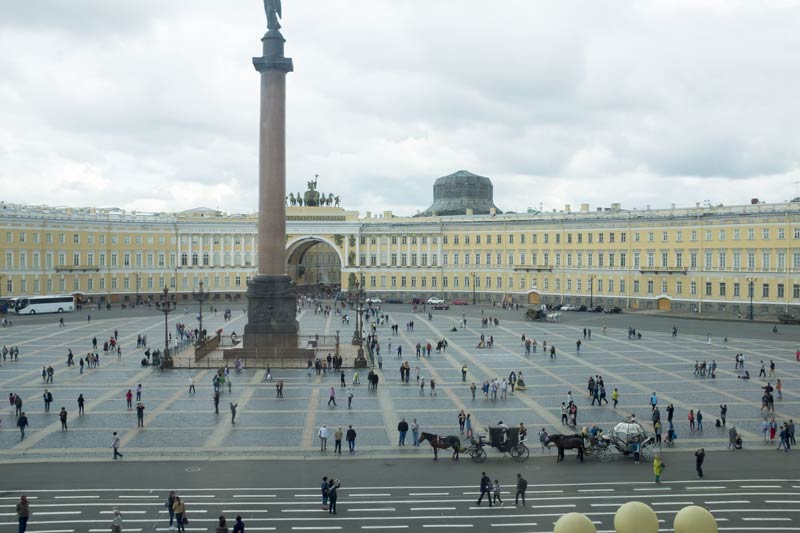
We arrive at the huge open space in front of the Hermitage and buy hot corn on the cob from a street stall.

Then we walk across the Square and follow the road towards the river and ask. People are very friendly and helpful. They look on the their phones and they ask their colleagues. No one knows.

the-square-in-front-of-the-Hermitage

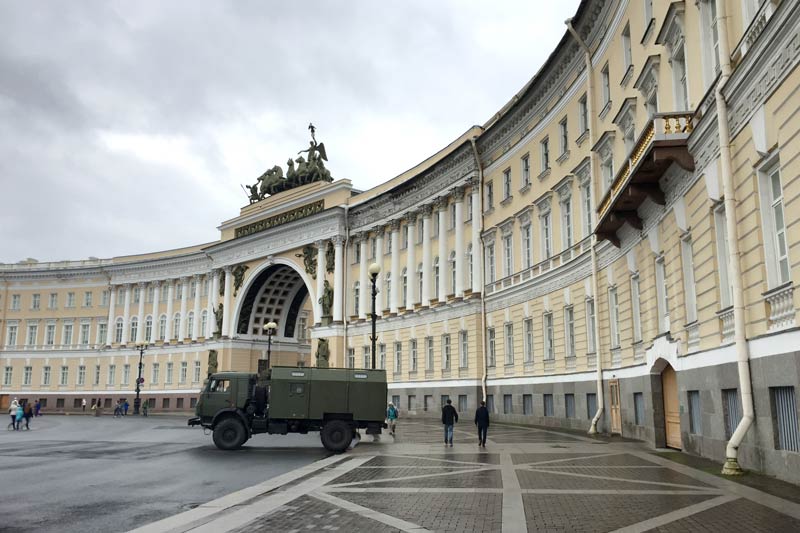
Eventually we find out it is the yellow-painted, curve of a building across the Square from the Winter Palace. We smile, realising we had stood next to this building earlier when we bought the corn on the cob.

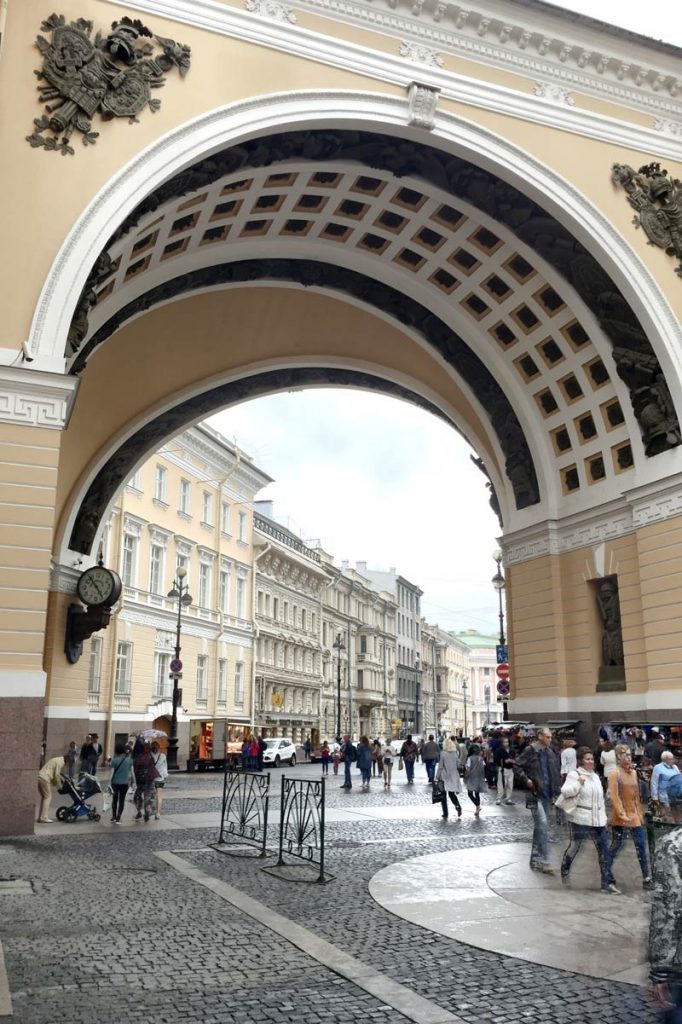
Even now we cannot find the entrance. We walk through the arch to a door but it is not the right one. We ask again. It is back around the corner on the inner curve of the building, two doors down.

At last.

Note for anyone reading this: The entrance is to the left of the archway on the inside of the curve.

The General Staff Building

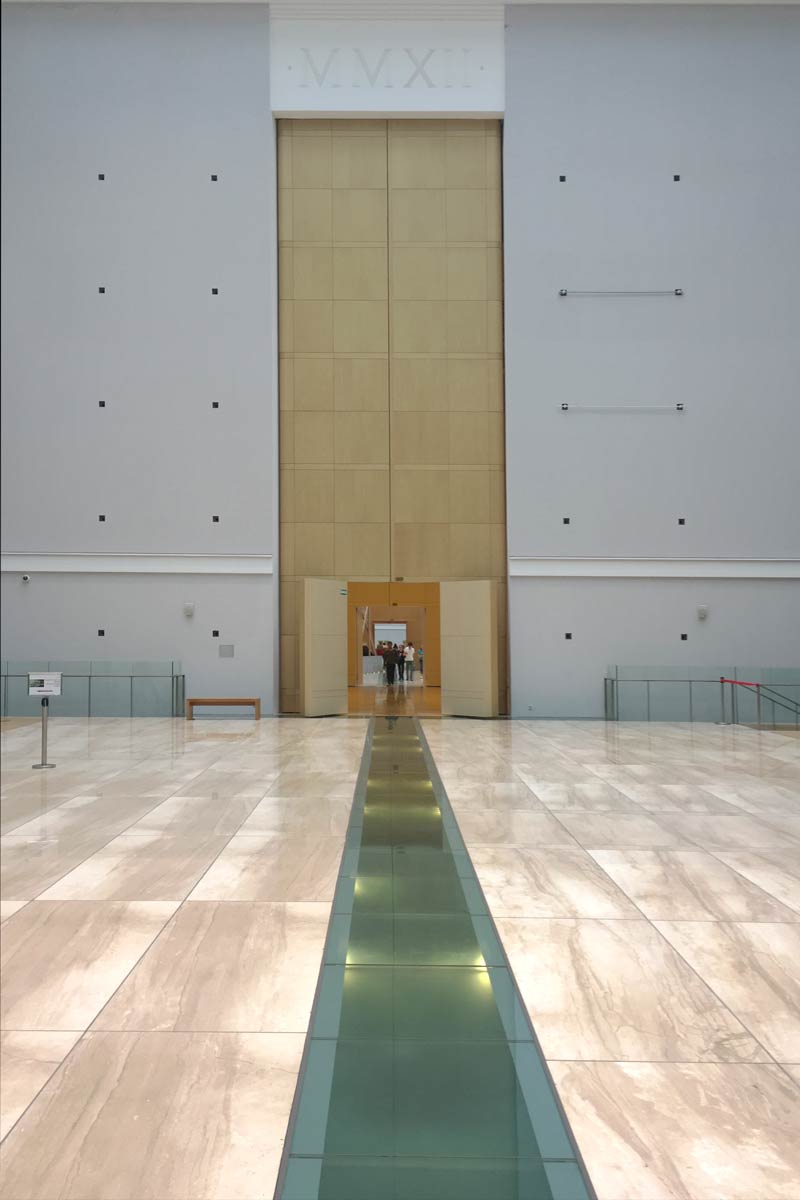
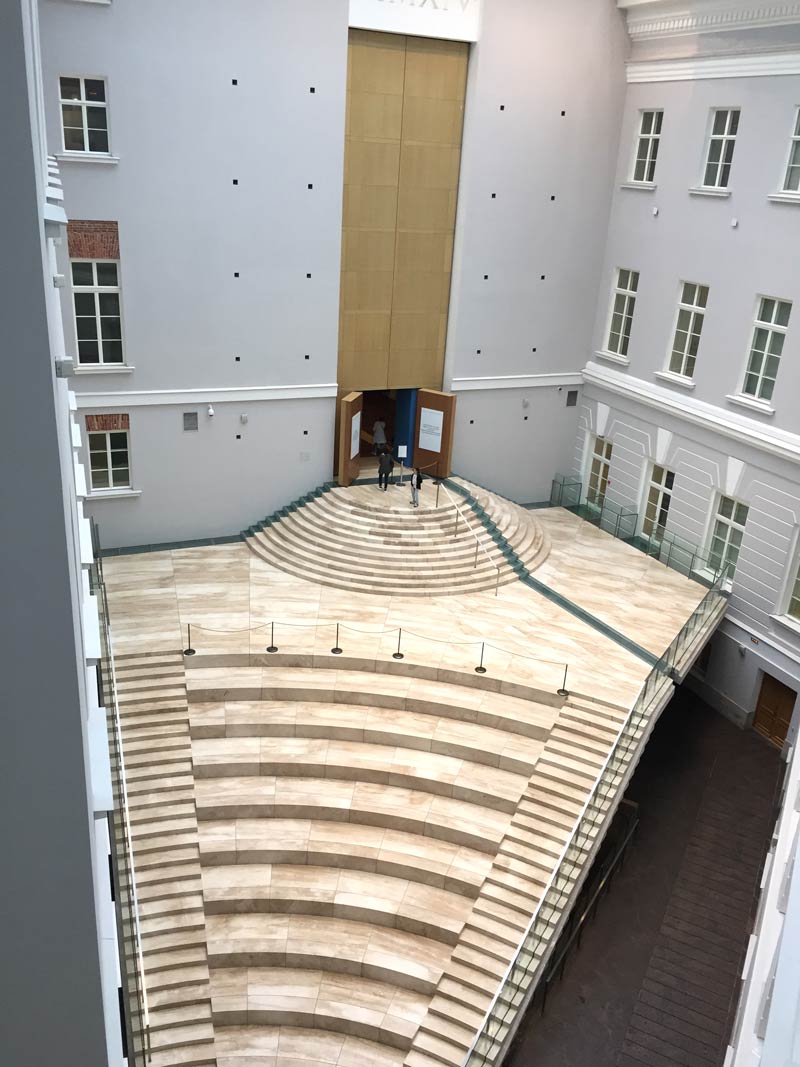
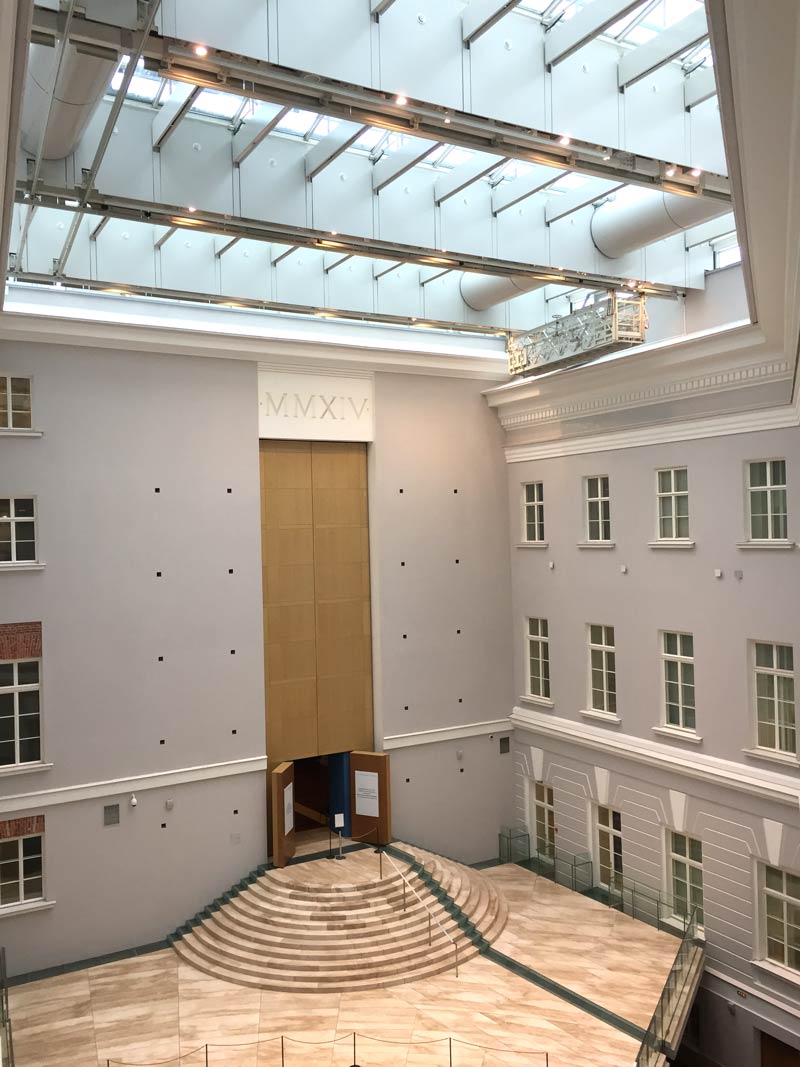
The lower floors are strange, huge, (huge!) empty rooms with nothing on the walls. And they lead out onto an other-worldly space linked by a bridge.

space in the General Staff Building at the hermitage in saint Petersburg

space in the General Staff Building at the hermitage in saint Petersburg

space in the General Staff Building at the hermitage in saint Petersburg

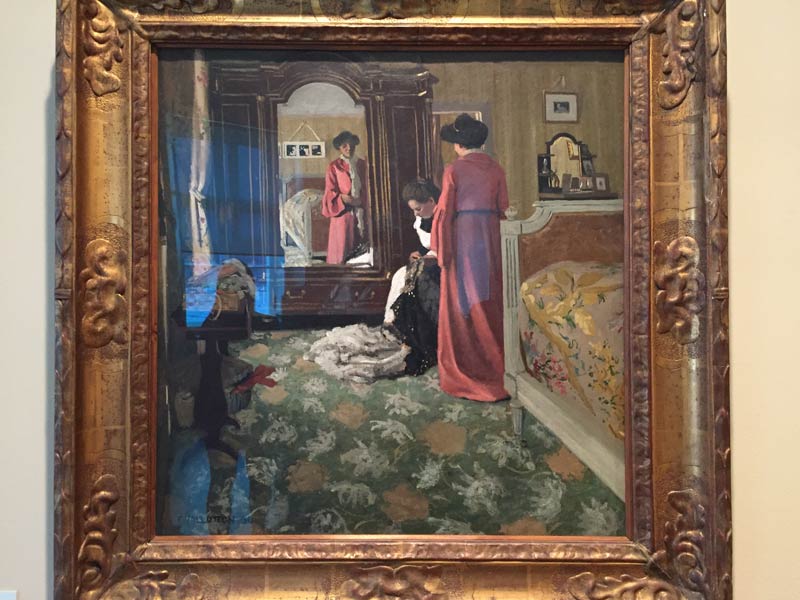
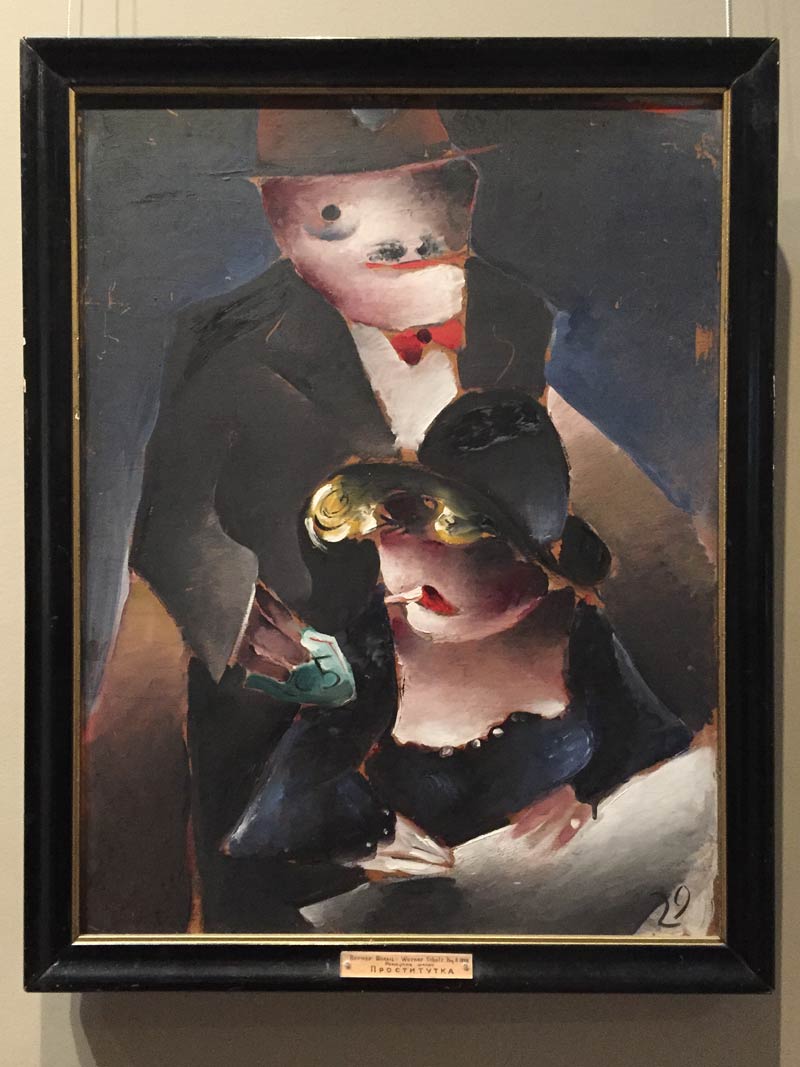
The good stuff is on the fourth floor. It is well worth it, with beautifully hung paintings with plenty of light – and wonderful painters. There are some we know and some we do not know. This is not a place for a one-time visit. It is a place to come back to again and again. It is a fine collection.

Werner scholz

In The Cafe

The rain sweeps across the Square between the General Staff Building and the Winter Palace. We sit in the cafe of the General Staff building. It is set low down, a bit below ground level, with windows looking onto the Square. We have a low-level view of people struggling with umbrellas across the empty space dominated by the column and the Winter Palace.

It is the only bad weather of the trip – but we are snug in this strange, foreign cafe while the rain pelts down.

We wonder what the ground of the Square was like in the days when the buildings were first built. Perhaps it was a green open space with a track for carriages, or a sea of mud on days like this.