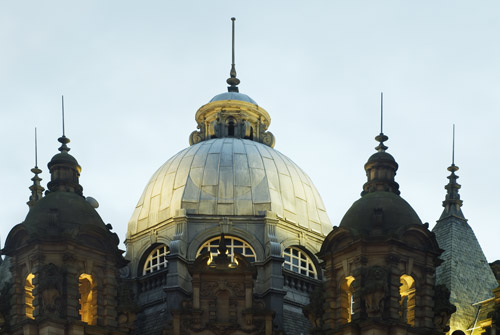
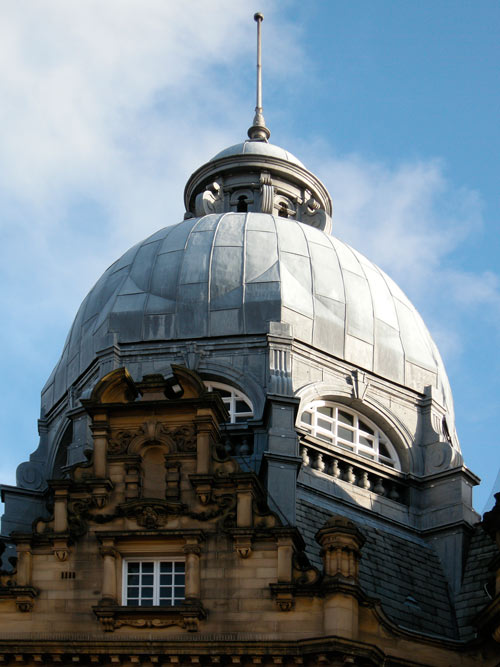
‘Rembrandt’ or ‘chiaroscuro’ lighting accentuates the focal point of the composition by bathing it in light and surrounding the focal point by darker recesses. The Italian word ‘chiaroscuro’ means light and dark, and the alternative name of ‘Rembrandt’ lighting comes from the fact that he created that lighting effect in a lot of his paintings and may be the finest artist to have used the technique.
The contrast between light and dark areas also accentuates the three-dimensional appearance of the subject.
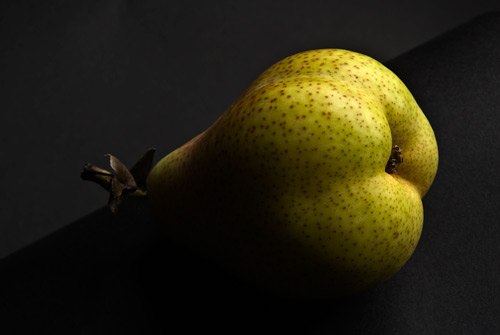
In photography the chiaroscuro lighting effect is straightforward to achieve with window light, because window light is directional. In the northern hemisphere the ideal window is one that faces north, away from the direction of the sun, because the light is less contrasty.
But if the subject is placed very near the window, the light fall-off may be too rapid because light always falls off most rapidly nearest the light source and there is a dramatic decrease in the intensity of the light with each step back into the shadows.
Whereas if the subject is placed well into the room, say twenty feet from the window, and is then moved another foot further away from the window, the fall off of light caused by moving that small extra distance from the light source isn’t great because the light has already spent its power penetrating that first twenty feet.
While placing a subject close to a light source can be very atmospheric, it may be too much for the film or camera sensor to deal with. And yet there may be too little contrast and too little light if the subject is placed deeper into the room.
A common way to overcome this problem is to place the subject near the window and use a reflector to bounce light back into its darker side and so reduce the contrast across it.
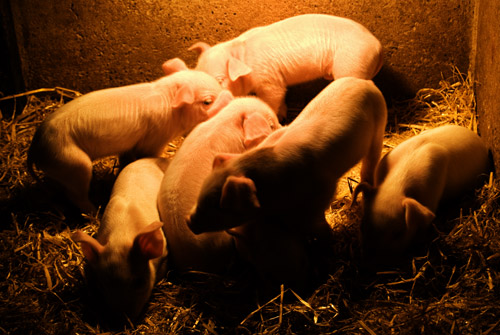
But that’s not all that Rembrandt lighting is, because he used it to color the scene to create mood. And I thought of that when I looked at the image of young piglets under the heat lamp at a local farm. It was very dark in the shed and although I propped my elbows on the side of the stall, I knew the shot would probably be blurred and therefore useless to make a large print, but at this size it doesn’t show too much and the lighting on the piglets in the half shadow reminds me of how chiaroscuro lighting was used to mould the human body in classical compositions.
You can send distinctive ecards featuring our photographs by Joining Quillcards.