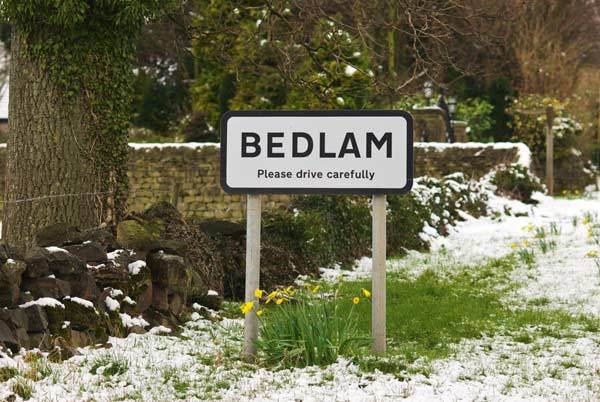
This is a sign to tell visitors that they are entering Bedlam.
No, it is not Bedlam as in a scene of uproar and mass confusion or madness.
And it is not Bedlam as in the world’s oldest hospital (Bethlem Royal Hospital in London) that specialises in the treatment of the mentally ill… although it is from the name of that hospital that the word ‘bedlam’ is derived.
And indeed it is not the small hamlet of Bedlam in Shropshire in England.
It is in fact as the entrance to the small village of Bedlam in the county of North Yorkshire in England.
Take the road out of Harrogate and travel north, deep into the countryside and you will find it.
The name probably comes from Old English or Norse and means ‘at the buildings’.
So no bedlam in Bedlam, but the ‘Please drive carefully’ beneath the name on the road sign always makes us smile when we pass through the village.
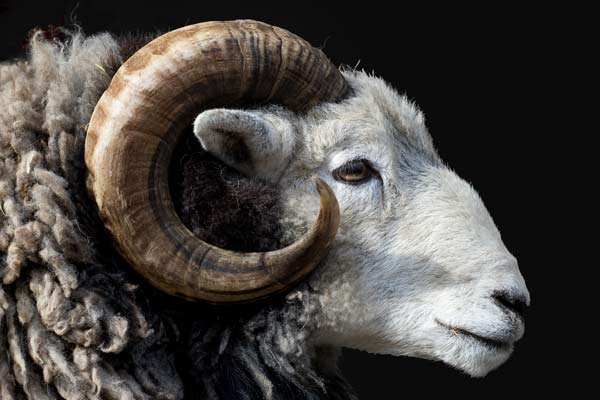
Our Photo Of A Herdwick Ram – Also A Quillcards Ecard
The Wool House Exhibition At Somerset House
At the beginning of this year, Melissa Watts of Maud Designs approached us to ask whether she could use our image of a Herdwick ram as the model for a wool ‘art work’ that she wanted to make.
She explained that she had been approached by The Campaign for Wool. They invited her to make a piece to follow up on the ‘Elizabeth II’ piece she had made for the Wool House the year before.
Melissa said she hoped the art work would be chosen to be displayed at the Wool House exhibition to be held in Somerset House in London.
We said she could use our image upon which to base her hand-stiched design. And we sent her a large version of the Herdwick photo for her to use.
Melissa said thought that there would be approximately 250 hours work involved, and over one-third of a million hand stitches (!), and asked us to wish her luck.
Hard Work And Success
After she had made the art work, Melissa confided jokingly that it almost killed her. She said that we didn’t want to know how many hours a day she had to work on it!
The Wool House exhibition was held in March this year and the introduction to the exhibition states:
The Campaign for Wool is excited to announce WOOL HOUSE: the world’s biggest ever celebration of Wool, taking place from the 13th to the 24th of March in London’s historic Somerset House.
Prince Charles – Give Fleece A Chance
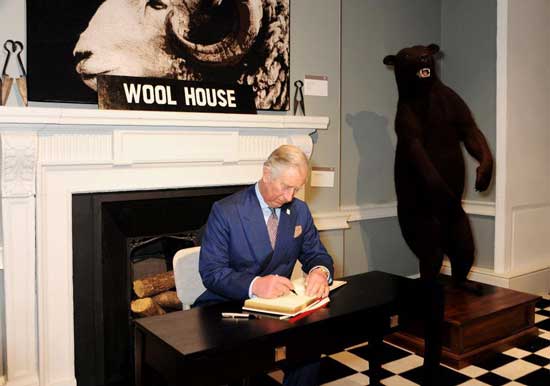
Prince Charles, His Royal Highness The Prince of Wales is the patron of the Campaign for Wool, which is why he was there at Somerset House for the exhibition.
The Campaign for Wool is a global community of sheep farmers, retailers, designers, manufacturers and wool lovers. They are working to promote the benefits of wool to a modern audience who have lost touch with the benefits of this natural material.
HRH Prince Charles has made this catchy video supporting wool and the Campaign for Wool.
Center Stage At The Wool House
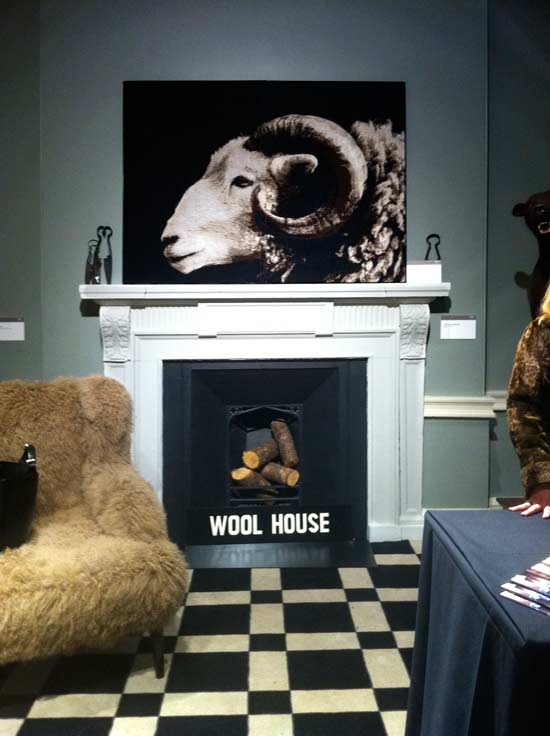
We are pleased that Melissa’s finished design of our image of a Herdwick sheep was center stage in the exhibition.
Here it is on the mantelpiece and here is Prince Charles signing the commemorative ledger bringing the exhibition to a close.
Herdwick Art Work At The Wool House Exhibition at Somerset House
Prince Charles At The Campaign For Wool Exhibition
Melissa Gets Her Art Work Ready In Time
Melissa told us that she was lucky to finally finish in time for the event, and that she had to make an entrance late in the evening on opening night – that’s how close she was to not finishing on time.
She made the ram bigger than she first thought, and the final design is 160 x 120 cm (63 x 47 inches).
She added some extra background for bulk, named the ram Relentless, and asked whether we liked him.
Needless to say, we do like him and we think Melissa is very talented. She is also tremendously committed to have brought the project through to such a lovely conclusion.
So it was lovely to hear from her that everyone at the exhibition loved the ram!
Herdwick Sheep
You can read more about the Beatrix Potter’s role in saving the Herdwick breed of sheep in Beatrix Potter’s Affable Animals here on this blog.
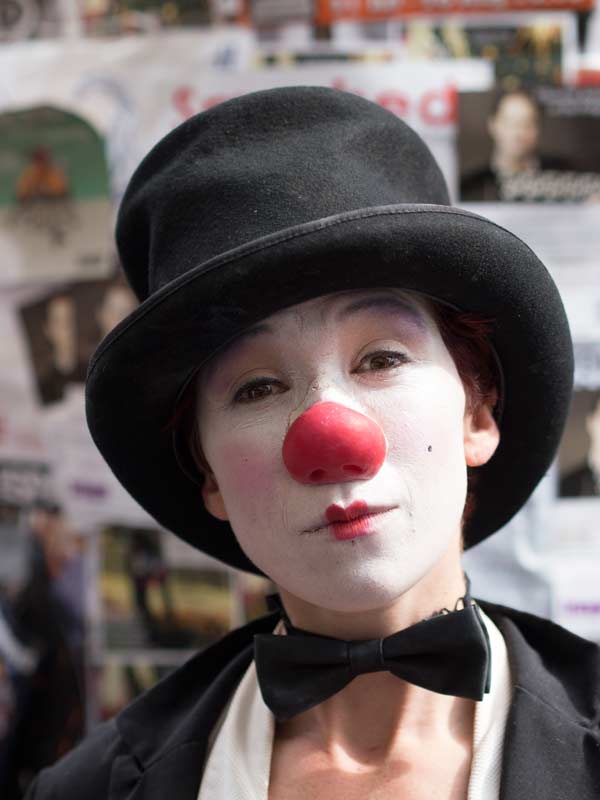
She’s five foot nothing (all sizes are approximate) and clowns in her raggedy costume, reminiscent of Charlie Chaplin and Marcel Marceau.
When I stopped her on the Royal Mile to take her photo, she posed and then gave me her card. It says Dott Cotton – International Idiot.
“Dott Cotton?,” I quizzed in my best loud, incredulous, rising falsetto East London accent.
Meanwhile I was thinking – Dott with two ‘t’s? That must be to make sure there is no confusion with Dot Cotton, the fictional character from the TV soap EastEnders.
“Dott Cotton?” (rising falsetto East London accent again).
“Easy to remember,” she said with a wink and a smile.
“I’m a street performer and I’m also in The Greatest Liar In The World at the Fringe.” Sounds intriguing…
The Greatest Liar In The World: A darkly funny sequel to the story of Pinocchio: the carnival is breathing its last breath and with it so is The Liar. Tired of his lies, he hijacks the performance at gunpoint to tell the real story of his infamous origins.
Gordon Highlanders
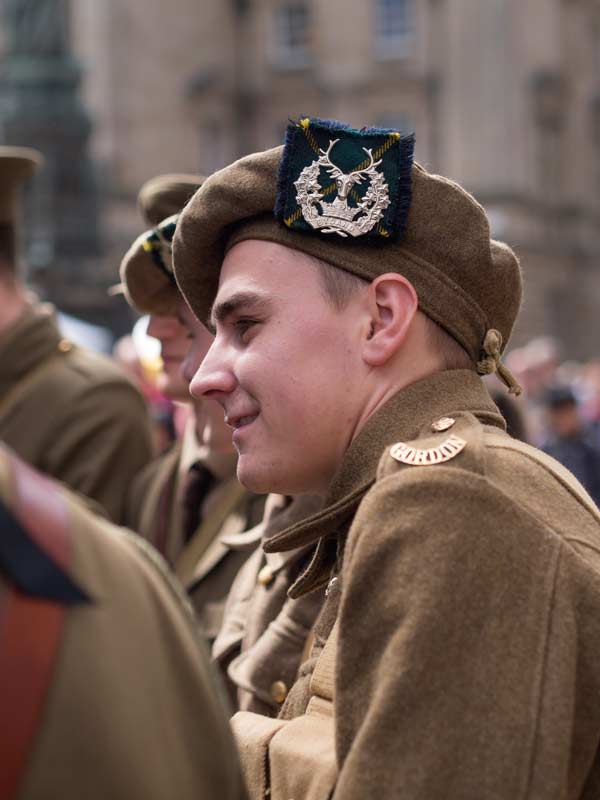
In the swish and swirl on the Royal Mile, I didn’t work out which of the characters were from a play and which were the members of the Gordon Highlanders re-enactment group who had been invited along to add colour to the day.
Gordon Highlanders
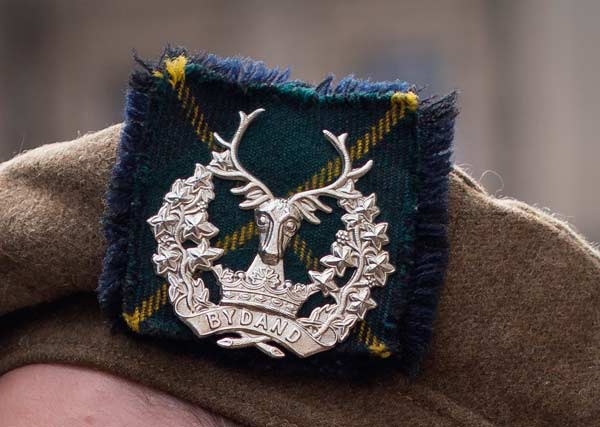
I’m pretty sure this is one of the re-enactment players because his shoulder insignia and his cap badge with the tartan and the motto ‘bydand’ (steadfast) are accurate.
Bydand – Gordon Highlanders
The Gordon Highlanders regiment dates back to the 1880s and soldiers were recruited principally from Aberdeen and the North-East of Scotland.
According to the Regimental Museum archive, of the 50,000 men who served in the regular, territorial and service battalions during the First World War, 27,000 men were killed or wounded.
Assigning men from one village or one small town to the same regiment happened many times in the First War.
It was a mistake that caused immeasurable grief when thousands were killed in one day on the battlefield, with the loss of every man in a village back home.
Even though I took this photo a few days ago, there was something about this man’s smile that took my right to the imagined world of comradeship in the heady days of the beginning of the First World War.
Superhero Snail Boy
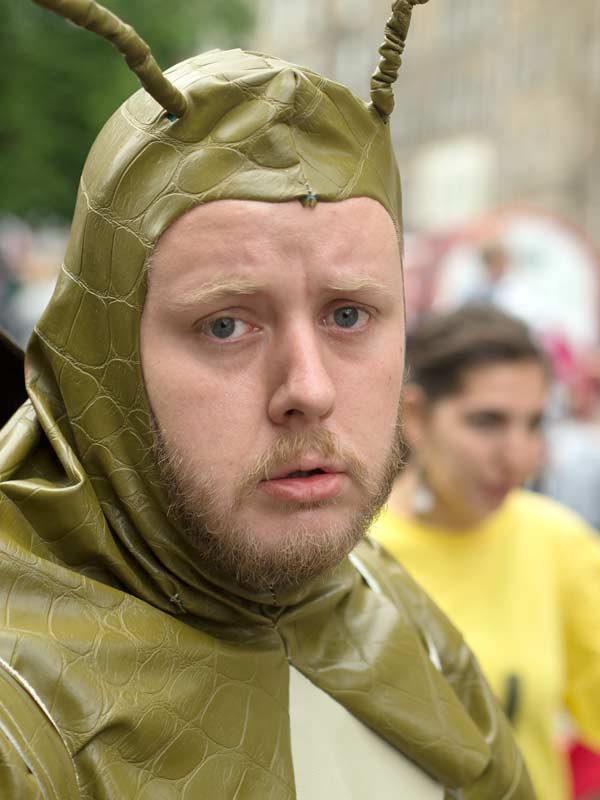
I concentrated on his face when I took the shot because he he looked so sad, so mournful, so hard done by.
He had a giant snail’s shell attached to his back, but with a long lens on my camera, it was the expression in his face or the shell, but not both.
Superhero Snail Boy shows that even the smallest of superheroes can grow to be bigger than their fears. In a place where hope grows in the form of enormous flowers and breakthroughs are found in the smashing of plates, parents are parented by the wisdom of the young and solace is sought from a giant snail.
Edfringe: Superhero Snail Boy
I Know Not Who This Is
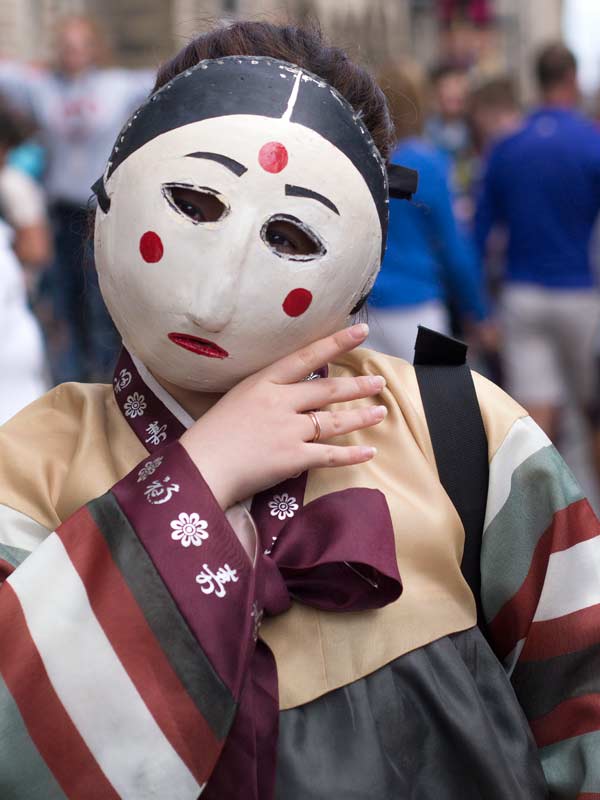
She and her fellow actors were heading up the Royal Mile. She was the last in the line and I asked to take her photo and she obliged. But by then the others were further ahead, and I hadn’t the heart to ask her to tell me the name of the troupe and where she was performing, and how to spell the words, and….
So we smiled and off she went. And I know not who this is.