‘Rembrandt Lighting’ In Photography

‘Rembrandt’ or ‘chiaroscuro’ lighting accentuates the focal point of the composition by bathing it in light and surrounding the focal point by darker recesses. The Italian word ‘chiaroscuro’ means light and dark, and the alternative name of ‘Rembrandt’ lighting comes from the fact that he created that lighting effect in a lot of his paintings and may be the finest artist to have used the technique.

The contrast between light and dark areas also accentuates the three-dimensional appearance of the subject.
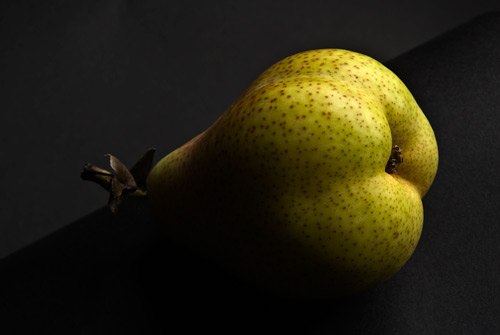
 

chiaroscuro or Rembrant lighting on a pear
Chiaroscuro or 'Rembrandt' Lighting On A Pear

 
In photography the chiaroscuro lighting effect is straightforward to achieve with window light, because window light is directional. In the northern hemisphere the ideal window is one that faces north, away from the direction of the sun, because the light is less contrasty.

But if the subject is placed very near the window, the light fall-off may be too rapid because light always falls off most rapidly nearest the light source and there is a dramatic decrease in the intensity of the light with each step back into the shadows.

Whereas if the subject is placed well into the room, say twenty feet from the window, and is then moved another foot further away from the window, the fall off of light caused by moving that small extra distance from the light source isn’t great because the light has already spent its power penetrating that first twenty feet.

While placing a subject close to a light source can be very atmospheric, it may be too much for the film or camera sensor to deal with. And yet there may be too little contrast and too little light if the subject is placed deeper into the room.

A common way to overcome this problem is to place the subject near the window and use a reflector to bounce light back into its darker side and so reduce the contrast across it.

But that’s not all that Rembrandt lighting is, because he used it to color the scene to create mood. And I thought of that when I looked at the image of young piglets under the heat lamp at a local farm. It was very dark in the shed and although I propped my elbows on the side of the stall, I knew the shot would probably be blurred and therefore useless to make a large print, but at this size it doesn’t show too much and the lighting on the piglets in the half shadow reminds me of how chiaroscuro lighting was used to mould the human body in classical compositions.
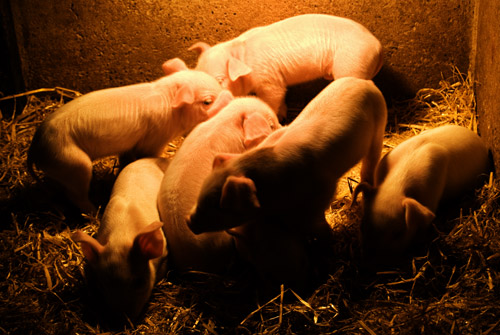
 
piglets

You can send distinctive ecards featuring our photographs by Joining Quillcards.

William Blake: Sedition In Chichester

William Blake, poet, visionary, painter, and printer, moved from London at the age of forty three to a cottage in the village of Felpham outside Chichester on the south coast of England.

By train today it takes approximately two hours to travel from Chichester to London. The journey is made slightly longer than it otherwise might because of the route the rail line takes to navigate the river that runs to the sea to the east of Chichester.

In Blake’s day, Chichester must have been the best part of a day’s travel from London.
 

William Blake’s Cottage in Felpham

blakes-cottage

Blake was born in 1757 in Soho in the heart of London, and except for his four years in Felpham lived in London all his life.

Blake Develops the Printing Technique of Relief Etching
As an artist he is, of course, known for the way his powerful visual imagination shone through his utopian vision. What is less well known is that in the late 1780s he developed his own printing technique known as relief etching – a technique that subsequently became important in commercial printing.

Unlike most engraving techniques that create the image by filling the page with the engraver’s marks, Blake’s method left large areas of the paper untouched, to be subsequently hand-colored. It involved an etching process that etched away the majority of the plate, leaving the parts to be inked standing proud, or in relief – hence ‘relief etching’. And Blake and his wife hand-colored the prints.

In the early 1780s Blake’s work had attracted the attention of one of the founders of the National Gallery. Blake’s reputation increased and he opened a print shop and began working with the publisher Joseph Johnson.

Social Justice
Blake was a well-known supporter of social justice and that included the right of women to take a full and equal place in marriage and in society.

So it was only natural that he met and mixed with some of the leading intellectual dissidents of the period, from Thomas Paine to John Henry Fuseli to William Wordsworth, all of whom met at Joseph Johnson’s house.

Felpham
But in 1800 Blake moved to Felpham, a small village in Sussex, far away geographically and in its ambience from the intellectual stimulus of the people he had mixed with in London. He began work on illustrations for Ballads founded on Anecdotes of Animals by Wiliam Hayley of Chichester and worked on his own poem Milton.

Sedition
Then in 1803 Blake was tried in Chichester Assizes for sedition – for uttering words aimed at upsetting the established order. He had found a soldier relieving himself in his garden, and was charged with making seditious remarks about the King and the army. In the event, he was acquitted, principally on the unreliability of the testimony of the soldier.

What motivated Blake to exchange London for a rural existence in the first place? Did he go to Sussex only to work on the illustrations for Hayley’s book? Could he not have worked with Hayley at a distance, traveling to meetings when needed?

Felpham is pretty, even today. And it’s easy to see how Blake would have liked the rural scenery. What is less clear is why he would have left the intellectual stimulation of his friends in London. In any event, within a year of his acquittal Blake returned to London to live, and stayed there until his death in 1827 at the age of seventy.

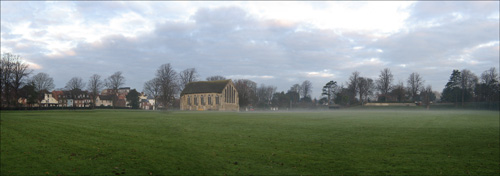
Chichester Assizes court was housed in one of the buildings that formerly formed part of the Priory that dated back to the early Medieval period. Today the building is empty save for a few museum pieces and sits atmospherically in a park in the center of Chichester.
 

Chichester Priory

chichester_priory

Check out the ecards featuring our photographs here at Quillcards.

Tulips From Kirkgate Market in Leeds

The flower sellers in Kirkgate market in Leeds sell fresh cut flowers and pot plants. They set out the cut flowers and bouquets in buckets that spread over the stalls and the ground in front of them in a swathe of color.

The color is not set out randomly, but rather it is sculpted in lines of blues and pinks and yellows that thread their way across the stalls.
 

Pink Tulips

tulips

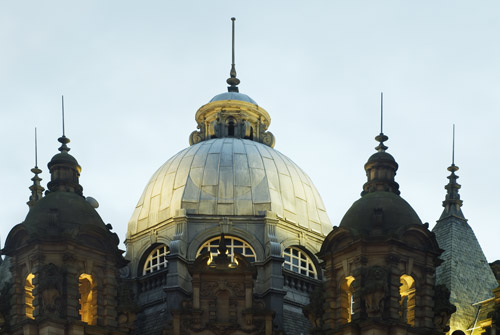
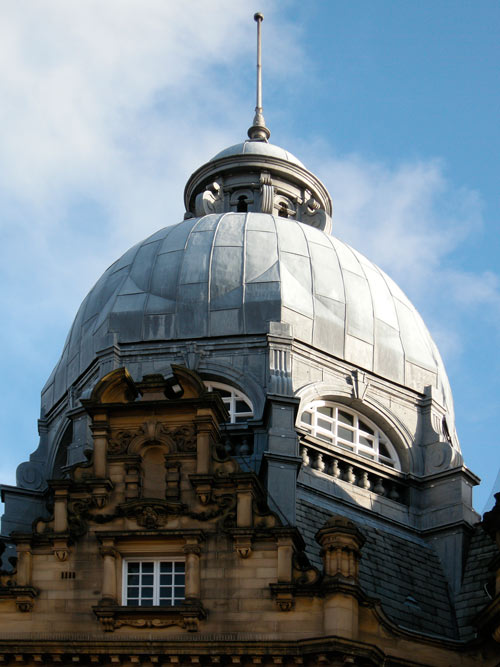
Following the destruction of the Central Market eleven years earlier, a design competition was held, which the Leeming brothers won, and the new Kirkgate market opened in 1904. It’s crowning glory is its roof with many cupolas fringing the walls of the building.
 
kirkgate_market_2
 
kirkgate_market

You can send distinctive ecards featuring our photographs by Joining Quillcards.