Nikon D700 and Nikon D60: Comparing Image Quality

This is a semi-technical article, comparing the image quality of the Nikon D700 and the Nikon D60 in controlled lighting conditions.

If you don’t want to plough through the details, the cropped images from the two cameras are at the end of this article – take a look and let me know what you think.

Why We Are Interested In Cameras At Quillcards
All the photographs for the ecards here at Quillcards are ours and unique to this site. That means that we have more than a passing interest in cameras. As always, it is a balance between cost, weight, image quality, ruggedness, and ease of use.
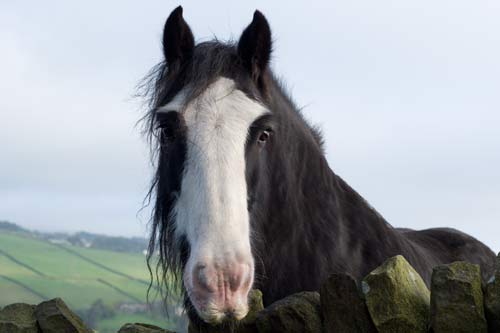
From 'The Friendly Horse' Series

Cameras We Have Used
The cameras we have used are the Nikon D200, The Nikon P5100, the Nikon D60, and more recently – the Nikon D700.

The P5100 is a high-end compact camera that is able to make high-quality photographs, provided the overall contrast of the scene is not too great and it is well and evenly lit. The others are digital Single Lens Reflex cameras.

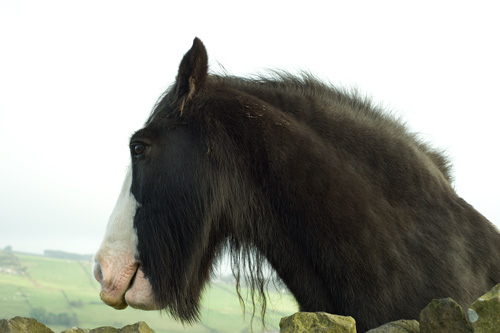
There is no question in my mind that when looking at photographs taken with the D700, they are the most pleasing to the eye. Take, for example, the photo above from the series shot for The Friendly Horse article on this blog.

The superior image quality of the D700 is due to a number of factors, including the dynamic range the camera is capable of containing and the way the processor translates the signal into color and tonal gradations.

So here are the photographs of a flower taken with the Nikon D700 and the D60. You may be able to see differences in the images. To see the differences properly however, one has to see either large size printed photographs or 100% crops on screen – hence the crops at the end of this article.


Nikon D700
Nikon D700
Nikon D60
Nikon D60

It is not a big surprise that the D700 outperforms the other cameras. It is the latest incarnation of a line of cameras that have been building on the qualities of the ones that came before. What we have now with the D700 is a camera that is in a class of its own at high ISO, being virtually noise-free at ISO 1600.

The greater dynamic range of the D700 means it should cope with high-contrast scenes better than the D60 does. That has been my experience.

A Controlled Scene
However, I thought it would be instructive to see how the two cameras dealt with a controlled scene.

By ‘controlled’ I mean where the overall contrast across the scene from the lightest to the darkest point is not too great and where the micro contrast – the contrast between adjacent parts of the scene – is also not too great.

Of course, the Nikon D700 has a full-frame sensor, whereas D60 has a smaller APC size sensor. This means that the angle of view of the D60 is smaller.

However, the Nikon 35mm AF-S f1.8 lens on a Nikon D60 ‘sees’ more or less the same view as a Nikon 50mm f1.8 on the Nikon D700.

The Test
So I set both cameras on a tripod at aperture priority at f8. I set the D700 at ISO 200 and the D60 at ISO 100 as these are the lowest base ISO settings for the two cameras.

In order to control the light, I chose a scene lit by window light diffused through a large translucent shade.

I photographed a flower because – in my opinion – natural objects are better subjects than man-made images for showing the capability of a camera to capture images faithfully.

I produced the best image I could from each RAW file. That involved moving the exposure slider a little more in Camera Raw for the D60 because it underexposed the image slightly, but apart from that the settings for both images were the same.

The Results
The D60 set a shutter speed of 5/10 of a second while the D700 set a shutter speed of 4/10 of a second. As the ISO of the D700 was twice that of the D60, one could say that the shutter speed of the D700 ‘should’ have been half that of the D60, or vice versa.

However, the view of the scene varied slightly between the two camera-lens combinations. This is because the multiplier factor of the D60 is 1.5, and that means the equivalent focal length of the 35mm lens is 52.5mm – slightly different from the angle of view of the 50mm lens on the D700.

Therefore there is more of the white background in the scene ‘seen’ by one camera compared to the other, which could affect how it sees the scene in terms of how much exposure it needs.

I could have set the exposure compensation in the camera, but I decided to set both cameras to the same settings (apart from base ISO) and make any changes post capture, in Photoshop.

So here are the crops of the central area of the image.

Nikon D700 Crop
Nikon D700 Crop
Nikon D60 Crop
Nikon D60 Crop

What do you think? What difference can you see in the scene as rendered by the two cameras?

We’re changing the look of ecard communications.
Take A Look At Our Ecards.

Clocking Sunshine: Why We ‘Spring Forward, Fall Back’

The Fading Of The Light

It’s that time of the year again when clocks have been set back and darkness now descends early in the evening – and gone is the lovely daylight that buoyed our spirits throughout the long-lit summer evenings.

Human Conventions And The Sun

So how did this convention of human beings setting back time ever occur in the first place?

Benjamin Franklin on Time

The Flexible Hour of Ancient Rome

The idea of adapting to daylight hours was first practiced in ancient times there was a form of daylight savings in ancient Rome.

They achieved this through a form of flexible hour in which they chopped the daylight into the same number of units in the summer and the winter.

Therefore, each unit or ‘hour’ was longer in the summer and shorter in the winter and so it would get dark at the same ‘hour’ in summer and winter.

Even to this day, some monasteries use such unequal hours.

Benjamin Franklin Admonishes the Parisians

As you can glean from the quotation in the Quillcards ecard at the beginning of this article, Benjamin Franklin valued time greatly.

And so it was centuries later in 1784 that he revived the concept of flexible, daylight hours in his playful essay on daylight saving which he submitted anonymously to the editors of The Journal Of Paris.

His satire proposed waking the Parisians by ringing church bells and firing cannons at sunrise. In addition, he suggested that shutters that kept out the sunshine should be taxed and that candles should be rationed.

The Value of Sunlight

Franklin even detailed for the six months between the 20th of March and the 20th of September the number of nights, hours, inhabitants, candles, and monetary expense that “the city of Paris might save every year, by the economy of using sunshine instead of candles.”

Franklin never proposed anything like our daylight savings time, however. Like ancient Rome, the society of France during the 18th century did not keep precise schedules.

The Effect Of The Steam Engine and Timetables

At the beginning of the 19th century, however, the first steam engine was invented which led to modern railroads, trains, and timetables.

This in turn led to the need for a standardization of time that was unnecessary in earlier centuries.

Hats Off To the New Zealander George Vernon Hudson

Towards the end of the 19th century in 1895, modern DST (‘Daylight Standard Time’, also known in England as British ‘summer time’) was first proposed by a New Zealand entomologist named George Vernon Hudson.

Hudson did shift work, and this gave him time on his own to collect insects – and made him acutely conscious of the value of after-hours daylight.

This awareness led to his 1895 paper presented to the Wellington Philosophical Society proposing a two-hour daylight-saving shift. Due to the considerable interest that this paper generated, he wrote another paper three years later on the topic.

William Willett, The Indefatigable English Campaigner

Many sources incorrectly credit a prominent English builder named William Willett with the invention of DST.

However, Willett was a great lover of the outdoors and he was indeed an indefatigable campaigner on its behalf.

Willett was an avid golfer who hated cutting his games short at dusk. Then one day in 1905 when he was out for a ride before breakfast, he noticed that so many Londoners weren’t up and that instead they slept through what he considered a large part of a summer day.

Willett’s ‘The Waste of Daylight’

Two years later, Willett proposed his solution to this problem through his pamphlet entitled ‘The Waste of Daylight’ in which he suggested advancing the summer clock by 80 minutes broken down into twenty minutes forward on successive Sundays in April; and then turning back the autumn clock by the same amount on Sundays in September.

Cutting the Energy Bills

Besides his proposal that would enable people to devote more time to outdoor recreation, Willett also figured that this plan would save about £2.5 million ($4.1 million) in lighting costs.

Big-Name Supporters In England

At the time, King Edward VII and Winston Churchill also supported the idea of DST as did the managing director of Harrods, the iconic luxury department store in London.

Still A No-Go Plan

Nevertheless, several other leading figures in Britain at that time weren’t keen on the idea and so it never came about.

Willett himself kept up his lobbying, never having seen it successfully adopted when he died in 1915.

An Interesting Aside

One can say that Willett lives on these days in one way, namely that his great-great grandson Chris Martin is the lead vocalist and primary songwriter of the band Coldplay.

The First Adoption of Our Current DST (‘Daylight Savings Time’)

Getting back to the subject of the clocking of sunshine, if Willett had lived just another year until April 1916, he would have seen the first adoption of DST by Germany and its allies as a means to conserve coal during World War One.

Other Nations Follow Suit

Britain, most of its allies, and other European neutral countries soon followed this lead, while Russia and several other countries waited until l917 to adopt the plan. In 1918, the United States joined as well.

A Controversial Human Adjustment

Since that time, DST has gone through various mutations, adjustments, and the like. The practice is controversial.

The Pros and Cons of DST

Here’s how DST stacks up on both sides of the aisle:

On one hand, adding daylight to the afternoons is beneficial for the retail sector, sports, and other activities where having sunlight after working hours is a boon. Traffic accidents and fatalities are also reduced where there are extra hours of sun.

On the other hand, the additional hours of sunlight cause problems for farmers, other occupations linked to the sun, and evening entertainment.

Neither Fish Nor Fowl

Otherwise, it is not clear what the effect of this extra daylight is on health and crime.

Furthermore, whereas an early goal of DST was to reduce the evening usage of incandescent light and light bulbs, these days the patterns and types of modern heating and cooling differ greatly so the benefits are not that clear.

Lastly, there is not much research about how DST affects energy use and it is often contradictory.

Spring Forward, Fall Back

Nevertheless, what prevails all around the world today is still the ‘spring forward, fall back’ pattern, as the mnemonic rhyme indicates: Clocks are adjusted one hour forward near the beginning of spring for DST, and then they are adjusted backwards in autumn as we have recently done once again this year.

And in readjusting our clocks this time of the year, most of us extend a wistful good-bye to those extra hours of sunlight up there in the skies that now seem to darken way too early in the day.

References:

Wikipedia
Benjamin Franklin’s Essay On Daylight Saving
The Guardian – Guide To The Night

Time Out
Time Out

The Friendly Horse and The Australian Government

We’re changing the look of ecard communications.
Take A Look At Our Distinctive Ecards.

The Friendly Horse
The Friendly Horse

He was such a placid and friendly horse. He came over and without any nervousness, smelled my hand and took the grass I held out.

Looking at him in the photograph, I thought of the word ‘Dobbin’ used to describe a placid, patient, plodding farm horse.

It turns out that Dobbin is an old word. It appears, for example, in Act II of Shakespeare’s The Merchant of Venice, when Shylock’s attendant meets with Gobbo and discovers he is his long-lost son.

Gobbo says:

… if thou be Launcelot, thou art mine own flesh and blood.
Lord worshipped might he be! what a beard hast thou
got! thou hast got more hair on thy chin than
Dobbin my fill-horse has on his tail.

Dobbin is a diminutive form of Dob, which is short for Robin or Robert.

But then ‘dob’ has another meaning. To dob means to put something down heavily or to throw something down heavily and to ‘dob in’ means to contribute towards the cost of something, for example a leaving present for a co-worker.

You can imagine someone tossing their contribution into the pot in that nice off-hand way that people do when they want to preserve their modesty and not seek to attach too much importance to their contribution.

But in Australian English, to ‘dob in’ also means to give someone up to the authorities.

I thought it was a colloquialism or something only said in casual speech, but the Department of Immigration and Citizenship of the Australian Government has a web page advertising its toll-free Immigration ‘Dob-in Line’ which you can call to advise the department about a person living in Australia illegally.

It’s nice to think that the word ‘dob’ weaves a trail from a friendly horse in a field in the north of England around the world to the Australian Government’s efforts to catch illegal aliens.

If you enjoyed this article, please consider leaving a comment. You may also wish to join Quillcards and send distinctive ecards.