The village of Haworth is set in the Pennine Hills, overlooking the Worth valley, and it is in the parsonage that the Bronte sisters wrote their most famous works, including Jane Eyre by Charlotte Bronte and Wuthering Heights by Emily Bronte.
Behind the Parsonage, which now houses the Bronte Museum, there is a field aptly named Parson’s Field.
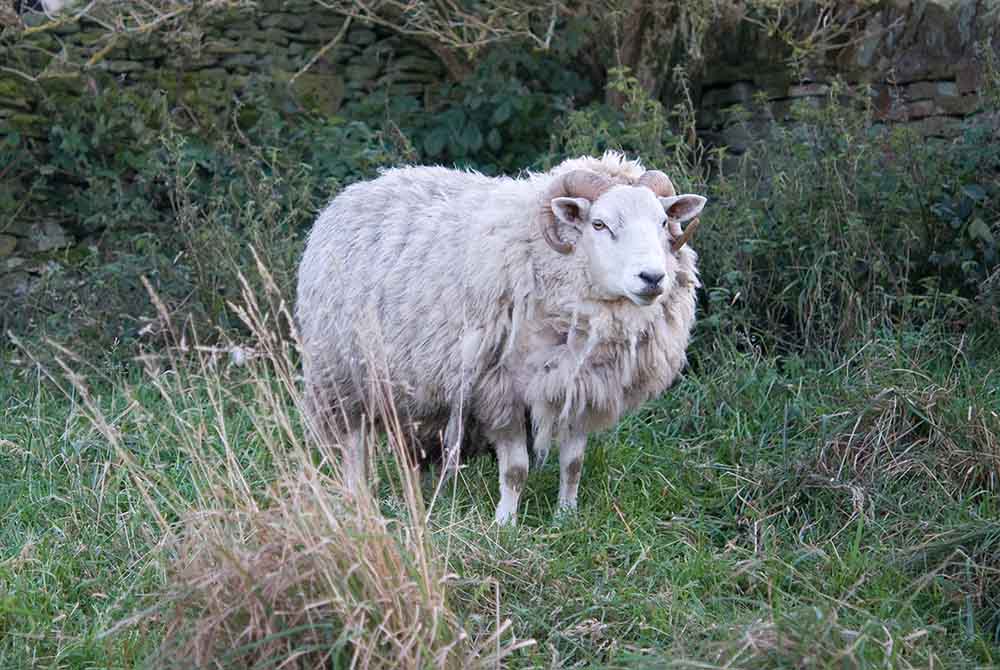
It slopes gently uphill, and as approached we saw a ram and several ewes in the top corner by the dry stone wall.
As we approached, they looked up and the ram stood at the back, side-on to me, full-coated and magnificent. The ewes looked a little spooked and one of them pawed the ground like a bull, and pulled back her lips to tell us not to come any closer.
Walking around Paris, you come across inscriptions cut into the stonework of various buildings. This inscription is at about lower chest height and testifies to the flood that Paris suffered in January 1910. The sign reads cru de la Seine, which indicates the level the waters of the river Seine reached on January 25, 1910 when the river burst its banks.
The flood or inondation raised the waters of the river Seine over 25 feet (over 8 metres) above their normal level, and not only flooded the streets but also the then newly constructed Metro – the underground railway system that now covers most of Paris.
As a side note, the metro is built very close to ground level compared to the systems in other cities. Anyone who has travelled down the subway or underground escalators in Washington D.C. or London or Moscow or Lyon knows how long they are and how far down into the earth they travel.
Not so with the Paris metro, where the stations are often just a hop down down a couple of short flights of stairs.
Quillcards, the subscription ecard service that started life in 2007, is no more. The code was simply too old. It worked flawlessly for years, but in December last year the subscription module started to behave erratically, and the user database stopped recognising users. Finally, the website crashed and was impossible to resurrect.
For any subscriber who might wonder about security, the failure was a failure of the code and nothing was accessed from outside. After the site crashed and was impossible to fix, we deleted and destroyed everything.
Seventeen years – from 2007 to 2024 – is an amazing run for a website using the same code throughout.
For those that didn’t get a chance to use it, the service enabled users to log in to the website, choose an image from the built-in image library, write as much as a long letter, and send a unique link winging on its way. The recipient clicked the link and viewed the ecard on the website. And the sender received an email confirmation when the recipient viewed the card.
A perfect loop that everyone liked.
So the end of Quillcards is the end of an era. And we would like to thank the people over the years who enjoyed using Quillcards and told us how pleasant and appealing it was to use.
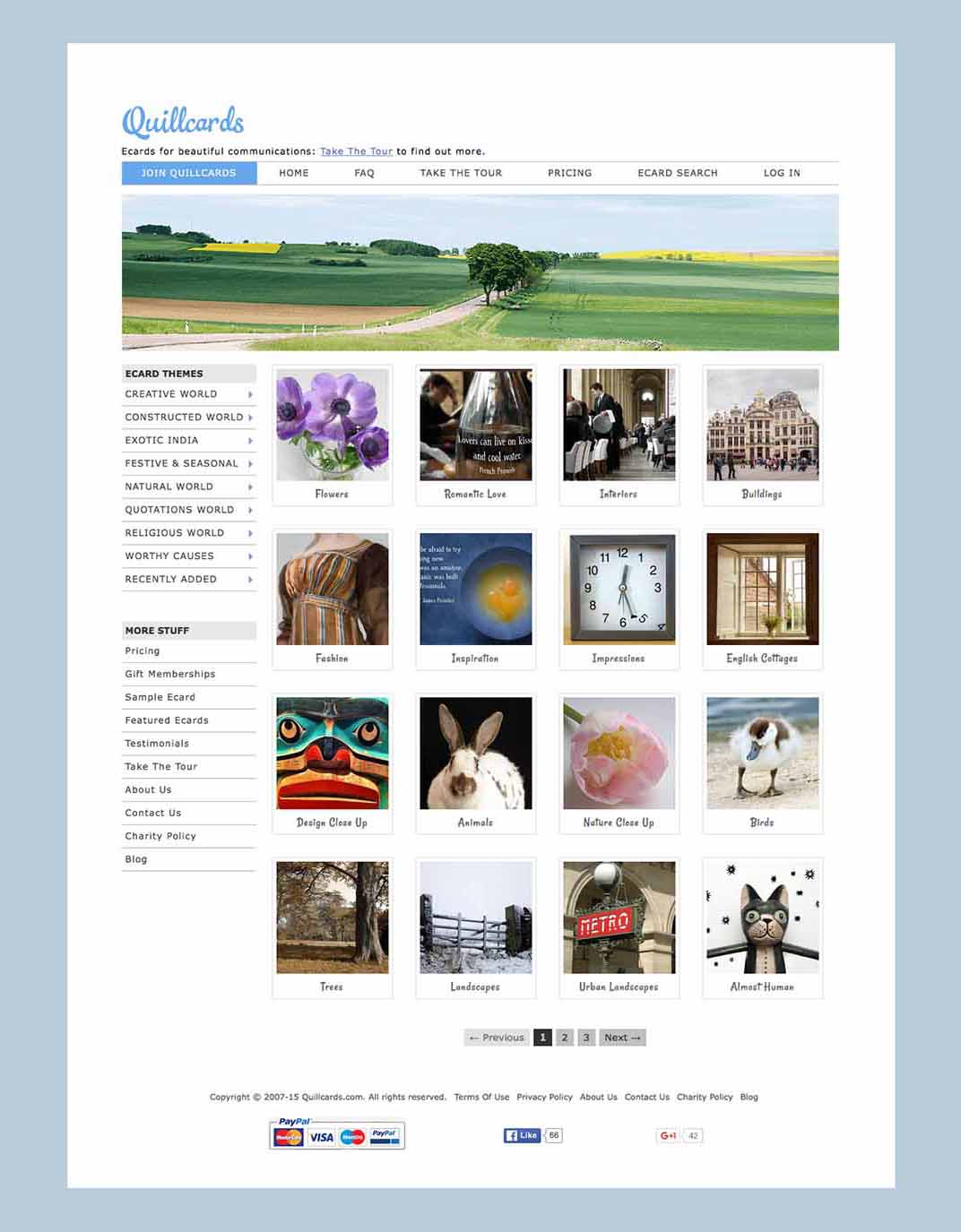
It may be that we will get it rebuilt. If so, you will learn about that here. Pending that, here is a screenshot of what the website homepage looked like. If we do get the Quillcards ecard service rebuilt it will be more modern because web design and code has moved on and continues to do so.
The Quillcards Blog
Boy, did we have fun with that. A lot of the posts came from our travels – from India to Austria – and several from the Edinburgh Fringe Festival from when we lived in Edinburgh. We both authored pieces and luckily we downloaded the texts and at least some of the images before the site crashed.
And while it is not a perfect reproduction of the originals, you can find posts on Quillcards.info where we put them to keep them from being lost in the sands of time – posts like this one about a woman with the stage name Bendy, who entertained the crowds on the streets of Edinburgh when she passed unstrung tennis rackets down her body.