I Spy Modern Art In Edinburgh

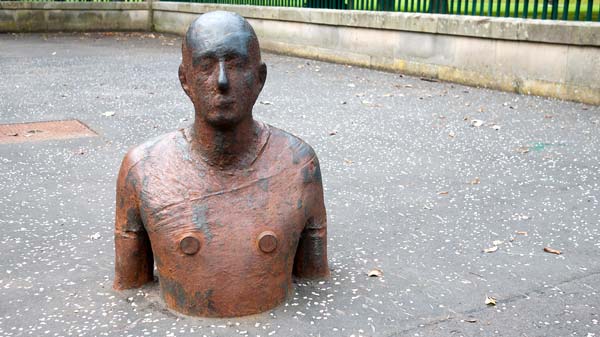
Antony Gormley Man Half Underground

A Short Walk To The Gallery

Here in the west end of Edinburgh where we are staying during the Edinburgh Festival, it is only a short walk to the Scottish National Gallery Of Modern Art.

This statue by Antony Gormley of a man half underground is at the pedestrian entrance to the gallery.

Or rather, it is at the pedestrian entrance to half of the gallery.That is because the gallery is in two halves.

Each half of the gallery is housed in a grand building set in its own grounds with the two galleries separated by a road.

The first time we visited – by car – we dithered whether to turn left into one half of the gallery or right into the other half.

I am sure there is the germ of an idea there for a new gallery exhibit – a video of visitors nonplussed in the middle of the road, lights winking in indecision.
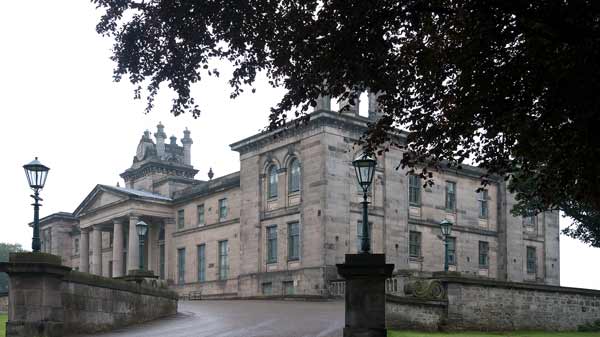
Scottish National Gallery Of Modern Art - Dean Gallery

One half of the Scottish National Gallery Of Modern Art was formerly known as the Dean Gallery. It’s name was very recently changed to Gallery Two, but there are still ‘Dean Gallery’ signs everywhere (more confusion).

Those Cold, Clammy Staircases

Gallery Two or The Dean Gallery is a former orphanage, and the staircases at either end of the building are dark and clammy with stone-cold steps and iron railings.

Because of that, I can’t help but wonder what the building felt like to the children to whom it was home before the building was transformed into a gallery and filled with art.

The gallery is home to a fine collection of woodblock prints including a number of prints by the Japanese artist, Hiroshige.

I used to own a book entitled Masters Of The Japanese Print (I wonder where that has gone?) that contained reproductions of some Hiroshige prints. I remember that I spent hours in my teens looking at the color reproductions in the book.

Now, seeing the large prints, I am struck by what a great graphic artist and realist Hiroshige was.

He places people, boats, and bridges half in and half out of the frame – capturing what is within the frame but alluding to what is outside the frame – so that we feel like we are seeing slices of the everyday life that he wanted to capture.

Ian Cheyne
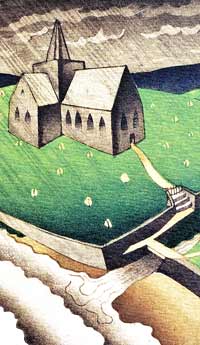
There are also some wonderful woodblock prints by Scottish artists including some by Ian Cheyne – an artist who studied at the Glasgow School of Art.

He used exaggerated perspective to describe dramatic scenes of small figures going about their lives against a backdrop of towering cliffs and crashing waves.

Cheyne died in 1955 and his work was barely known until someone was researching local artists and found his work in the archives of the gallery.

Woodblock Prints

There is a display in the print room showing the stages in the making of a woodblock print – with several woodblocks and semi-finished prints.

I didn’t know before seeing this that some print makers use one block with all the elements cut into it, and make several passes with whatever colors they are using.

Other print makers, however, use several blocks. Each block has part of the image cut into it and each block is colored separately.

I can’t get over the skill and mental agility needed to cut several blocks so that together they make a complete image.

The display is a great introduction to the technique of woodblock printing and well worth seeing.

The Other Half Of The Scottish National Gallery Of Modern Art

The other half the Scottish National Gallery Of Modern Art has the sculpted grounds that you can see in this photograph. The swirling mounds are an art installation designed by Charles Jencks, an American landscape designer.
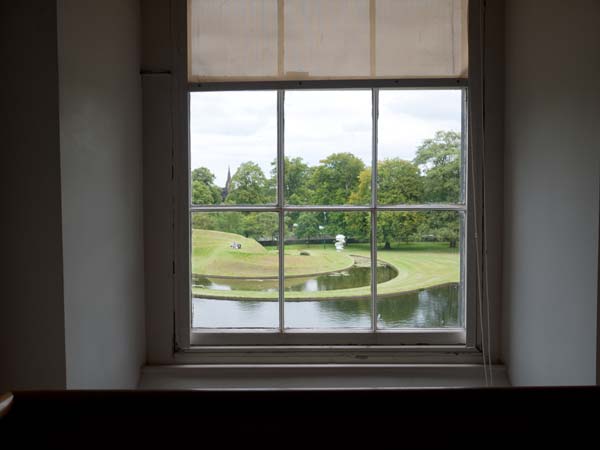
View of the grounds of the Scottish National Gallery Of Modern Art

Inside, the gallery houses paintings by Utrillo, Miro, Picasso, Leger, Gaugin, and Wyndham Lewis as well as more recent, how shall I call them, conceptual daubs on canvas.

Gaugin

The Gaugin painting is very interesting. It shows three Tahitian islanders, a young man and two women. They are close up and fill the frame. One is turned away, one half turned and the third is facing to the front.

Until recently, I didn’t take to Gaugin’s work. Slowly though since seeing a huge exhibition of his work in London last year, I have started to appreciate him.

One thing I learned at the London exhibition was how he had held down a responsible job for many years and that he had only gone to Tahiti after his wife demanded that he leave for failing to uphold the values she held dear.

I am sure the story is more complicated that that, but understanding that Gaugin tried to fit in and couldn’t, makes me understand his paintings differently.

Gaugin hated what had happened to Tahiti. He went there expecting a natural island paradise and felt that bureaucracy and Christianity had ruined the place. He railed against the authorities and ended up a drunk and quixotic figure in the eyes of those against whom he battled.

Utrillo

The Utrillo painting is of a lonely little Qquare – maybe in Paris – with the trees bare with their branches sticking up in the characteristic way of many of his paintings. Again, the perspective got to me – with a lot of flattened foreground road and pavement leading to the Square.

Edinburgh And Modern Art

It’s not only the Scottish National Gallery Of Modern Art that has modern art in it.

The Scottish National Gallery just off Princes Street in the center of Edinburgh has two or three rooms of the Impressionists and Post-Impressionists. There is a wonderful Cezanne there called ‘The Trees’ that he painted towards the end of his life.

There are also paintings from much earlier periods, but there is obviously some overlap with the Gallery Of Modern Art. So if you are interested in the art of before and around the turn of the 20th century, then you will want to make time to visit both the Scottish National Gallery Of Modern Art in the west of the city and the Scottish National Gallery off Princes Street in the center of Edinburgh.

Art Lovers

I couldn’t in all honesty say that the galleries in Edinburgh are world-ranking like the National Gallery in London or the National Gallery of Art in Washington D.C., but they are worth a long visit – and because we are staying so close to them, I have been four or five times in the time we have been here in Edinburgh.

The Waters Of Leith

Around the back of this building – behind the garden cafe and the car park – there is a path that leads down through the trees to the Waters Of Leith.

The Waters Of Leith is the name given to the river that wends its way through Edinburgh until it reaches the sea at the Firth Of Forth north of the city.

And standing in the river down below the gallery is this statue by Antony Gormley.
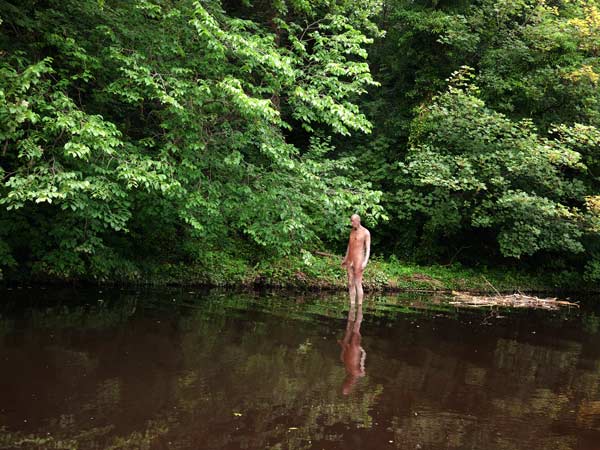
Antony Gormley sculpture of a naked man standing in the river at the back of the Scottish National Gallery of Modern Art

Antony Gormley

Antony Gormley also made the world-famous Angel Of The North sculpture that towers over and dominates the A1 road that connects the north and the south of England. You can read more about the North here.

The Little Wooden Bridge

A little wooden bridge spans the river behind the gallery, and I managed to photograph these two little dogs as they came across it.
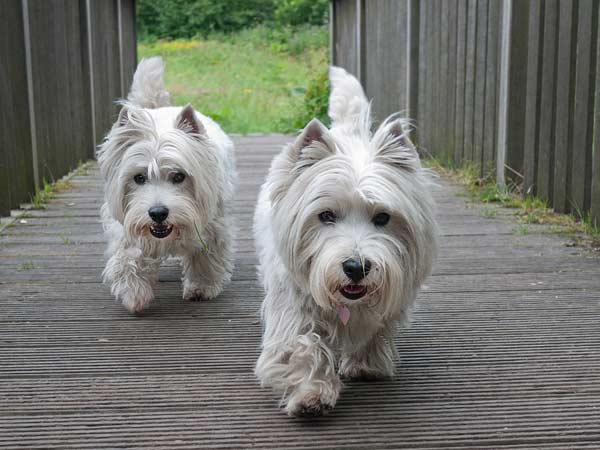
two West Highland White Terriers On A Bridge

That would have been a couple of days before the heavens opened and a normal August’s worth of Edinburgh rain fell in two days. I shot this short video, with the gentle Waters Of Leith now running fast.
Edinburgh: Architecture And The Dreaded Weather

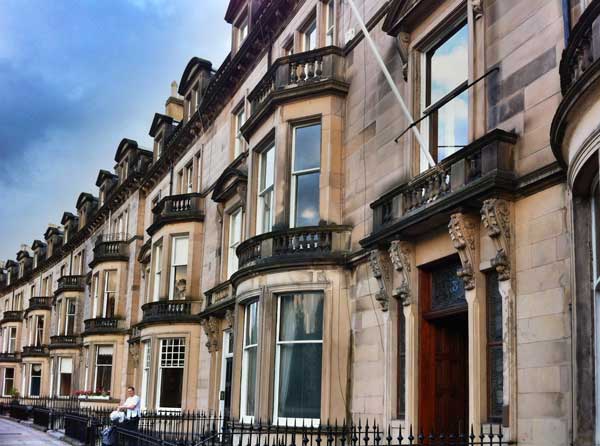
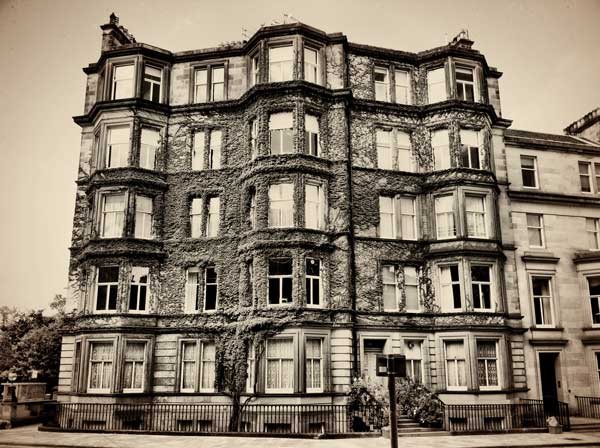
There are so many grand terraces and crescents in Edinburgh – intersecting and leading one into another – that it is easy to get heady and lost in the maze. Some of the terraces are very long and stretch for what seems like hundreds of yards.

Built with a sandstone that varies from a deep reddish-brown through to pale grey (sometimes blackened by soot) – often several stories high and with a similar architectural style throughout – they endow the city with a very strong character.

Eglinton Crescent In Edinburgh

The Dour Endure In Edinburgh

In fact, we have found people to be very positive, light, and friendly, on the whole. Not dour at all.

The word dour (pronounced doo-er or dower) that the Scottish use about themselves and their homeland comes from the Scottish Gaelic (and originally from the Latin) durus meaning hard, dull, obstinate.

And when the skies are grey or black and threatening, the city looks dour, hard, and unforgiving even in its grandness.

And that is how I picture Edinburgh now – friendly people set against a dark backdrop.

No Net Curtains To Mar The View

The houses in the center of the city are mainly built right onto the street, without a front garden, and there is a noticeable absence of curtains during the daylight hours at many of the downstairs windows.

Therefore one can see in to large rooms and high ceilings and the temptation to look in at every room adds a certain tension to a walk down the street.

No English house would be seen without its net curtains, so the lack of curtains here is noticeable. Perhaps being so far north and with the rooms being so big, they need all the light they can get to penetrate the gloom.

edinburgh- st. colme street
St. Colme Street In Edinburgh

The Houses On Anne Street

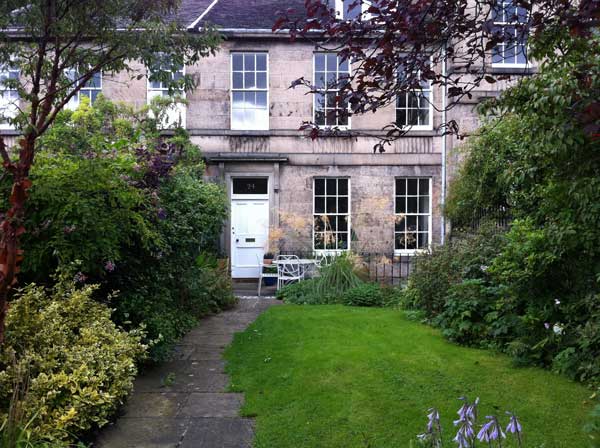
In contrast, some of the smaller streets in the West End have that look that speaks from an earlier age. The elegance of the proportions of the buildings is very attractive and the absence of anywhere to park means that the streets are chock-full of ‘permit only’ cars.

Take away the cars and the scene could be from the late seventeen or early eighteen hundreds.

house in edinburgh on anne street
House On Anne Street In Edinburgh

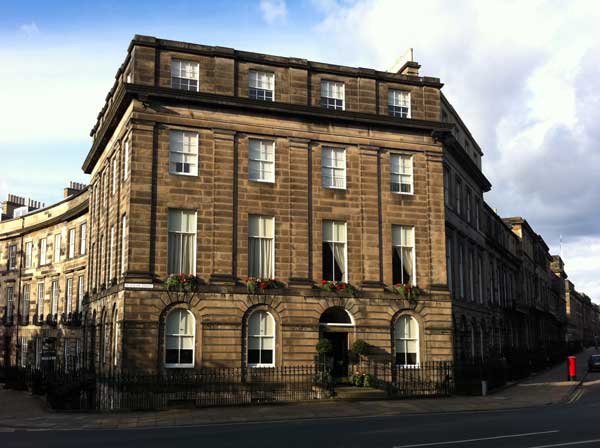
Rothesay Place Photographed With the iPhone

I have been taking more photographs with my iPhone. I have taken my big camera out with me and I photographed the street theatre performers at the Edinburgh Festival with it, but my ‘phone is always with me and the camera built into it is no slouch.

There are various camera apps besides Apple’s own version that is built into the iPhone, and the one that I am happy with is Camera+. If you have an iPhone, I recommend it.

edinburgh rothesay place
Rothesay Place In Edinburgh

The Weather In Edinburgh

The local people seem to have a different attitude to rain to that which I am used to.

Early evening yesterday as we made our way to a talk by David Sedaris, it was raining very heavily.

In the center of town, a middle aged man in a suit approached from the other direction. His dark pin-stripe jacket had absorbed so much rain that the rain was now glistening on the surface with nowhere else to go.

He walked as though he was not sodden through, but simply making his way home at the end of a day’s work.

Where was his umbrella? Why had he not called for a taxi!

I looked to my left. The people in the bus queue were standing by the railing. Some were under the roof of of the bus shelter, but they were not crowded in, jam packed to get out of the rain. No, some were standing against the railings getting wet through – with no umbrellas, no waterproof clothing, no hooded jackets.

That the weather in the United Kingdom is changeable is well known. But it has taken on a whole new meaning in the past few days here in Edinburgh.

Looking at the dark granite of the buildings in the rain, Edinburgh seems a dour place. Look at the way the people deal with the rain, and the weather seems humorous.

As I write this, the sun is shining. But it is as cold as autumn.

A few days ago the sun shone all day and we walked in the Pentland hills in the afternoon. It is very, very easy to get out of Edinburgh and into the countryside.

The sun was still shining in the evening and the air was fresh with a slight breeze. Being so far north, Edinburgh enjoys long days of daylight in the summer.

Overall though, it has rained and rained for days. We learned that a whole month’s worth of August rain fell in Edinburgh in just two days just a few days ago.

The Edinburgh Festival

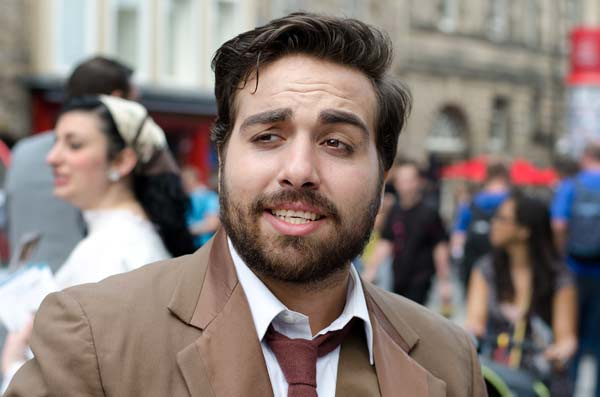
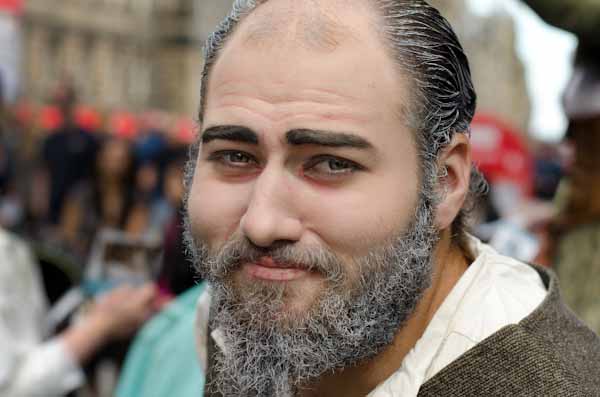
During the Edinburgh Fringe Festival, the Royal Mile – a long street in the center of the city that leads up to the castle – becomes a venue for artists to give the crowds a taste of what they are offering in their shows.

A Potted History Of The Century

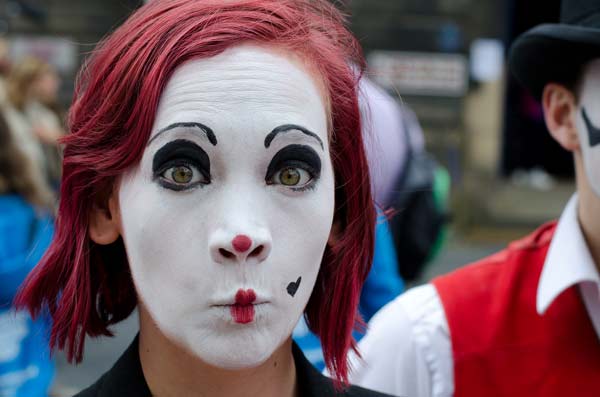
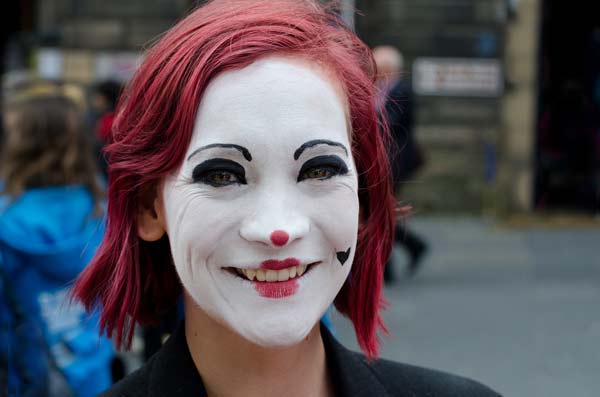
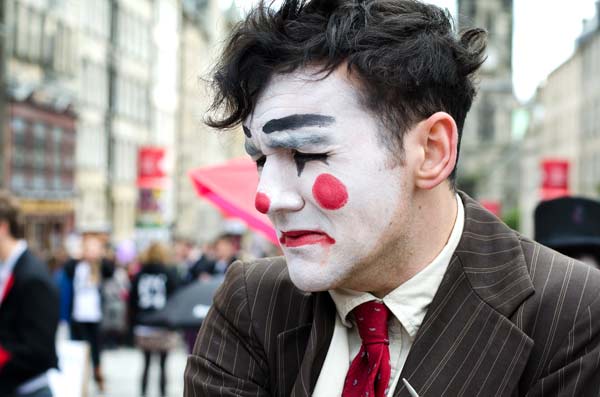
Bepo and Co – circus performers from the Unwish Theatre – look back on the past century in their shows. They earned a place in my heart for the way they mimed situations – from standing on a precipice to being disappointed in love.

Cast member from Bepo and Co

Bepo and Co cast member

Cast Member From Bepo And Co

Gogol and Chekhov On The Royal Mile

The Fringe is not only host to modern theatre, but to the Russian masters as well.

Gogol
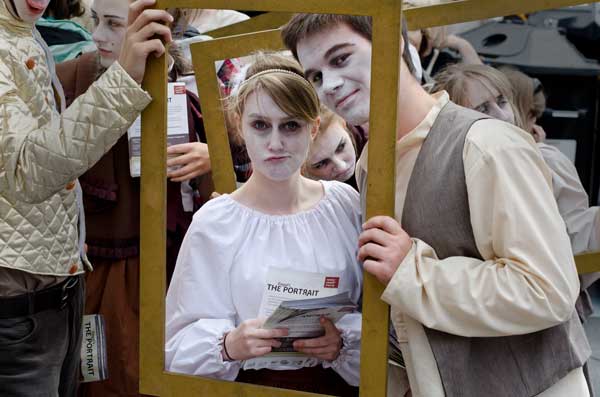
The cast from the Newbury Youth Theatre – with members seen here suitably framed – are appearing in a new adaptation of Gogol’s play The Portrait.

Gogol - The Portrait

Chekhov
These fine gentlemen are appearing in Chekhov’s The Three Sisters. They are members of the Aurora Theatre Arts at Western Connecticut State University – which is an indicator of how international the Edinburgh Fringe Festival is.

An Actor From The Edinburgh Fringe - Chekhov's Three Sisters

actor at Edinburgh Fringe playing in Chekov's The Three Sisters

Hamlet Was Never Like This

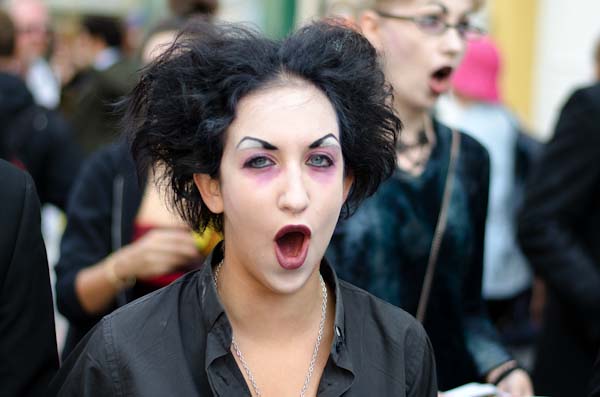
The troupe from Hamlet House Of Horror looked especially striking as they made their sonorous way up the Mile. Their version of Shakespeare’s play is in vaudeville style, using mime, satire and the original music of The Horror House Band.

Cast member from Hamlet House Of Horror

I’d Like A Hug

This man was part of a theatre group standing with placards asking for hugs. I took his photo and then gave him a hug. I wish I could have photographed him as he broke into a big, infectious grin!

Man on Royal Mile at Edinburgh Fringe Asking For A Hug

The Edinburgh Festival

There are in fact several festivals running here in Edinburgh during these summer months.

Besides the Fringe festival – which has everything from comedy to theatre to piano performances – there is the International Festival with more mainstream arts (though the line is blurred between it and the Fringe) including performances this year by the Philadelphia Orchestra.

Then there is the Book Festival with talks and discussions with, among others, Tobias Wolff, Ben Okri, and with Ingrid Betancourt, the Colombian politician who was taken hostage by FARC rebels and held captive for more than six years.

There is the Jazz and Blues Festival – of which we caught the tail end – and the Art Festival with installations all over the city.

The Mood In The City Of The Largest Festival In The World

The Fringe Festival doesn’t represent all of Edinburgh, but one thing I notice is what a good and positive feeling in the crush and crowds on the Royal Mile.

I am told that the city gets its share of rowdy drunks on the Grassmarket late at night – but our experience is that the city is laid-back and the people are very friendly and engaging.

It makes me wonder whether this friendliness is what has contributed to the success of the Festivals in Edinburgh.

In contrast to the streets of London, for example, I saw just two policemen on the Royal Mile when I spent a few hours here watching performances, talking to people, and photographing the performers.

That is quite a testament to the Edinburgh festival – the largest festival in the world.