Originally written and published February 1, 2009 by Tamara Colloff-Bennett
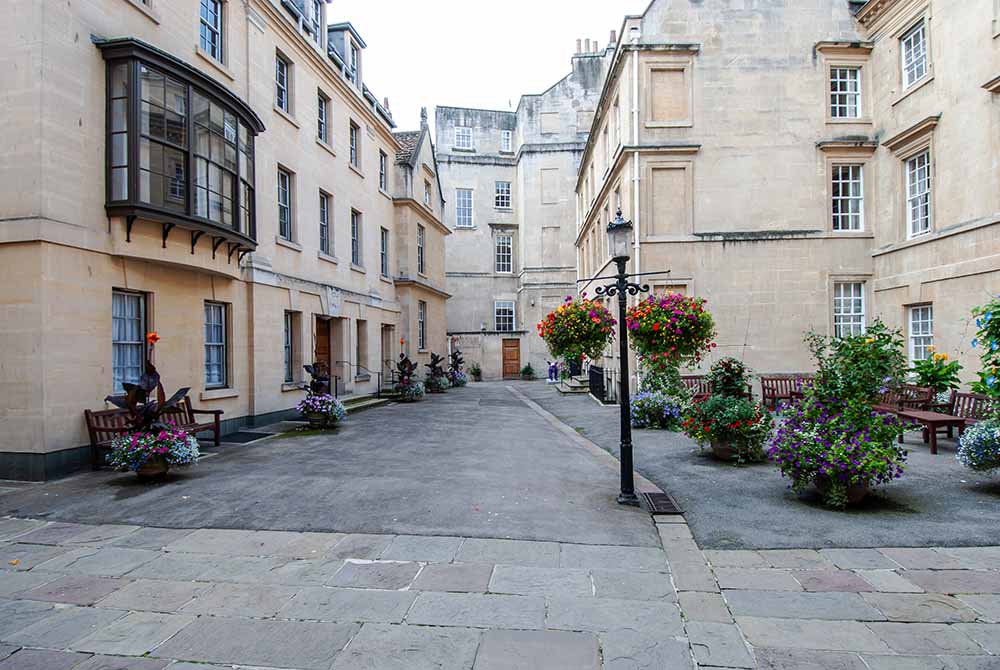
Towards the end of the eighteenth century when the famous classics author Jane Austen made two long visits to Bath and then when she lived in the city from 1801 to 1806 after her father the Reverend George Austen retired to live in the area, she might have walked in areas of the city that looked like this photograph.
Located in Somerset in the southwest of England about 100 miles west of London, the city of Bath has a population at present of about 80,000.
When Jane moved there in 1801 at the age of 26, Bath had a population of about 33,000 and by the standards of the time it was a large and important city.
Bath’s Natural Hot Springs
Surrounded by hills in the valley of the River Avon, what drew people to Bath at that time and indeed for centuries before was primarily one thing: its natural hot springs.
In fact, Bath is the location of Britain’s only natural hot springs. The springs come from rainwater which fell thousands of years ago over the limestone hills in this area.
The water has made its way deep under the surface, where the hot temperature has turned it to steam and has pushed it back up to the surface in a phenomenon that has been going on for thousands of years right up to the present time.
What this means is that at the site of the Sacred Spring at the Roman Baths in Bath, hot water at a temperature of 115˚F / 460C rises at the rate of 240,000 gallons (1,170,000 litres) each and every day.
The Roman Empire In Bath
Between 43 and 410 AD when the Roman Empire controlled Britain including the area of Bath, this natural phenomenon was beyond human understanding.
The Romans themselves believed it to be the work of the gods, so they built a temple next to the spring and dedicated it to the goddess Minerva, the deity believed to have healing powers.
The mineral-rich water from the spring also supplied a magnificent bath-house which attracted visitors from across the Roman Empire.
After the Romans left Britain in the fifth century, the baths were buried and forgotten.
Bath Becomes A Spa
In 1738, construction started of a hospital that was known as the Royal Mineral Water Hospital.
Once again, people started to come to Bath to look for cures from the waters.
Then in 1800, in what happened to be the year before Jane moved to Bath, the King’s Bath was excavated by archaeologists and the rest of the Roman site was uncovered.
The city then became even more popular at that time as a fashionable spa resort.
The remains of the Roman Baths are still a major tourist attraction today.
Interestingly, public bathing to take advantage of its natural hot springs started again in Bath in the early 1800s when Jane was living there, only stopping in 1978.
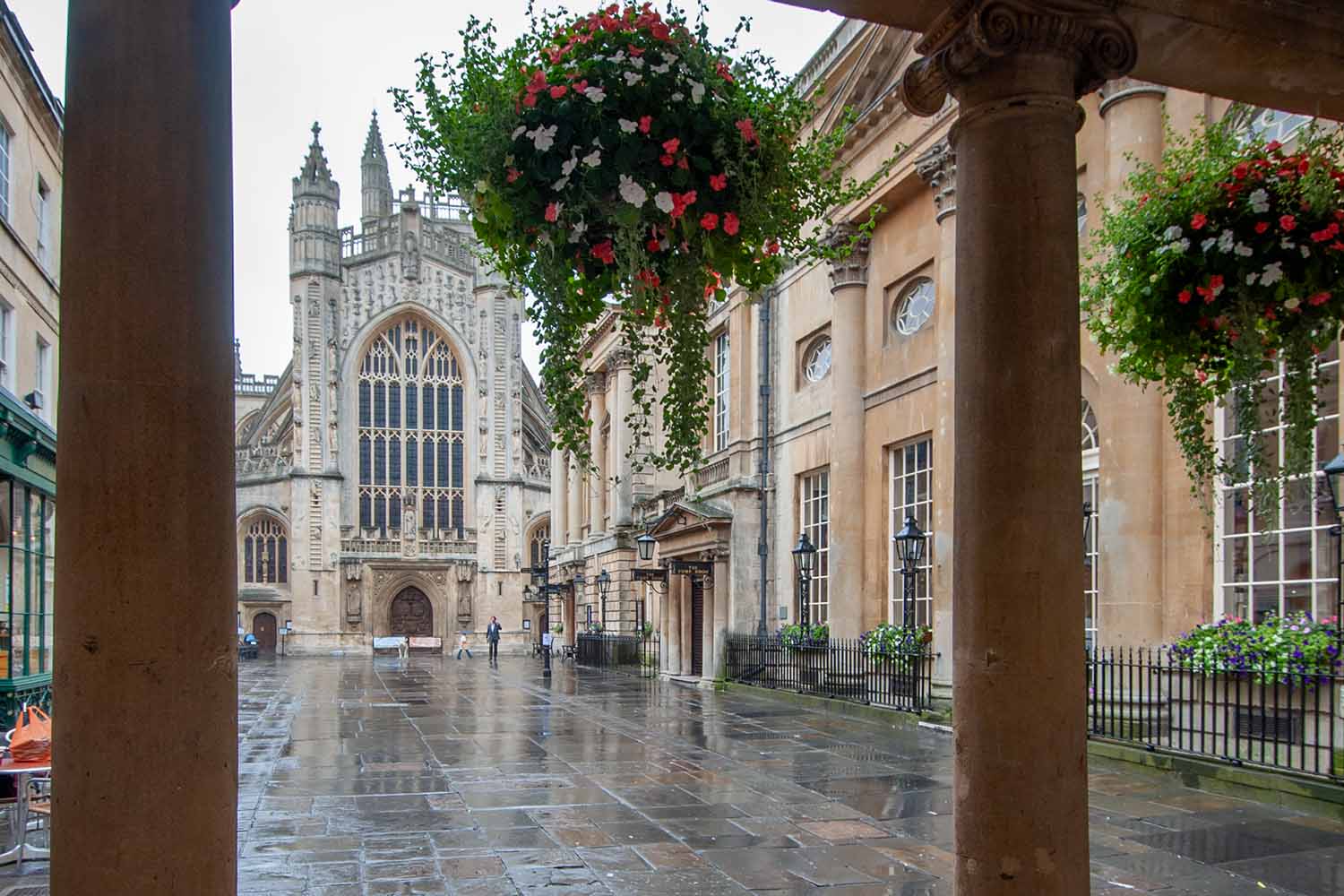
If you look all along the right-hand side of the photograph below, you will see a cluster of buildings that comprise the buildings built around those remains.
This area is the centre of Bath. In addition, the building that one can see straight ahead through the pillars is Bath Abbey, the last great Gothic church built in England.
Bath In Jane Austen’s Novels
Bath today in general looks in many ways as Jane saw it when she lived there in what was known in England as its Georgian period.
In her time, such a setting proved grist for her biting social commentary on society and as the backdrop for moments of vanity, snobbery, dissipation, and dullness that she includes in her novels.
In fact, according to Maggie Lane who is the author of many books on Jane Austen, Bath was so much a part of Jane’s mental perspective that she mentions it in all six of her completed novels.
To begin with, two novels that Jane wrote called Northanger Abbey and Persuasion are largely set in Bath.
Beyond having the city as the main location for her novels, Bath is worked into her books in other ways.
For example, at the end of Pride and Prejudice, Jane describes her character George Wickham who marries Lydia, the sister of the book’s heroine Elizabeth Bennet, as leaving his wife quite frequently ‘to enjoy himself in London or Bath’.
In another classic of hers called Emma, Jane’s shallow character Mr. Elton and a vulgar character Augusta Hawkins meet in Bath and then marry after a very short acquaintance.
Even worse than what happens in Bath in Pride and Prejudice and in Emma is the behavior of the character Willoughby who seduces and impregnates a very young girl by the name of Eliza Williams in Bath in Jane’s novel entitled Sense and Sensibility.
From these and other similar incidences where Bath is interwoven into her novels, readers can infer from the behavior of her characters that she believed that people could get away with worse behavior there than in the countryside where their behavior was more scrutinized by their neighbors.
Of course, Bath in modern times does not have the reputation that it did during Jane’s era.
These days it is visited by many tourists who come to see what remains of its Roman baths, its beautiful Georgian architecture that still endures, and to soak in the beautiful countryside that surrounds it.
The city also has a Jane Austen Centre, where its most famous resident is celebrated despite her differences with the city.
Housed in a Georgian town house in the heart of the city, it only a few blocks from where her real home actually stood.
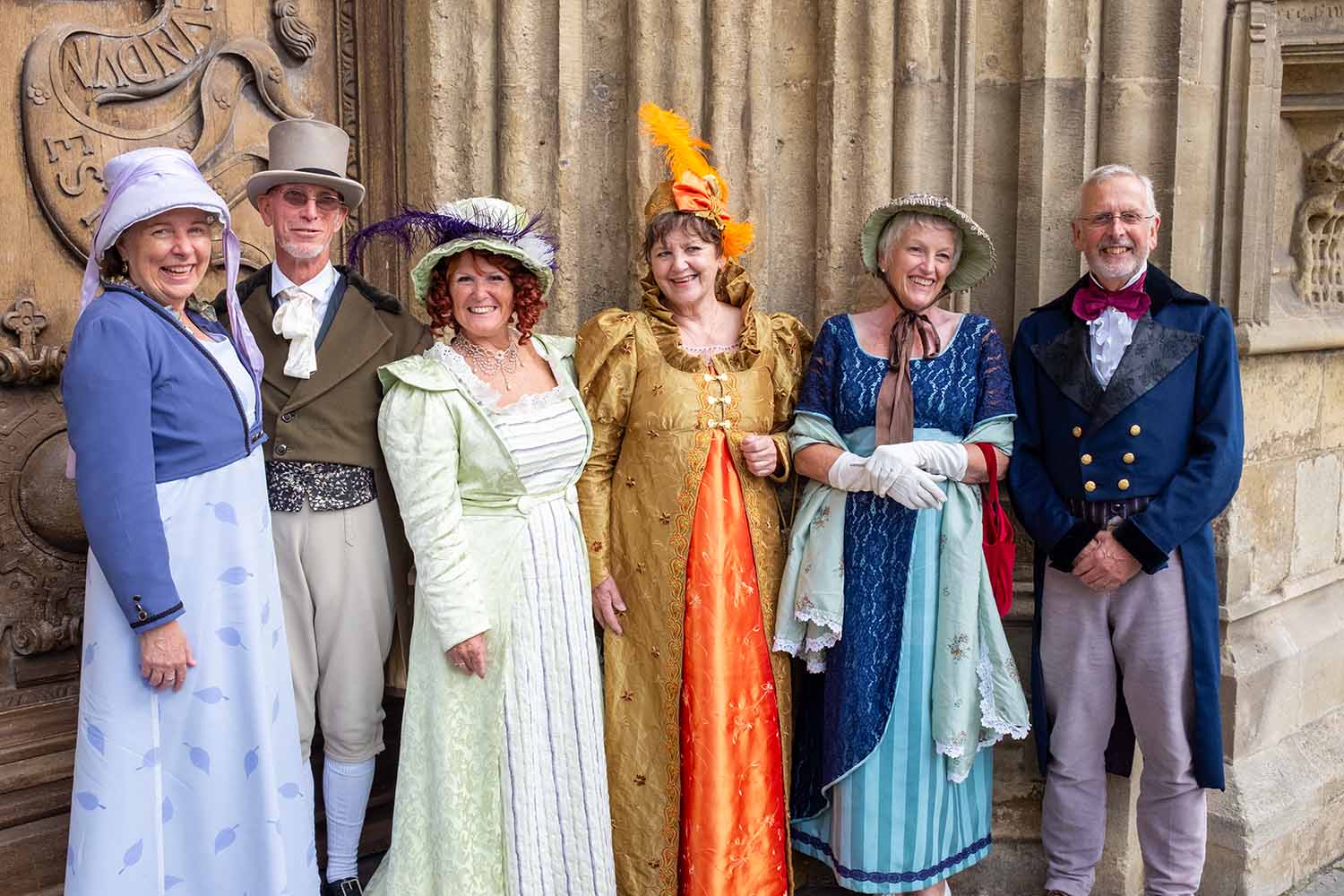
Each year you can see people dressed in the period of Jane Austen for the Bath Festival.