FedEx Panda Express Delivers The Goods
When a male and female Giant Panda arrived at the Edinburgh Zoo here in the city about 15 months ago via their specially chartered “FedEx Panda Express” flight after their nine-hour journey from China there was much fanfare as crowds gathered in the capital to welcome the pair.
After five years of negotiation with the Chinese government involving the China Wildlife Conservation Association (an organization that has been dedicated to giant panda conservation since 1983), the pair arrived from their home at the Giant Panda Conservation and Research Centre in China’s Sichuan Province.
Artwork And A Swanky New Home
On loan to the zoo for 10 years, the bears were accompanied by artwork and messages created by more than 1,000 Chinese children which wished them best of luck in their new home.
And what a new home they have: Consisting of two separate enclosures, the pandas’ new habitat cost a not-too-shabby £250,000.
Seeing ‘Ailuropoda melanoleuca’ At Last
So although my husband David and I are members of the zoo and we visit there regularly, the crowds were off-putting when the pair first arrived and so we had forgotten about the “Ailuropoda melanoleuca” (as their species in known in Latin) twosome.
However last week when the sun miraculously shone here in Edinburgh and the zoo was quiet save for some visiting school classes, we enthusiastically got our tickets to see the pair.
Sweetie and Sunshine
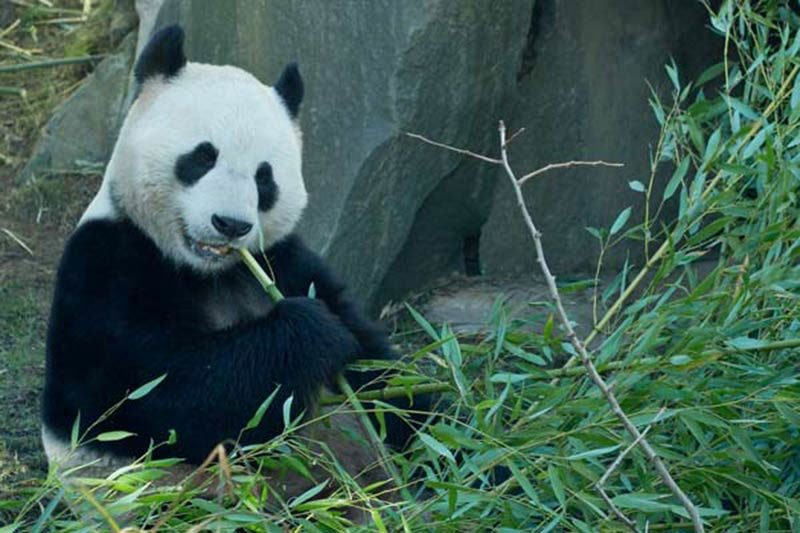
As we learned from the zoo employee who led our tour when we saw the pair, the female was born in August 2003 and she’s named ‘Tian Tian’ in Chinese.
This means ‘Sweetie’ in English, and she is characterized by her trainers as being mischievous by nature and quite the fussy lady when it comes to bamboo.
Tian Tian’s male companion Yang Guang, is only 10 days younger than she is. His name means ‘Sunshine’ in English, and his keepers describe him as even-tempered and gentle.
Some Facts And A Myth
And now to my Q&As to reveal some facts (and one myth) about the world of these gentle giants in general, and about Tian Tian and Yang Guang at the Edinburgh Zoo in particular.
Living Fossils
Q: Just how long has the giant panda been in existence?
A: Based on fossils that have been found, scientists have concluded that giant pandas have existed since the Pleistocene age approximately 3 million years ago – which is why they are referred to as a “living fossil”.
Ancient Folklore
Q: What is the ancient Chinese story that explains how the giant pandas got their distinctive markings?
A: There are several myths about this, and here is a recap of one of them featured on Animal Diversity Web: A young girl who was friendly with these bears died. The pandas felt great sorrow over her death, and so they wore black armbands as a sign of respect. At her funeral, they wept and wept, rubbing their eyes with their arms as their tears ran. The dye from the armbands flowed into their eyes, creating black splodges all around them.
Then the bears hugged one another, the black dye stained their ears, shoulders, hind legs and rumps with this same black color, resulting in the pattern of their black and white coloring that we see to this day.
The Modern Take On Those Blackened Eyes
Q: According to scientists these days, why do pandas have black, ringed patches of fur around their eyes?
A: Modern-day thought is that lucky giant pandas have built-in sunglasses: Those blacked patches encircling their eyes protect their eyes from the sun. (Pretty nifty, eh??).
Natural Habitat In Ancient Asia And China Today
Q: In the wild, where do giant pandas live?
A: Although they once roamed over a wide portion of Asia, they are found now only in a small area in southwestern China in the mountain forests of the central Chinese provinces of Sichuan, Shaanxi, and Gansu.
Q: Did they ever live anywhere else?
A. During China’s Han dynasty (206 BC – 24 AD), these gentle creatures that were thought to have mystical powers graced the gardens of the emperors. In later centuries they also lived in lowland areas of China too. However in more modern times, due to forest clearings, increased farming, and other developments, now they only live in the mountains.
Q: What sort of forests do giant pandas live in today?
A: Broadleaf and coniferous forests that have a dense layer of bamboo vegetation.
Q: What sort of elevation and general weather conditions are we talking about?
A: The elevation is between 5,000 to 10,000 feet, (1,500 to 3,000 metres) and the temperature runs from cool to cold. These mountainous areas are generally covered in heavy clouds almost all of the time due to the dense mist and heavy rains and snow with about 30 to 40 inches (75 to 100 cm) falling yearly.
Size
Q: How big are giant pandas?
A: They’re about the size of an American black bear, standing between two and three feet tall at the shoulder (on all four legs), and they are four to six feet (1.2 to 1.8m) tall when they are standing on their hind legs.
The males are larger than the females, weighing up to 250 pounds (114kg). Females sometimes reach 220 pounds (100kg).
Diet
Q: What do they eat?
A: Different types of bamboo make up 99% of their diet.
According to the Smithsonian National Zoological Park in Washington, DC, the balance of a giant panda’s diet consists of other grasses and occasional small rodents or musk deer fawns. The National Zoo further explains that in captivity in zoos, giant pandas eat bamboo, sugar cane, rice gruel, a special high-fiber biscuit, carrots, apples, and sweet potatoes.
About That Bamboo
Q: About how much bamboo does a giant panda eat every day?
A: They eat about 37 pounds (17kg) of bamboo stems per day, or about 22-31 pounds (10-14kg) of bamboo leaves, or about 88 pounds (40kg) of bamboo shoots.
Q: Since the nutritional level of bamboo is low, why have giant pandas evolved to depend so much on it?
A: Although bamboo is not great in the nutrition department, what is great about it is that it’s green all year ’round and easy to get in the bamboo forests in the giant pandas’ native environment. Importantly, there are fewer food competitors in the bamboo forests than elsewhere. So despite some of its nutritional deficiencies, bamboo does provide a stable and abundant food supply at any time of the year.
Q: It’s wonderful that bamboo is a stable and abundant food supply, but ultimately how do giant pandas get enough nutrition from it for 99% of their diet?
A: According to the Edinburgh Zoo, giant pandas use the following strategies regarding their intake of bamboo to meet their dietary needs: They eat bamboo in huge amounts, and they select the best variety and plant part according to season. For example, when available they take tender parts of the bamboo that have more nutrition and less fiber.
Q: How do giant pandas manage to eat enough to keep up their bulk?
A: They spend most of their day foraging and eating, that’s how they do it. The exact number of hours varies depending on which authority is talking about the subject, but the range is from 10 to 16 hours per day.
Q: From where do giant pandas get the water that they need?
A: Bamboo is a grass whose contents is about 50% water, so in the wild they get most of the water that they need from this grass. In fact, new bamboo shoots are about 90 percent water.
Still, they need more water than what bamboo alone provides. So almost every day in the wild in China, these animals drink fresh water from rivers and streams fed by melting snowfall in high mountain peaks. As noted already in this article, the temperate forests of central China where giant pandas live have about 30 to 40 inches (75 to 100cm) of rain and snow a year.
In captivity, zookeepers provide water for these residents.
Q: Getting back to that bamboo – how does Edinburgh Zoo keep up with all the bamboo that Tian Tian and Yang Guang eat daily?
A: According to Edinburgh Zoo’s website post in November 2011, the pair’s menu includes just a bit under a whopping 20 tons (18,000 kgs) of bamboo per year composed of 25 different varieties. The article stated that one of Europe’s leading horticulture specialist firms, Reiner Winkendick, would provide 85% of the animals’ bamboo requirements for the first three years that the pair are in Edinburgh. Winkendick’s supply is grown in bamboo plantations at a nursery on the outskirts of Amsterdam.
The other 15% has been set to grow at special sites around Edinburgh Zoo itself, and in about 1 3/4 years at the end of the initial three years that the animals are in Edinburgh, the zoo’s home grown supply will be slowly increased.
The pandas’ specific dietary requirements have been challenging for gardening experts at the Royal Zoological Society of Scotland.
Simon Jones, Gardens Manager, fleshed out just what this horticultural challenge entails:
“Our bamboo strategy is the result of more than three-years of research, planning and exhaustive negotiations with suppliers across the UK and Europe.
“Our starting point was to ensure a long-term supply of fresh bamboo that was both sustainable and cost-effective. Because bamboo forms such a fundamental part of the giant pandas’ diet, we also had to guarantee consistency of supply, and to ensure that the bamboo was of the highest possible quality while offering the variety of species required for their highly specialized needs.
“Our German supplier grows exclusively for zoos across Europe and has a proven track-record in the large-scale provision of specialist animal feed – including for giant pandas currently in captivity in Berlin and Vienna.
“But we also wanted to procure a supply nearer to home, which is why we have five growing sites spread across the zoo’s grounds. At any one time, our homegrown supply can provide up to three weeks bamboo, enough to cover any emergency situation. Our on-site nurseries will also form an essential part of the public’s understanding and engagement with the panda experience,” he said.
Getting Pregnant
Q: With Mother’s Day on the horizon this spring, how does it work with female giant pandas – how often can they get pregnant?
A: Female giant pandas enter what is known as ‘estrus’ in Latin (i.e., come into heat when they are ready to mate) only once a year, for an average of two to four days.
Estrus
Q: Now that we’re talking about estrus, what is the derivation of that word?
A: ‘Estrus’ in Latin means ‘frenzy’. It also means ‘gadfly’ in mythology. ‘Estrus’ is derived from a Greek word that means ‘gadfly, breeze, sting, mad impulse’. This all refers back to the gadfly that Hera sent to torment Io, whom Zeus had won in her heifer form.
Q: So at what age can giant pandas get in this ‘frenzy’?
A: In the wild, female giant pandas are sexually mature at 5 ½ to 6 ½ years and males at 6 to 7 years. In captivity, giant pandas mature about a year earlier due to better living conditions and nutrition.
Breeding Season
Q: In what season does this sexual drive hit the giant pandas?
A: Generally right around now during springtime. However, a panda’s estrus is also affected by the latitude and altitude as well as abnormal climate of their habitat.
Living Arrangements And Living With One Another
Q: Speaking of mating, do males and females live together all the time?
A: No, they prefer to live a solitary existence – except during mating.
Q: So what does this mean about their living arrangements at the Edinburgh Zoo?
A: Their £250,000 habitat (mentioned earlier in this article) has adjoining enclosures for the pair. There is a wall between them with just a small section where they can see one another. Their habitat was built this way because if there were a continuous long run of fencing from where they could see one another, they would get nervous.
Q: So if these animals are solitary, where do Edinburgh Zoo experts come into this process?
A: Through behavioral observation, chemical cues and signals plus hormone testing, zoo experts are able to predict when both giant pandas are ready to breed.
Last year Tian Tian came into season on April 2nd. This year, however, zookeepers think she and Yang Guang will mate in March.
Q: How else does Edinburgh Zoo prepare for the mating season?
A: Last year the animals’ web cams were turned off, and the pair met in their indoor enclosures. When my husband David and I were at the zoo last week, the zoo guide explained that in order to prepare the animals for each other, zookeepers lock one of them out of its run and let the other in.
A current online post explains that zookeepers started enclosure swapping at the beginning of this February, so that both of the animals could explore each other’s territory.
This is vital since these normally solitary animals depend very much on scent marking as a means of communicating with one another. Zookeepers keep up and increase this enclosure swapping right until the peak of the mating season.
Also, Yang Guang’s appetite for bamboo is up. This is another sign that the mating season is arriving since added bulk will enhance his body size and keep him in the peak physical shape that is needed during breeding season.
In general, a male giant panda knows that a female is in estrus because her urine and the secretions from her glands are different.
Also, the pair start calling to one another, another behavior that starts around mating time.
Q: Assuming they are not preparing for the next Olympics, why do male giant panda bears do handstands?
A: Along with two classes of children visiting Edinburgh Zoo as we were last week, we were all amazed to see Yang Guang do an elaborate handstand in his living area.
We learned then that this is the male’s way of marking his territory as he urinates.
Yang Guang gave us a perfect demonstration of this, for which he got very high marks indeed from all of us watching him intently. While bracing himself by standing on his hands, he put his hind legs as far up a post as he could manage. Then he urinated in a big arc to mark his presence.
Q: How long can a female giant panda have cubs?
A: Giant pandas reach breeding maturity between four and eight years of age. They give birth between 95 and 160 days after mating, and they may be reproductive until about age 20.
Q: Do these statistics about mating work as nicely as they sound?
A: Unfortunately they do not.
As Erin McCarthy’s article on the Mental Floss website explains, in the wild there is the behavior that scientists hope for with intense competition for each female with the dominant male mating with her several times to safeguard success. This strategy works, and wild female pandas generally give birth every two years.
The reality for breeding pairs in captivity is much more difficult, however: Either the pandas lost interest in mating the natural way, or it seemed like they didn’t know how to go about it correctly. Scientists have theorized that the awkward fumbling that has occurred between captive pandas during mating may be that they were taken away from their mothers at too young an age, or perhaps they have never actually seen mating occur.
And lack of interest might happen because there is lack of competition for the female.
Scientists have experimented with dosing males with Viagra or showing a matched pair panda porn, McCarthy reported. But, as she explains, most of the time they rely on artificial insemination to get the job done.
Q: Back to our pair in Edinburgh Zoo – are zookeepers hopeful they will mate successfully this year?
A: Just three days ago, the Edinburgh Evening News reported although last year’s mating season ended in disappointment because the pair did not hit it off, this year they are hoping things will go smoother so that the first panda cub will be born in the UK.
Last year only Tian Tian’s hormones were tested every day but not Yang Guang’s. This year vets will test him as well to better understand male panda behavior.
Yang Guang’s handstands continue, Tian Tian has been heard calling to her prospective mate, and if these two don’t do the deed during the very short window of opportunity that they have – experts are being brought in from Berlin to perform artificial insemination on Tian Tian as a back-up.
Mother’s Day
So if things go off well between Tian Tian and Yang Guang shortly, maybe Tian Tian will join the ranks of females celebrating Mother’s Day next year, yes?
Just joking — but this allows me the opportunity to wish families a very happy Mother’s Day this spring. To brighten up a mother’s special day, you could send some of Quillcards virtual flowers including these:
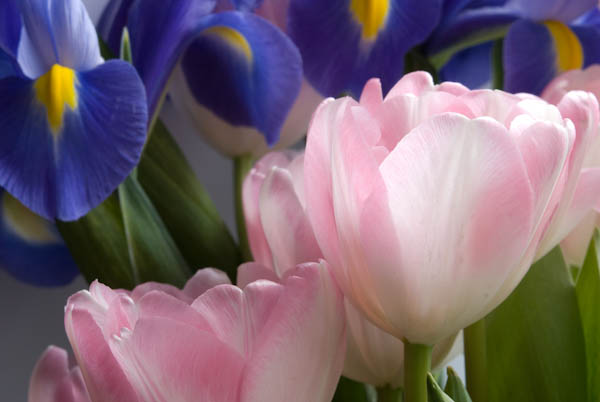
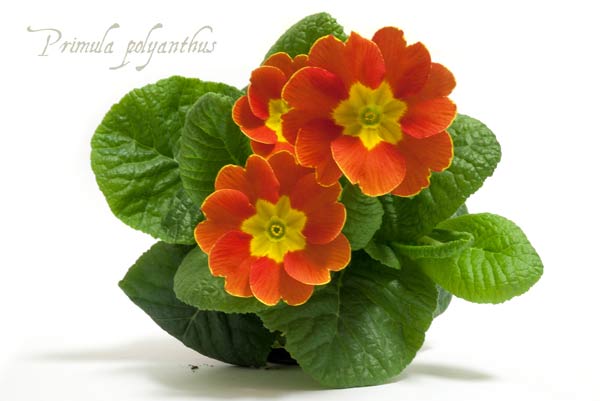
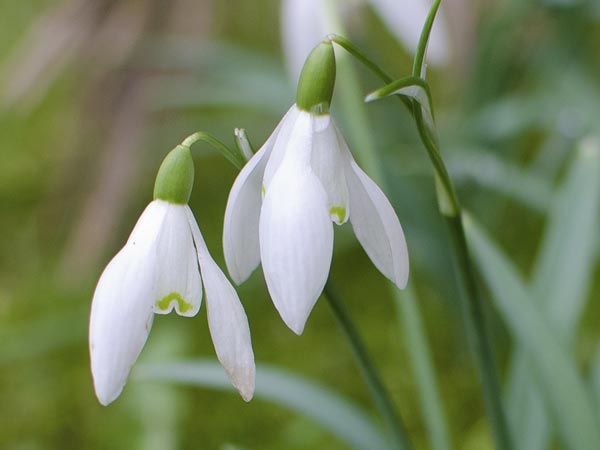
We have plenty of other images to choose from our 1,500 or so ecards, many of which will dovetail well with our Mother’s Day greeting.
In fact, speaking of giant panda bears – our two images of Yang Guang are now the most recently added images in our Natural World’s ‘Animals’ category.
And if you like bears of a different nature too, you can show your mother just how much you love her by sending one of our ‘Inspiration’ quotation cards featuring our own trusty teddy here with this fitting quotation:

Here’s hoping that Tian Tian and Yang Guang would also approve of this fellow – even though he’s made from dashing imitation fur, squashy stuffing, and green satin ribbon!
 One thing I have learned is that it pays to know the why as well as the how when building things.