Saint Petersburg Diary – Part One

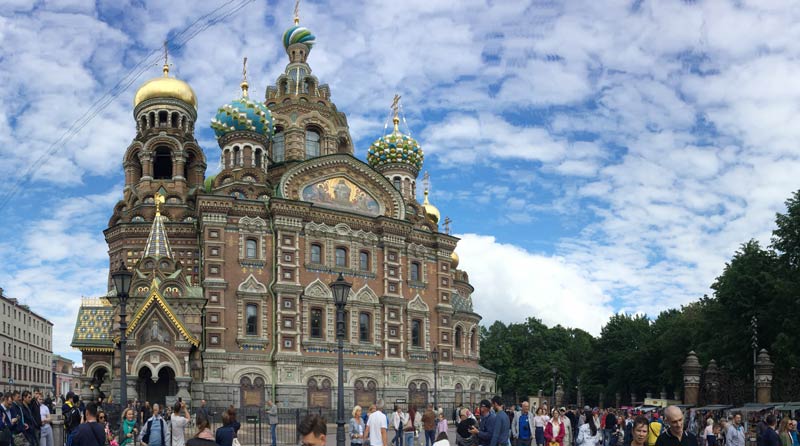
The Church of The Spilled Bloodin Saint Petersburg marking the scene of the assassination of Alexander II

30.06.2017 Day Zero- and we are in Saint Petersburg. In the airport there are taxi touts hovering around where passengers arrive. We ask what the price is and decline it. A walk along the airport building to a young man by a sign advertising an airport taxi. Half the price and in line with what we read before we set off from the UK. Already we feel like savvy travellers.

Into the hotel and then a walk up to Nevsky Prospect, which is broad and shades off into the distance. The metro station is circular and I recognise it from Google street view when I searched back in the UK.

It was good to orient ourselves before we set off, but now I reflect on this and idly wonder whether there is anywhere that is off the beaten path anymore.

Our hotel room is large and well decorated, but smells of paint – a kind of dusty, plastic smell. And the bathroom smells of the drains. We read that Saint Petersburg has problems with its sewers. Giardia infections (giardiasis) are not unknown. There are three bottles of water in the room (and fresh ones every day), so the risk of giardiasis must be real. That said, we don’t hear of anyone who has problems.

We call the staff and they send someone the next day to clear the smell from the system. It works for a few days and then comes back. The staff are friendly and we like them. Our first impression of Russians is positive.

I go out and am confronted by a begging drunk on the corner of Vosstaniya and Nevsky Prospect. He stands leaning forward a few inches from my face and moves off when I shake my head. I had this idea that I would see a lot of drunks in Russia, but he is about the only one I see in all the time we are there.

I am taken aback to see that Stockmann Department store is open until 11pm daily. A department store open until that time every day?

Stockmann’s links to a mall on several floors and there’s a Starbucks. Spot the Cyrillic alphabet. The second word is ‘cafe’. From our adventures in the Russian language before we left (YouTube videos) we learned that the letter ‘o’ is pronounced ‘o’ when the stress is on that syllable. But when the stress is on another syllable, then ”o’ is pronounced ‘a’.

Starbucks in the mall on Nevsky Prospect in Saint Peterburg

In our hotel room the film on TV is ‘Salt’ – an American film about Russian agents planted in the US. Dubbed in Russian – I wonder what the local audiences think of the film?

We go into a couple of places and decide on one that serves Italian food. We talk with the waiter about literature and language. He tells us it costs a lot of money to live in Saint Petersburg, which is why he is working part time as a waiter. He is from the Urals (said, we think, with some reticence as though it is not a desirable place from which to come) and he is studying to become a neurosurgeon.

After we leave the restaurant we smile at the recollection of a good conversation with the waiter. We say ‘Only in Russia’ does one meet a trainee neurosurgeon and talk about Dostoyevsky, Bulgakov, Nabakov, and others.

It is nearing the end of the White Nights, the midsummer period when the sun hardly sets. Late at night we can see across the street as easily as if it were daytime. It’s a lovely feeling in a grand old city.

The Next Day

What do we notice? Ripped jeans, black chokers, spinners – how do these ideas spread worldwide so quickly?

Tamara notices that quite a few women have very long hair stretching down their backs. And many have their hair in braids. We think braids must be a Russian style. Later we see tourists from other countries with the same style. Is it Russian then, or just the latest world fashion that has spread here?

We play a game of deciphering the Cyrillic names on the shop fronts. We get excited when a word jumps out at us.
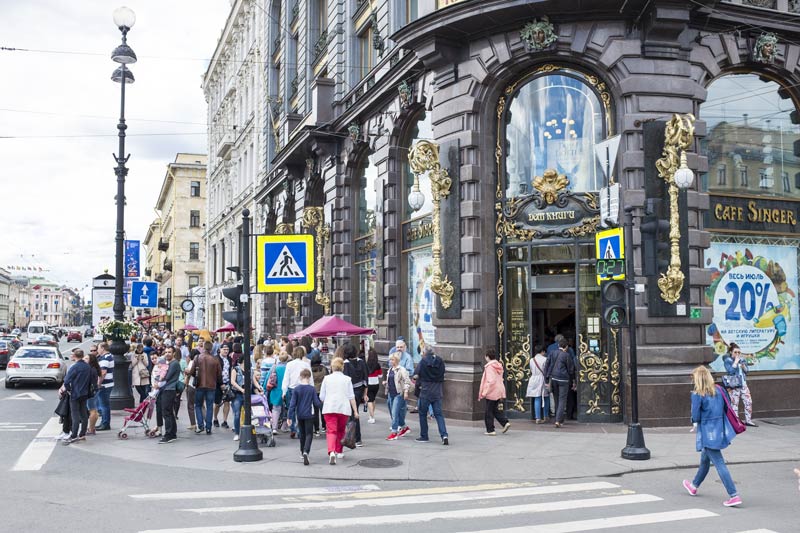
Cafe Singer in Saint Petersburg

We go to the famous Cafe Singer – a bookshop with cafe. After exhausting ourselves among the bookshelves we go to the cafe and eat a chewy, doughy Danish. Unhappy, we order more food. This time we order wisely and eat good smoked salmon. Across the road there is the huge frontage of the Kazan Cathedral.
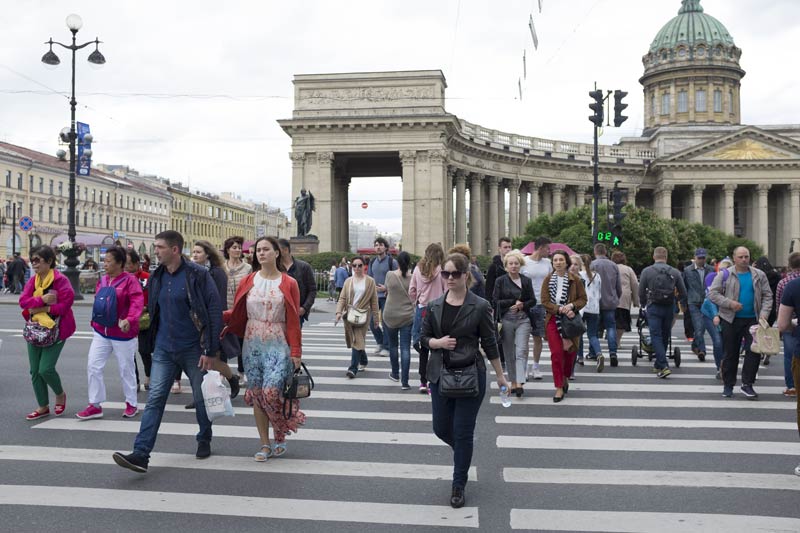
We cross to the Kazan cathedral and wander around inside its massive interior and sit next to an older woman. I notice that she magically moved seats to allow Tamara and me to sit together. The ‘magic’ element is that she moved before she saw Tamara. Did I look like someone who was with someone else?

We exchange nice smiles with her when we leave.

One note of interest is that we learn later that the Kazan cathedral features in Dostoyevsky’s Crime and Punishment.
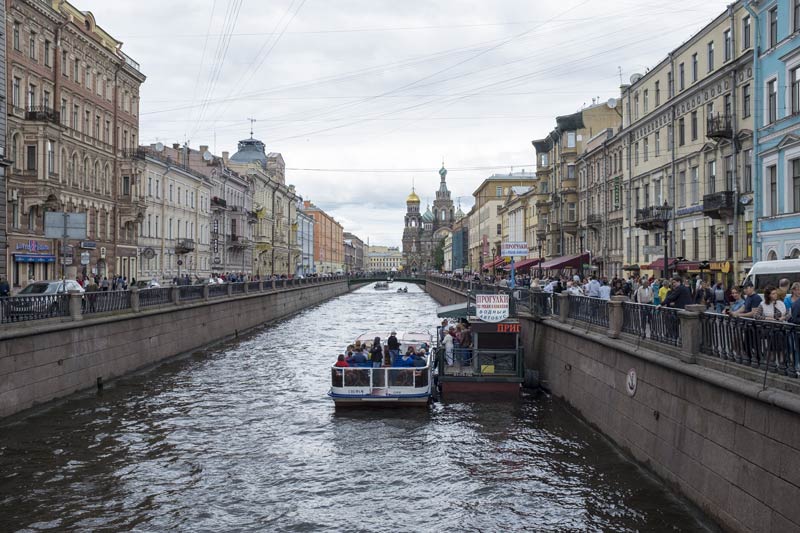
View from Nevsky Prospect to the Church of the spilled blood at the far end of the canal in Saint Petersburg

Church of the Spilled Blood

We walk up the street by the side of the canal to the Church Of The Spilled Blood. It was built in the site where Alexander II was assassinated.

We reflect on how world events turn on small aspects of human character. The assassins threw a bomb at his armoured carriage and succeeded only in hurting some people who were nearby. Alexander got out of the carriage to see what was going on and that is when the second bomb killed him.

The seeds of the Russian Revolutions can be traced through this event.

We don’t go in to the church, deciding to leave that for another day. It is magnificent from the outside as we walk around it staring upwards.
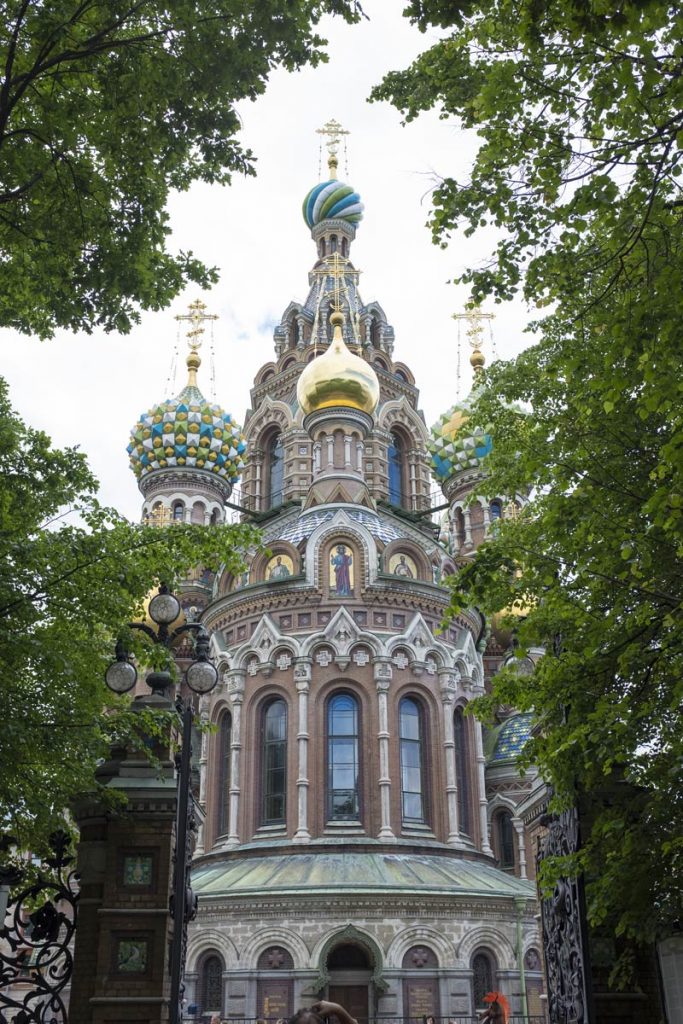
looking up at the exterior of the Church Of The Spilled Blood in Saint Petersburg

Only In Russia

Outside the Ploschad Vosstaniya metro there is a man with a raccoon around his shoulders, handing out tickets (the man, not the raccoon). We stroke the raccoon and discover that its fur is strong like horsehair- not like a cat. He tells us he has six raccoons in his apartment and feeds them dog food.

I go out to pick up a sandwich at Stockman’s cafe in the mall and the young woman who serves me looks like she is from Central Asia. She bright and quick and speaks good English and she tells me she is doing a Masters in BioEngineering. Another student working part time to make ends meet.

Day Three

The buffet breakfasts in the hotel are magnificent. The mix of guests is interesting, with people who look like they could be from Iran or Turkey, and others from Central Asia.

Out of the hotel and a metro along Nevsky Prospect where we take a boat tour along the canals. We choose to go with Anglotourism (commentary in English). We arrive late at the jetty to buy tickets and it is a mad rush while we try to find out where Anglotourism leaves from, which is their ticket office, and how to get down to the boat.

I am not handling it well and part with the cash with the air of a man not expecting to receive what he has paid for. In fact the tour is excellent.

The boat threads its way around the concentric canals and under bridges, working its way towards the old centre of the city. We go under the Bridge of Singers and the Three Bridges of Centuries. The views of the twists in the canals and the old buildings lining them are lovely.

The bridges are low and we have to lower our heads so as not to whack ourselves against the ironwork. One of the bridges is so low that the boat barely scrapes under it.

We see the Mariinsky Theatre ahead of us. We have tickets for a performance of Prince Igor at the Mariinsky later in the week, so as we pass under the bridge we look up at ‘our’ theatre.

And then we are out and into the open water and the broad mouth of the Gulf Of Finland with impressive views across the gulf to the fortress on the islands across the gulf.

People are sunbathing on the stony shore by the fortress. In this climate we see that people need to grab every drop of sunshine.

Good commentary from the guide, Maria. As we pass some merchants buildings she mentions that the god Mercury did additional duty as the god of commerce. She tells us that Mercury’s entwined snakes are on many commercial buildings including the ‘profit houses’ – the 18th century apartment buildings that were rented out to the poor of the city.

Contemporary writers wrote about the overcrowding and unsanitary conditions of the apartments, and they were a national scandal that went on for years.

Back on land we find a small cafeteria and eat kacha and spinach cake with vegetables. Tamara jokes that eating in Russia is like being at a Jewish wedding or bar mitzvah – it’s the same food.

Then on to the Museum of the Siege of Leningrad. A raggedy building with good art on the walls. Half a million dead in a 900-day siege. There is a terrible authenticity to the exhibits. I stand stock still in front of an SS officer’s uniform and spit quietly.

Afterwards, we sit in the Summer Garden of the Imperial Palace and watch the people. It feels good to be here.

We walk and get tired. We catch a bus 90-K. In the bus I think it is more like what I had thought of as Russia nowadays – poorer under the glitz. I could have stayed on the bus all day just absorbing the tone of the people.
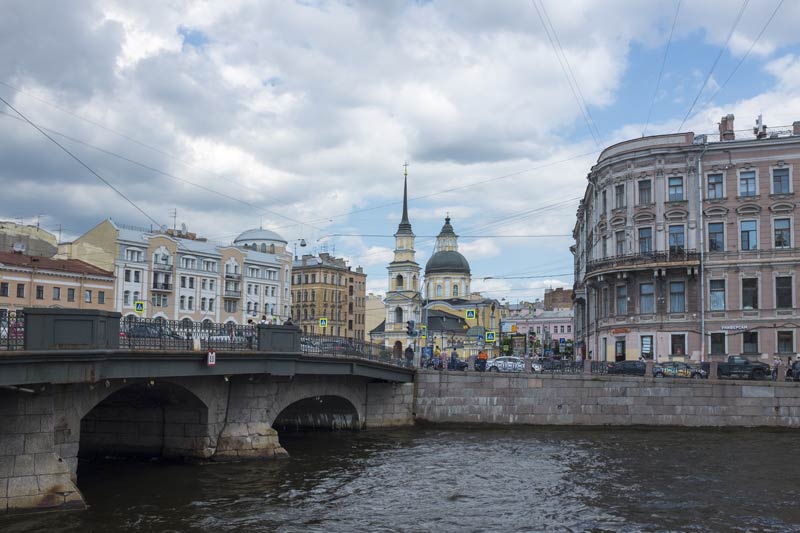
Old Stourbridge Fair At The Leper Chapel

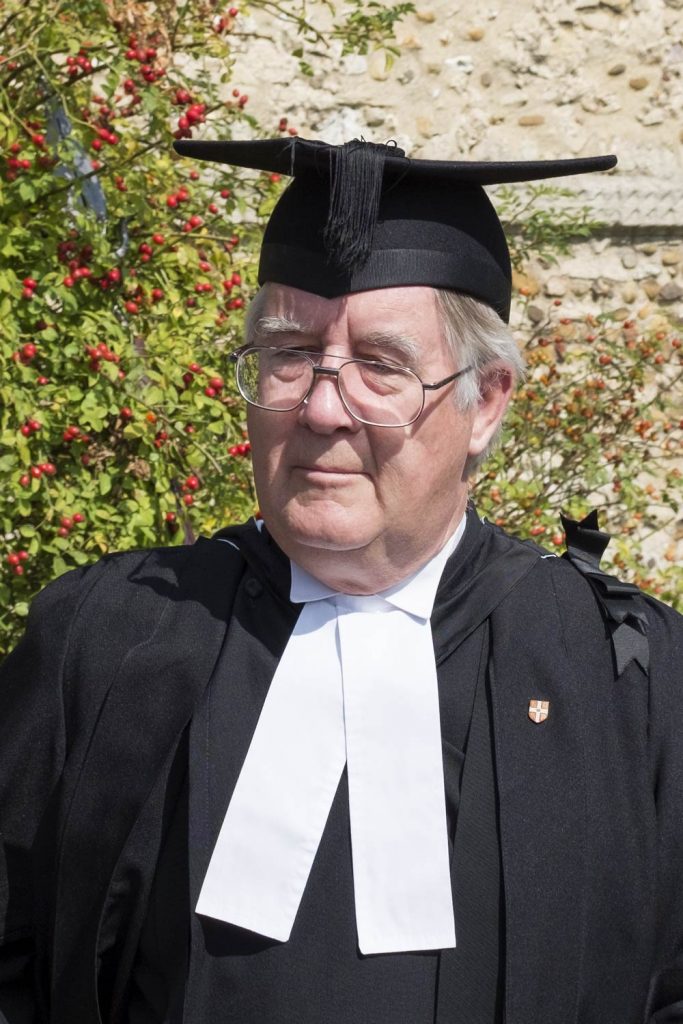
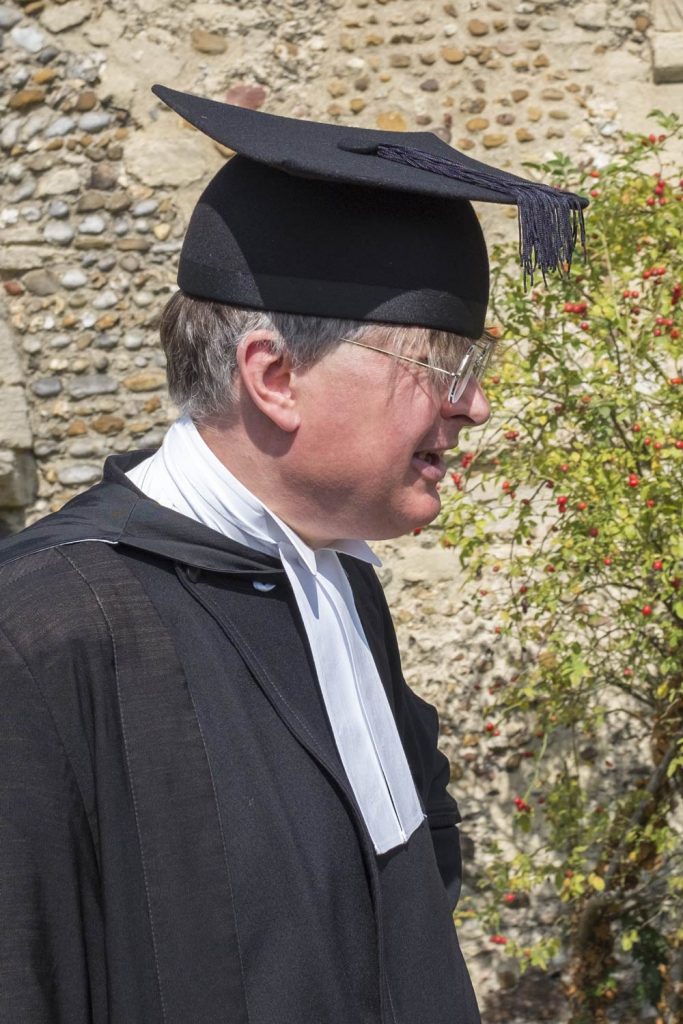
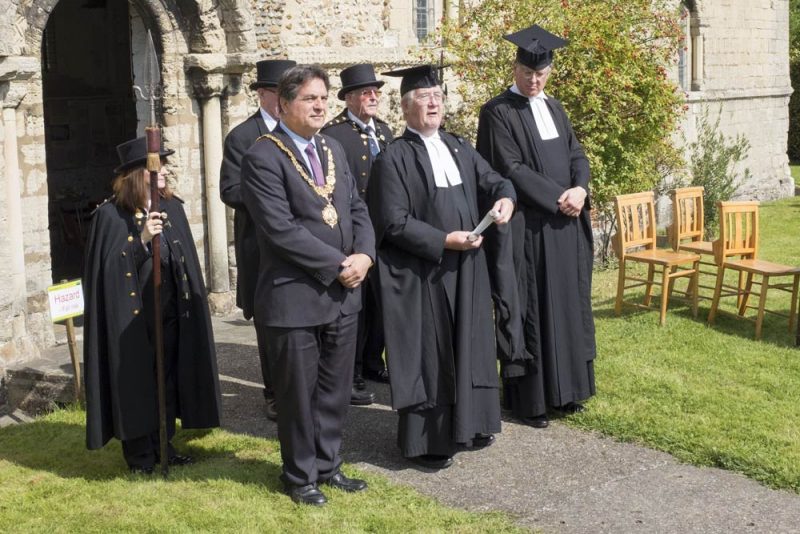
The Provosts Opening Stourbridge Fair With The Stourbridge Cry

This article is about the Stourbridge Fair at the Leper Chapel. It was held here on the outskirts of Cambridge, and was at one time the biggest in England and some say, in Europe.

Here is the Mayor of Cambridge, Councillor George Pippas, together with two proctors of the University of Cambridge. One of the proctors is marking the opening of the now-defunct Stourbridge Fair. He is doing so by reading out the Stourbridge Cry. It is an admonition as to correct behaviour and the consequences of not following it.

And here at the two provosts, who are masters of Colleges at Cambridge University.

A Provost of Cambridge University

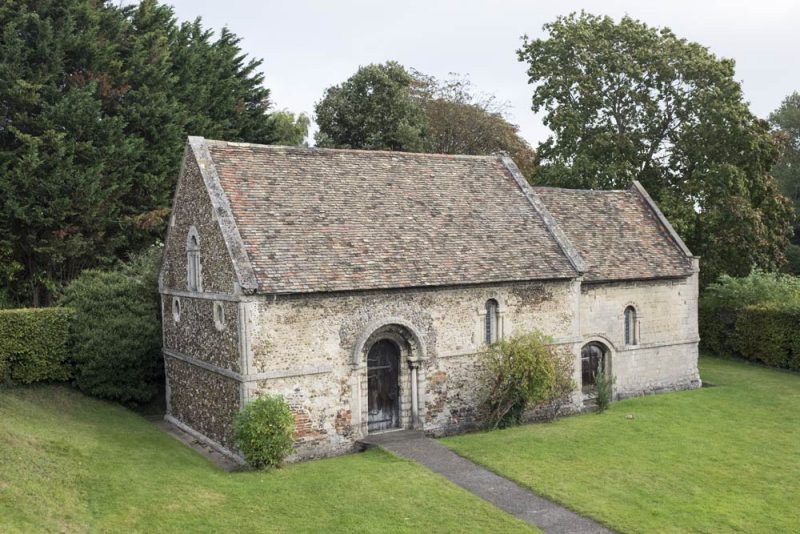
The Leper Chapel

Follow the River Cam a little way to the north-east of Cambridge, and you will come to Stourbridge Common.

Across the common, there is a small stone building. In former times it was a hospital. It was a hospital for lepers and other diseases that were thought to be contracted through sin. The hospital was purposely situated by the road so that passers by could take heed of the wages of sin. And they could also appreciate those who gave the funds and their time to keep the hospital going.

the leper chapel at Stourbridge

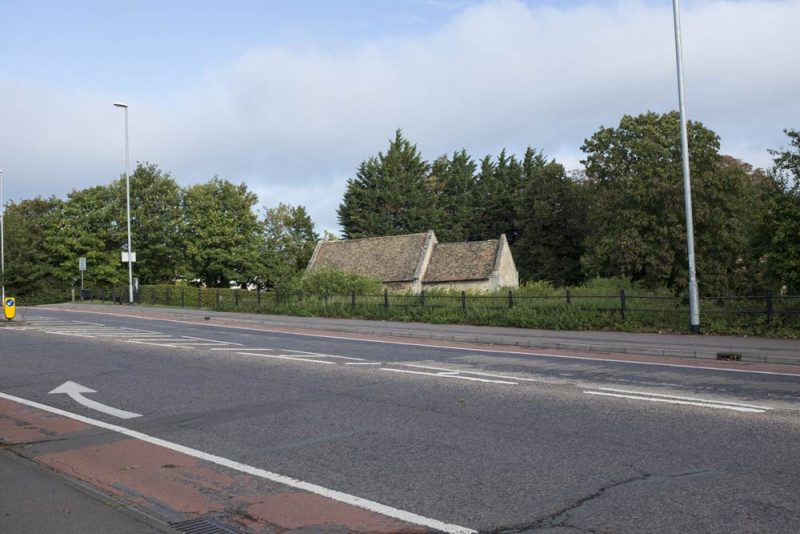
Today, the road past the chapel is higher than the land on which the chapel is built. That’s because of the road bridge that was built to go over the railway line that runs to the west of the chapel. So today the chapel is down in a dip and easy to miss unless one is looking for it.

The leper chapel at Stourbridge is in a dip below the road

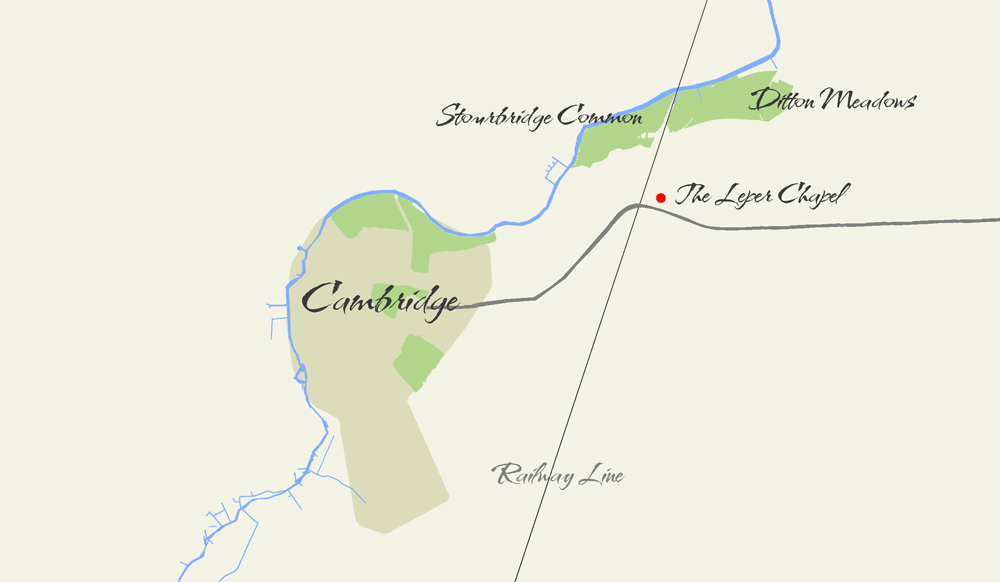
Here on the map you can see the location of the Leper Chapel by the road and near the railway line and Stourbridge Common.

stourbridge-common-and-the-leper-chapel-in-relation-to-cambridge

King John’s Charter of 1211

In 1211, King John granted a charter for an annual fair held by the Leper Hospital at Steresbrigge. The name came from a bridge over the river Stere (Stour), a tributory of the River Cam.

The fair ran between 24 August and 29 September. By the late 1200s when the leper colony closed, the town of Cambridge took over the fair.

The fair was originally a place where local people came to sell produce from their fields and smallholdings. In the nature of people, however, the locals started to rent out their stalls. They rented them to traders from London and other parts of the country. The even rented them to traders from towns in mainland Europe. Cambridge was navigable down to the sea, and so goods came up the River Cam and the fair grew. By the late 1300s it was one of the largest in Europe.

With greater trade came greater dishonesty. It came to a head when the University complained to the King. The complaint was that inferior goods were being sold. Not only that, but there was unseemly entertainment.

By the 1390s, the University gained control of the conduct of the fair. But as the years went by and the fair grew, the town of Cambridge wanted to tax the profits from the fair. The tussle over control was settled by Elizabeth I in 1589. She confirmed the right of the town to tax the fair. But she granted the University the right to oversee the quality of goods and the standard of entertainment.

And against that background, here is what has become known as The Stourbridge Cry. It was read out at the start of the fair by officers of the University who stated the rules of conduct for the fair. It makes good reading.

The Stourbridge Cry

We charge and strictly command in the name of the King of England our Sovereign Lord and in the name of my Lord Chancellor of the University of Cambridge that all manner of scholars, scholars’ servants and all other persons in this fair and the precincts of the same keep the King’s peace and make no fray, cry, freaking or any other noise by the which insurrections, conventicles, or gathering of people may be made in this fair to the trouble, vexing and disquieting of the King’s liege people or letting of the officers of the University to exercise their offices under the pain of imprisonment and further punishment as the offence shall require.

Also we charge and command that all manner of Scholars and Scholars’ servants wear no weapon to make any fray upon any of the King’s people neither in coming nor in going from this fair under the pain of banishment.

Also we require and command that all manner of strangers that come to this fair, that they leave their weapon at their inns that the King’s peace may be the better kept and for the occasion ensuing of the same, under the pain of forfeiting of their weapons, and for their punishment as the offence shall require. And that every innkeeper give that warning to his guests at their first coming: to leave their weapons in their inns under the pain of punishment.

Also we charge and command that all common women and misbehaving people avoid and withdraw themselves out of this fair and the precincts of the same immediately after this cry, that the King’s subjects may be the more quiet, and good rule may be the better maintained, under the pain of imprisonment.

Also we charge and command in the King’s name of England, and in the name of my Lord Chancellor of the University, that all manner of bakers that bake to sell that they bake two loaves for one penny and a farthing for another of good paste, good boulted and lawful size after as grain goeth in the market. And every baker that baketh to sell have a mark upon his bread whereby it may be known who did bake it under the pain of forfeiture of his bread.

Also that all bakers shall obtain and keep such sizes of bread as shall be given them by the officers of the university under the pain of forfeiture of their bread if it hap any baker to be found faulty in any article pertaining to unlawful bread according to the King’s laws, that then such bakers after three admonitions shall be imprisoned and punished according the laws of our Sovereign Lord the King.

Also that no brewers sell into this fair nor anywhere within the precincts of the university, a barrel of good ale above two shillings, nor a barrel of hostel ale above twelve pence, no long ale, no red ale, no ropey ale, but good and wholesome ale for man’s body under the pain of forfeiture, and that every brewer, have a mark upon his barrel whereby it may be known whose it is under the pain of imprisonment and fine at the discretion of the officers of the university.

Also that every barrel of good ale hold and contain fourteen gallons, thirteen gallons of clear ale and one gallon for the rest and the hogget seven gallons that is to say six gallons and one pottle of clear ale and the residue of rest under the pain of forfeiture and for the punishment after the discretion of the officers of the university.

Also we command that the beer brewers shall sell a kilderkin of double beer in this fair for two shillings and a kilderkin of single beer for twelve pence.

Also that no tipper nor gannaker sell in the said fair, nor within the precincts of the university, a gallon of good ale above four pence nor a gallon of hostel ale above two pence, And the beer brewers a gallon above four pence and a gallon of single beer above two pence under the pain of twelve pence for every time.

Also where great detriments, hurts and deceits hath been to the King’s subjects in times past by reason of false and unlawful measures brought by potters and other persons to be sold and bought in this fair and the precincts of the same in avoiding therefore the said hurts and untrue measures, we strictly charge and command that every potter and all other persons that bring such pots to be sold in this fair or precincts of the same that they and all other from henceforth sell and buy true goods and lawful measures as gallons, pottles, quarts, and half pints under the pain of imprisonment, and there to remain till they have made fine at the will of the said officers.

Also if any brewer or beer-brewer be found faulty in any of the premises after that they have been in times amerced, then the said brewer shall be committed to prison, there to remain till he have fined at the pleasure of the officers of the university.

Also that every tippler and gannaker that selleth ale in this fair that ye have the measure well and lawfully sealed and assized according to the standard of the university, and that every gannaker and beer-brewer that hath beer to sell have a sign at the booth whereby they may the better be known under the peril of imprisonment.

Also that any vintner that hath wine to sell in this fair as white wine, red wine, claret wine, gascon, malmsey, or any other wine, that they sell no dearer than they do in London except an halfpenny in a gallon toward the carriage, and that every vintner have their pots and their measures sized and ensealed after the standard of the university under tbe pain of forfeiture and their bodies to prison.

Also that all persons that bringeth ling-fish, stockfish or any other salt-fish to sell in this fair or within the precincts of the same that they sell no rot fish, no byrnt fish, no resty fish, but good lawful and wholesome for man’s body under the pain of forfeiture of their fish and their bodies to prison.

Also that all manner of persons which hath salmon, herring or eels to sell in this fair that the vessels called butt, barrel, half barrel, and firkins, they sell none of them afore they be seen and searched and that the butt hold and contain eighty-three gallons, well and truly packed upon pain for every butt, barrel, half barrel so lacking their said measure six shillings and eight pence. And that the great salmon be well and truly packed by itself without any meddling of any grills or broken bellied salmon with the same & that all small fish called grills be packed by themself only without any meddling upon pain of forfeiture and lofting of six shillings and eight pence for every butt, barrel and half barrel so found faulty contrary to the statute of the parliament in the which statute these points and other more be more plainly expressed.

Also that any pikemonger that bringeth fresh fish to sell in the fair, as pike, tench, roach, perch, eel or any other fresh fish that the fish be quick and liveish and of size and bigness according to the statute thereof made under the pain of forfeiture and their bodies to prison.

Also that every butcher that bringeth flesh to sell in this fair that he bringeth no rotten flesh, no murrain, no sussners, but lawful and wholesome for man’s body and that every butcher bringeth the hide and the tallow of all such flesh as he shall kill to sell in this fair. And that every butcher bringeth with him the liver and the lungs of all such beasts under the pain of forfeiture.

Also that every baker that baketh horsebread to sell, that he selleth three loaves for a penny after good and lawful size and after such size as shall be given them, by the university, and that it be made of good peas & beans and other lawful stuff, upon the pain aforesaid.

Also that all brown bakers, as well as innkeepers as other, observe and keep such size of horsebread as shall be given them by the said officers, under the pains and punishments as of other bakers is rehearsed.

Also that all persons that selleth by measure as by ell or by yard woollen cloth or linen cloth, silk, worsteads sized and ensealed that they have their ells and their yards sized and ensealed after the standard of the university under the pain of forfeiture and their bodies to prison.

Also that all persons that selleth by measure as by bushel, half bushel, peck or half peck as coal, salt, mustard seed or any other thing that their bushels, half bushels and pecks be sized and sealed after the standard of the university under the pain of imprisonment and more punishment as the offence shall require.

Also that all persons that selleth by weight have good and lawful weights sized and ensealed and to agree with the standard weights of the university under the pain of imprisonment and for their fine as it shall please the officers of the university.

Also that no man shall regrate none of the foresaid things as ling fish, salt fish, stock fish, herring, salmon, pike, tench, wax, flax, osmund, rosin, yarn, pitch, tar, cloth, nor none other thing of grocery ware or any other merchandise in this fair under the pain of forfeiture and their bodies to prison and to make fine as it shall please the officers of the university. And he regreteth that buyeth any of the said things afore rehearsed or any other manner of merchandise of any man in this fair and selleth again the same thing in the said fair enhancing the price of the said thing more that it was before.

Also if there be any person that will sue by personal action either for debt, victuals, injury and trespass or think themselves wronged in any of the premises or otherwise, let him come and complain to my Lord Chancellor’s Commissary and other officers of the university which shall hold and keep courts daily and hourly in this fair during the same to the intent that he shall be heard with lawful favour, right and conscience and after the liberties of the same.

Also that every butcher that bringeth flesh to sell in this market that they bring no rotten flesh, et supra.

Also that every butcher that bringeth to sell in this market that they sell none of the tallow of all such beasts as they shall bring to sell in this market, but to such rasement and tallow-candellers as are dwellers within the said university and precincts of the same, and they to make the said tallow in good and lawful candle so that the said university and town of Cambridge be nowise disappointed but the better served and that they sell not a pound of candle above a penny, and that the said butcher sell not a stone of tallow above eight pence.

Also that every innkeeper that keepeth inn that he have his bottles of hay well and lawfully made and sized and that every bottle weigh seven pound and that they sell not less than three horse loaves good and lawful for a penny under the pain of punishment after the discretion of the officers of the university.

Also that every carrier that bringeth wood to sell in this market that they bring good wood, and if it be faggot let the faggot thereof be well filled and sized and that every faggot be full seven foot long and every faggot to have two bounds and thirty-one faggots in a load well filled after the said length under the pain of forfeiture.

Also that every collier that bringeth charcoal to sell that every sack called a quarter sack holds eight bushels, saving that they be allowed for the culm and breaking by the way after the discretion of the officers of the university under pain of forfeiture.

Also that every person that bringeth grain to sell in the market that they open not afore ten of the clock nor to stand after one of the clock under the pain of forfeiture.

I found the meaning of some of the words in the Stourbridge Cry:

Pottle – a measure for liquids equal to a half gallon
Amerced – from amercement – a financial penalty in English law, common during the Middle Ages, imposed either by the court or by peers.

Today

In 1933, Stourbridge Fair was held for the last time. And now all that is left is the ceremony officiated by the University and the Lord Mayor annually to perpetuate the memory of the fair.

In the event it was a small affair in terms of stalls, just four of them – one for jewellery, one for a local honey from Quy Fen Apiaries, one for a coconut shy, and one for Cambridge Past Present and Future, a charity and civic society whose aim is:

…to help anage green spaces and historic buildings in and around Cambridge for public enjoyment; to run education programmes promoting nature and local history; and to champion high quality planning and the sustainable development of Cambridge and its surrounds.

Why were there not more stalls? The Lord Mayor was there and proctors of Cambridge University were there. So why so few stalls? I found myself imagining the mood at the fair in the Middle Ages and wishing that there were more stalls today.

The fact is that I have mixed feelings about the revival of old customs that perpetuate class distinctions. Not that I found the two proctors anything other than courteous and kind. And I have met the mayor before and he is a lovely man. It is just that this little ceremony, quaint though it seemed, serves in the end to delineate the classes and to keep them apart.

Take a look at the people standing behind the Mayor and the proctors. They are ‘in costume’ so it is not for real, or is it?

Discovering Cambridge

Despite its small size and probably because of the university and its nearness to London and to the rural East of England, there is a lot to Cambridge. Discovering Cambridge takes time.

See the two cities – the city of the university students and the city of the ordinary working man or woman. Listen to the accents, from the well-bred to the East End cockney. See the retired professor. See the visitors – tourists in their hundreds. It is all there.

See the ‘Backs’ – the area behind the colleges that is in the photo at the top of this article. Of course, not all of Cambridge is like that. How could it be? It has its share of poor housing and mean streets. But it also has a lot of very pretty streets and buildings.

Where Is Cambridge

Cambridge is a city in East Anglia, in the East of England. It is 49 miles from London as the crow flies and 50 minutes by the fastest train to the capital. It is on the southern edge of an area that was once fen until Dutch engineers drained them three hundred years ago.

A lot of the low-lying areas of eastern England, mainly in Lincolnshire, Cambridgeshire, and Norfolk, were once fen – low-lying and marshy area of land. Some were always under water and some flooded seasonally.

Because the water was so shallow, the inner parts of the fens could only be reached by flat-bottomed boats or punts. Its inaccessibility helped its reputation as a mysterious part of old England, cut off from the rest.

Most of the fens are now farmland and meadow, criss-crossed by drainage ditches that lead out eventually to the sea.

This is one of the prettiest views in Cambridge, on St. John’s Street with St. John’s College on the left. It has the prettiest russet-coloured brick. And it is quite different from the dark buff brick of most of the later buildings in Cambridge.

If you have a sense of the topography of England and of the trees that grow in the uplands and the lowlands, you will sense that Cambridge is low lying. You can tell it from the colour of the landscape and the way buildings have weathered. There is a dampness baked into the fabric of the area that is different from upland Britain.

And indeed Cambridge is low lying – just six metres (20 feet) above sea level.

And it is a small place – 120,000 people with another 18,000 students who come and go. And the buildings are low – no skyscrapers here.

And pretty. There are lots of old, pretty buildings, and the river Cam that wends in a gentle arc around the city.

Who has not heard of punting on the river at Cambridge?

And then there are the colleges – that collection of institutions that make up Cambridge University. The college buildings and the wealth of the colleges has helped Cambridge through times where other places have had their hearts ripped out and replaced with modern glass and steel.

Cambridge University

The university is very important to Cambridge. Without it there would be no biomedical research companies, no computer chip companies, etc. The relationship between the university and business is fundamental to the prosperity of the city.

And it is unusual in that it is in fact the umbrella organisation for 31 separate and autonomous colleges. There are 18,000 students from all over the world who study, each one at a particular college.

You get an inkling of the diversity of the students from the number of languages you can hear on the street. And with students come staff – 11,000 staff.

The colleges have their own rules and procedures (subject to the overarching university regulations), so you hear people talk of being at a particular college rather than being at Cambridge University.

Not all the colleges are ancient. Peterhouse was founded in 1284, Clare College in 1326, Gonville & Caius College in 1348, and Corpus Christi College in 1352. But many colleges were founded in the 1800s and Wolfson College was founded in 1965 and Robinson College in 1979.

City Status

I said it is a city, and you may wonder how it is a city when it is so small. After all, we usually mean places with populations of half a million or more.

What you might not know about the history of England is that a city is any settlement where there is a cathedral.

In the fifteen hundreds, King Henry VIII established the association between cathedral and city. He found cities in six dioceses, which were districts under the pastoral care of a bishop.

England has cathedrals in some relatively small cities. Take Chichester for example. It has a cathedral and it is therefore a city, and yet it has a population of less than 30,000.

But Cambridge does not have a cathedral and it is a city for a different reason. It was granted city status in 1951 by Royal Charter signed by King George VI. The grant was to correct the omission that it was the only ancient seat of learning in the kingdom that was not a city or royal borough. And it was also granted city status to reflect its commercial value to the nation.